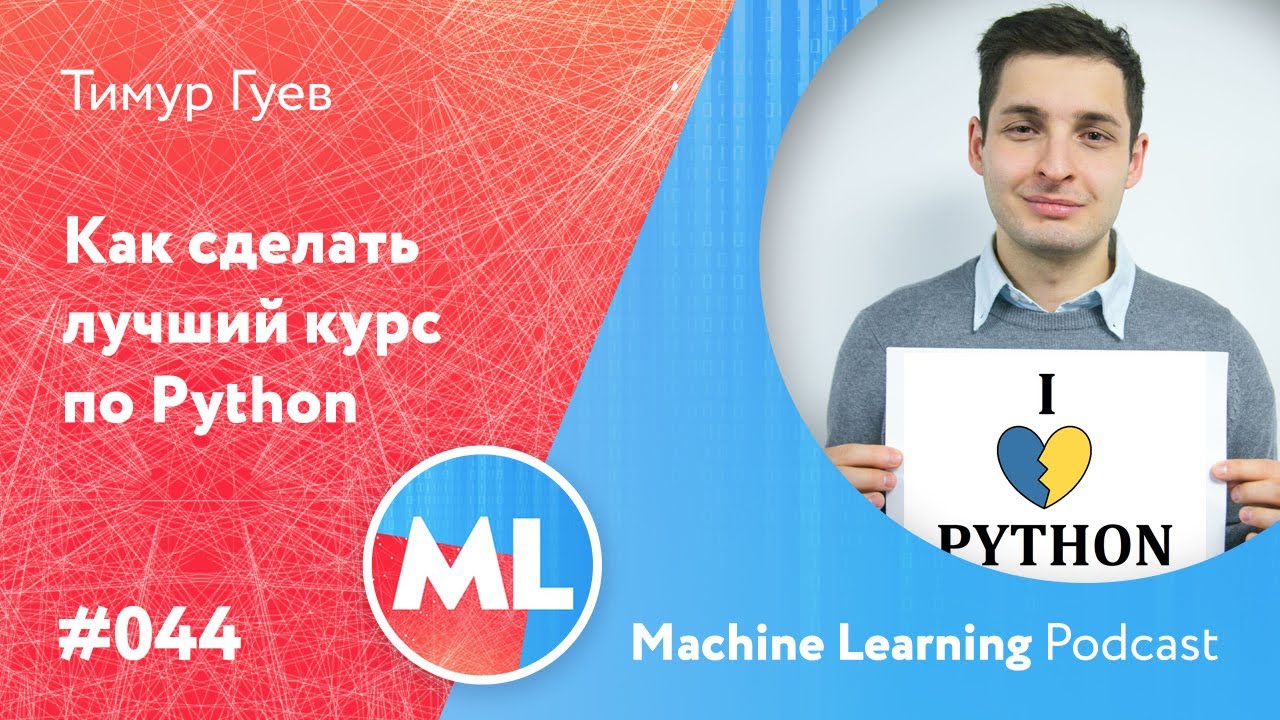
#044 ML Тимур Гуев. Как сделать лучший курс по Python
#044 ML Timur Guev. How to make the best Python course
Keywords
Summary
187 words
Critical Evaluation
Value of the Information & Strength of the Argument
The value of the information lies in the authentic insights from an experienced educator and software developer. Timur provides a candid account of his career transitions, shedding light on the realities of the software industry and the education sector. He argues that the core skill for a programmer is not memorizing functions but knowing how to search and understand documentation, a point he supports with personal examples. His argumentation is based on his own experiences rather than formal research, making it relatable and practical. However, the discussion lacks scientific rigor, as it is opinion-based and anecdotal. Nevertheless, the episode offers a valuable perspective on course creation and teaching methodologies, which can be useful for educators and content creators.
Scientific Rigor, Source Quality, Title Accuracy
The content is not scientific in nature; it is a conversational podcast. The rigor is low in terms of formal research, but the guest draws on his extensive professional experience. The sources mentioned in the description are primarily his own courses on Stepik and podcast distribution platforms, which serve as references for the discussed material. No external academic sources are cited. The title aligns with the core topic of creating effective Python courses, though the conversation also branches into career and teaching philosophy. Overall, the information is internally consistent and plausible, but it should not be treated as scientific evidence.
233 words
Title / Content Match
The title suggests a focus on creating the best Python course, and while the conversation covers this topic extensively, it also includes broader discussions about career and teaching. The title is mostly accurate.
Quality & Reliability
7/10
The podcast presents the guest's personal experience and opinions on education and course creation. The information is anecdotal but credible, grounded in his professional career as a programmer and educator. No scientific claims are made, but the discussion is insightful and practical.
Key Moments
Markers derived by PSI from the transcript: the creator did not define chapters.
- Introduction and guest background as a mathematician and programmer
- Working at Kaspersky Lab and the decision to leave due to monotony
- Experience at GeekBrains and the conflict with business-oriented course creation
- Teaching at a private school and the realization of not being a school teacher
- The process of creating the 'Generation Python' courses and his educational approach
Cited Sources
- Machine Learning Podcast main page — Official page of the podcast
- Episode 44 of the podcast — This specific episode
- Yandex Music album — Podcast available on Yandex Music
- Apple Podcasts listing — Podcast on Apple Podcasts
- Google Podcasts feed — Podcast on Google Podcasts
- Free course on creating Telegram bots in Python — Free course by the podcast host
- Python Generation: for beginners — First course in the 'Python Generation' series
- Python Generation: for advanced learners — Second course in the series
- Python Generation: for professionals — Third course in the series
- Manifesto on learning programming — A lesson on Stepik about learning programming
- All courses of the 'Python Generation' series — Organization page with all the courses
- Telegram chat for the podcast — Community chat for discussion
- Telegram channel 'Become an ML specialist' — Channel by the podcast host
- VK page of the podcast — Podcast on VK
Contribution & Novelties
The episode provides a personal account of building successful online Python courses, offering practical insights into educational content creation and career decisions. It highlights the importance of student autonomy and the shift from traditional teaching to self-paced learning. The guest’s experience at Kaspersky and GeekBrains offers a nuanced view of corporate vs. educational environments.
Pour aller plus loin :
- Python (programming language) — Overview of the language central to the discussion.
- Stepik — The platform hosting the ‘Generation Python’ courses, relevant to online education.
- Online learning in higher education — Research and context on the efficacy of online course delivery.
100 words
Radar Profile
The radar shows a strong emphasis on quantity and reliability, with moderate quality and technical level, indicating a comprehensive but non-technical discussion.