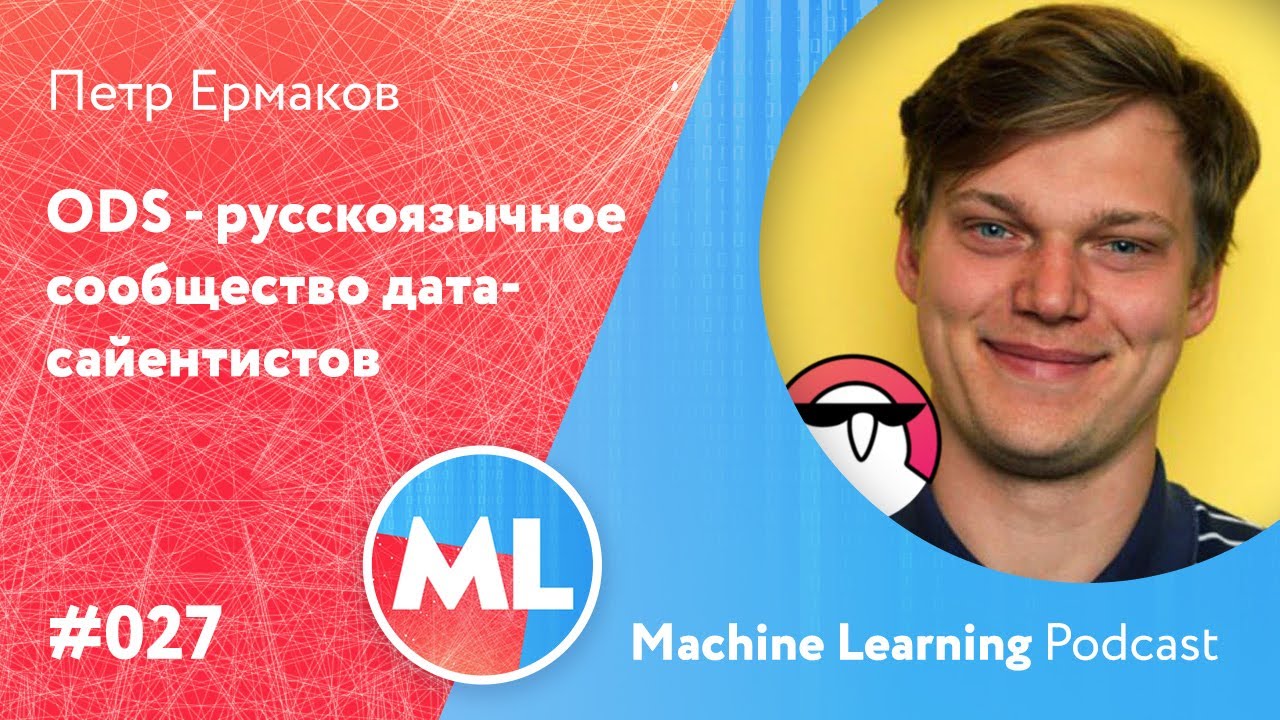
#027 ML Петр Ермаков. ODS - русскоязычное сообщество дата-сайентистов
#027 ML Petr Ermakov. ODS - Russian-speaking data scientist community
Keywords
Summary
168 words
Critical Evaluation
Value of the Information & Strength of the Argument
The episode offers valuable insider knowledge about the ODS community, including its rarely discussed origin story, cultural norms, and operational details. Pyotr’s arguments are grounded in personal experience, which lends authenticity but also introduces subjectivity. He effectively illustrates the community’s spirit through anecdotes, yet the lack of external data or counterpoints limits the argumentative strength. The discussion provides practical takeaways for anyone interested in joining a data science community, making it valuable for career development.
Scientific Rigor, Source Quality, Title Accuracy
Scientific rigour is moderate; the content relies on testimony and informal sources, with no formal references or empirical analysis. The quality of sources is acceptable for an interview format, as it draws on the guest’s direct involvement. The title is fully appropriate and accurately reflects the episode’s focus. The absence of structured citations or verification means the information should be treated as an anecdotal account rather than peer-reviewed knowledge.
159 words
Title / Content Match
The title accurately describes the episode's focus on the ODS community and Pyotr Ermakov's role in it.
Quality & Reliability
7/10
Interview with a co-founder of ODS providing firsthand account of the community's history, culture, and practices. Rich in personal anecdotes but subjective and not peer-reviewed.
Key Moments
Markers derived by PSI from the transcript: the creator did not define chapters.
- Introduction of Pyotr Ermakov and the episode's theme.
- Pyotr's background: early programming interests and education.
- Transition to data science at HeadHunter and building the DS team.
- Origins of ODS: from Data Mining Clubs to Slack and open community.
- ODS culture: toxicity, self-organization, and mutual help.
- Key milestones: first DataFest, Dota Science competition, and meetup takeover.
- Community rules and channels: job postings, salary transparency, and advice for newcomers.
Cited Sources
- Open Data Science community — The main website of the ODS community, referenced as the hub for discussion and resources.
- Lessons from participating in the Dota Science hackathon at Data Fest 2 — Habr article described by Pyotr as covering insights from the Dota Science competition.
- DataGym school of machine learning — Pyotr's own machine learning school, mentioned as his initiative.
- Pyotr's Telegram channel (Power of Data) — Telegram channel shared by Pyotr for further data science content.
- This episode on Anchor — Direct link to this podcast episode on Anchor FM.
- All episodes on Anchor — Anchor FM page listing all episodes of the Machine Learning Podcast.
- Podcast on Apple Podcasts — Apple Podcasts distribution for the show.
- Podcast on Google Podcasts — Google Podcasts feed for the podcast.
- Podcast on Yandex Music — Yandex Music listing for the podcast.
- Telegram channel 'Become a machine learning specialist' — Recommended Telegram channel for those learning machine learning.
- Podcast VK page — VK community page for the podcast.
Contribution & Novelties
The video provides a rare insider perspective on the formation and evolution of the Open Data Science community, including candid details about its culture, moderation, and key events. It offers practical advice for community participation, such as how to navigate toxicity and contribute effectively. The originality lies in the firsthand narrative, which is largely undocumented in structured form elsewhere.
Pour aller plus loin :
- Community of practice - Wikipedia — Relevant concept for understanding the dynamics of groups like ODS.
- Data science - Wikipedia — Core field that the community focuses on.
- Open Data Science community — The community itself for direct engagement and further resources.
106 words
Radar Profile
The radar profile shows high quantity of information (8) but moderate quality (7) and low technical depth (4), reflecting an anecdotal, experience-based interview. Reliability is moderate (7), indicating a credible but subjective account. Overall, the episode is informative for community insight but not for technical learning.