Arthur C. Clarke's Forgotten Cosmic Horror | The Nine Billion Names of God
Keywords
Summary
182 words
Critical Evaluation
Value of the Information & Strength of the Argument
The video offers a thoughtful and engaging analysis of Clarke’s story, effectively conveying its thematic depth and emotional impact. Quinn’s argumentation is coherent, tracing the narrative’s progression and highlighting key moments that support his interpretation. He successfully argues that the story’s power lies in its subversion of the reader’s expectations, aligning with the monks’ perspective rather than the engineers’. The discussion of technology as an accelerator of fate is particularly insightful, drawing parallels to real-world unintended consequences. However, the analysis is primarily descriptive and interpretive, lacking engagement with broader literary criticism or historical context, which limits its scholarly value.
Scientific Rigor, Source Quality, Title Accuracy
The video demonstrates a solid understanding of Clarke’s work and accurately summarizes the story. The creator’s interpretations are grounded in the text, and he appropriately credits Clarke as the author. However, the video does not cite external sources or scholarly analyses, relying solely on the creator’s commentary. The title is appropriate, though ‘Forgotten’ may be misleading as the story is well-known. Overall, the video is reliable for its intended purpose of introducing and analyzing the story, but it does not offer a rigorous academic critique.
199 words
Title / Content Match
The title accurately reflects the content, focusing on Clarke's story and its cosmic horror elements, though the 'Forgotten' descriptor is somewhat subjective given the story's fame.
Quality & Reliability
8/10
The video provides a faithful and insightful analysis of Clarke's short story, accurately summarizing the plot and themes. The creator demonstrates familiarity with the source material and situates it within Clarke's broader work. However, the analysis is interpretive and does not engage with external scholarly sources, limiting its depth as a critical study.
Key Moments
Markers derived by PSI from the transcript: the creator did not define chapters.
- Introduction to Arthur C. Clarke and his significance in science fiction.
- Overview of Clarke's style and themes, including his blend of science and mysticism.
- Introduction to the short story 'The Nine Billion Names of God' and its premise.
- Plot summary: engineers George and Chuck install a computer at a Tibetan monastery.
- Explanation of the monks' task and their belief that listing God's names will end the universe.
- Chuck's reaction to the monks' beliefs and his fear of the consequences.
- The final scene: the engineers leave and the stars begin to go out.
- Analysis of the ending's quiet, understated horror and its thematic implications.
- Discussion of the clash between faith and skepticism in the story.
- Reflection on the story's themes of technology accelerating fate and its lasting impact.
Cited Sources
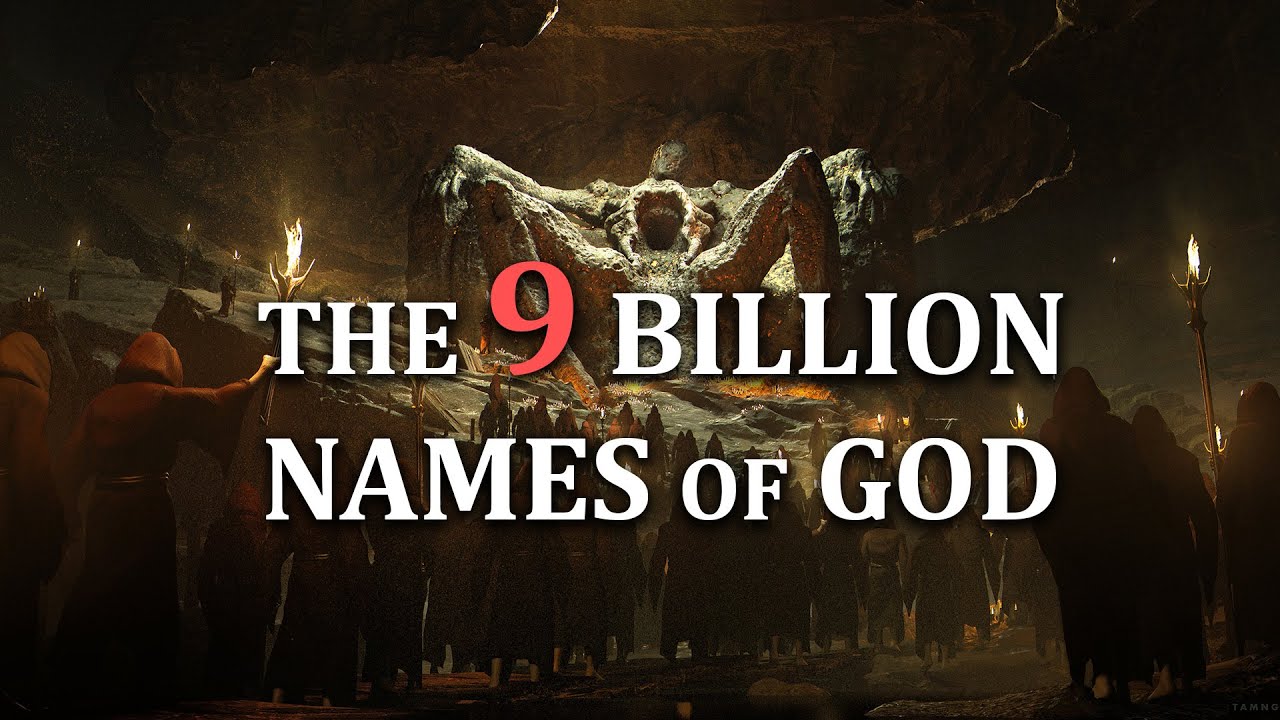
- Artwork for the video — The artwork used in the video, likely depicting the story's themes.
- Quinn's Website — The creator's personal website with information about his work.
- Quinn's Shop — The creator's shop for purchasing his books and merchandise.
- Quinn's Graphic Novel — The creator's graphic novel, mentioned in the description.
- Quinn's Subreddit — Community subreddit for the channel.
- H.P. Lovecraft Playlist — Playlist of videos about H.P. Lovecraft, related to cosmic horror.
- Dune Playlist — Playlist of videos about Dune, another science fiction series.
- Foundation Playlist — Playlist of videos about Isaac Asimov's Foundation series.
- Hyperion Playlist — Playlist of videos about the Hyperion series.
- Three-Body Playlist — Playlist of videos about the Three-Body Problem series.
Concurring Sources
- The Nine Billion Names of God (Wikipedia) — Provides plot summary and analysis consistent with the video's interpretation.
- Arthur C. Clarke (Wikipedia) — Confirms Clarke's status as a major science fiction writer and his themes.
Contribution & Novelties
The video provides a clear and accessible introduction to Clarke’s short story, highlighting its thematic depth and its place within the cosmic horror subgenre. It offers a fresh perspective by emphasizing the story’s quiet, understated ending as a key element of its horror, contrasting with more explosive depictions of apocalypse. The analysis of technology as an accelerator of fate is a valuable insight, connecting the story to contemporary concerns about unintended consequences of innovation.
Pour aller plus loin :
- The Nine Billion Names of God (Wikipedia) — Provides background on the story’s publication and reception.
- Arthur C. Clarke (Wikipedia) — Overview of Clarke’s life and works.
- Cosmicism (Wikipedia) — Related literary philosophy emphasizing the insignificance of humanity.
- The Last Question by Isaac Asimov — A similar story about the end of the universe, recommended in the video.
137 words
Radar Profile
The radar profile shows high scores in quality and reliability, reflecting the video's accurate and insightful analysis. The lower score in technical level indicates that the content is accessible and not highly specialized, which is appropriate for a general audience. Overall, the video is well-balanced, offering both informative and engaging content.
💬 Très positif. Sur les 30 commentaires analysés, la grande majorité exprime une profonde appréciation pour l'analyse et la narration, partageant des souvenirs personnels liés à l'histoire et soulignant son impact émotionnel durable.