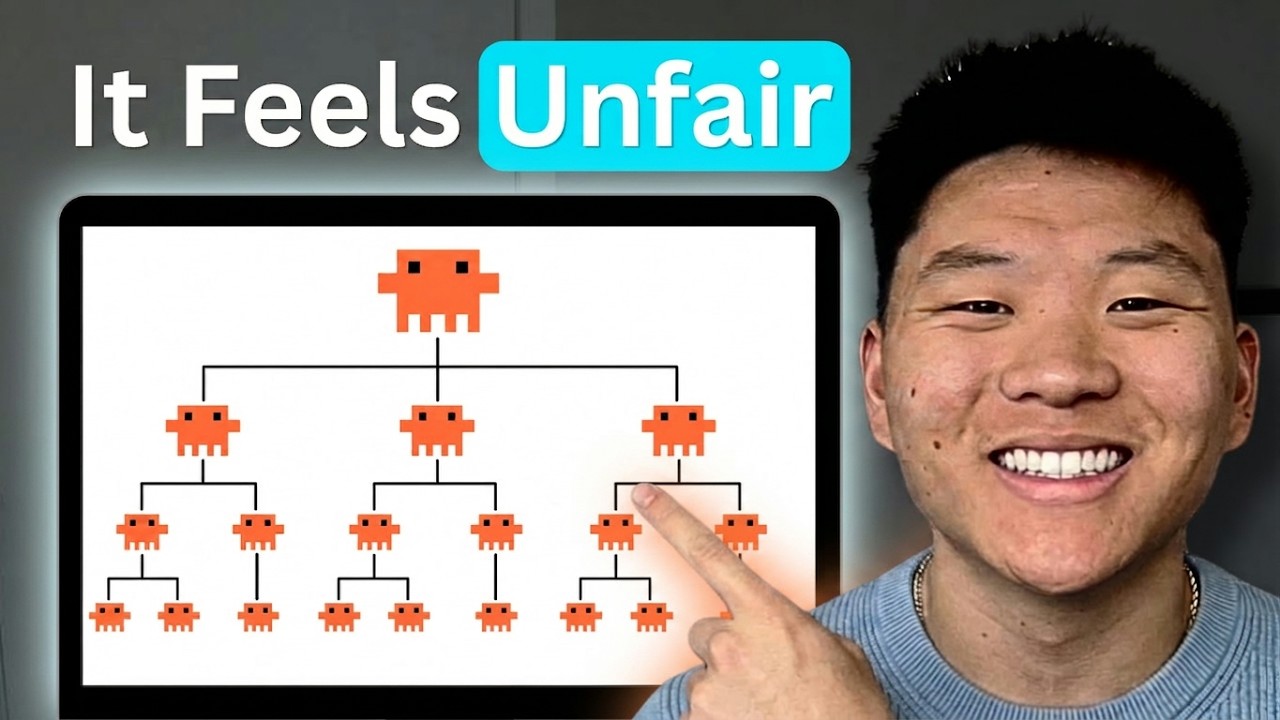
How to Build Claude Subagents Better Than 99% of People
Keywords
Summary
161 words
Critical Evaluation
Value of the Information & Strength of the Argument
The video provides high practical value for users of Claude Code, offering clear, actionable guidance on a feature that is often underutilized. The author’s arguments are supported by live demonstrations and personal experience, making the information credible and relatable. He effectively explains the benefits of subagents, such as context preservation, cost savings, and specialization, and provides concrete examples of how to implement them. The reasoning is logical and well-structured, though it relies on anecdotal evidence rather than formal research.
Scientific Rigor, Source Quality, Title Accuracy
The video is a practical tutorial with no formal citations, but it references the Claude Code documentation and a GitHub repository for subagents. The author’s approach is empirical, based on his own testing and usage. The title accurately reflects the content, which is focused on building and using subagents effectively. The video’s rigor is moderate; while it offers valuable insights, it lacks external validation and relies on the author’s authority as an experienced user.
168 words
Title / Content Match
The title accurately reflects the content, which focuses on building and using Claude subagents effectively.
Quality & Reliability
7/10
The video is a practical tutorial based on the author's direct experience with Claude Code. It demonstrates real-world usage and provides actionable advice, but it lacks formal citations or references to official documentation, relying instead on anecdotal evidence and personal workflow.
Chapters
Cited Sources
- Claude Code Subagents Documentation — Referenced as the official documentation for configuring subagents.
- Awesome Claude Code Subagents (GitHub) — Mentioned as a repository with pre-built subagents.
Concurring Sources
- Claude Code documentation — Official documentation that aligns with the video's explanations of subagents and skills.
External References
Contribution & Novelties
The video offers a practical, hands-on approach to using Claude Code subagents, going beyond basic explanations to show real-world implementation and iteration. It provides a clear framework for thinking about subagents as specialists and emphasizes the importance of progressive disclosure and YAML front matter tuning.
Pour aller plus loin :
- Claude Code documentation — Official documentation for Claude Code features.
- Prompt engineering guide — Comprehensive guide on prompt engineering techniques.
- Anthropic’s model overview — Information on Claude models and their capabilities.
81 words
Radar Profile
The radar profile shows high scores in information quantity and technical level, indicating a content-rich tutorial. The lower scores in reliability and quality suggest a reliance on anecdotal evidence rather than formal sources, which is typical for practical tutorials.
💬 Sur les 0 commentaires analysés, aucune tendance n'est disponible.