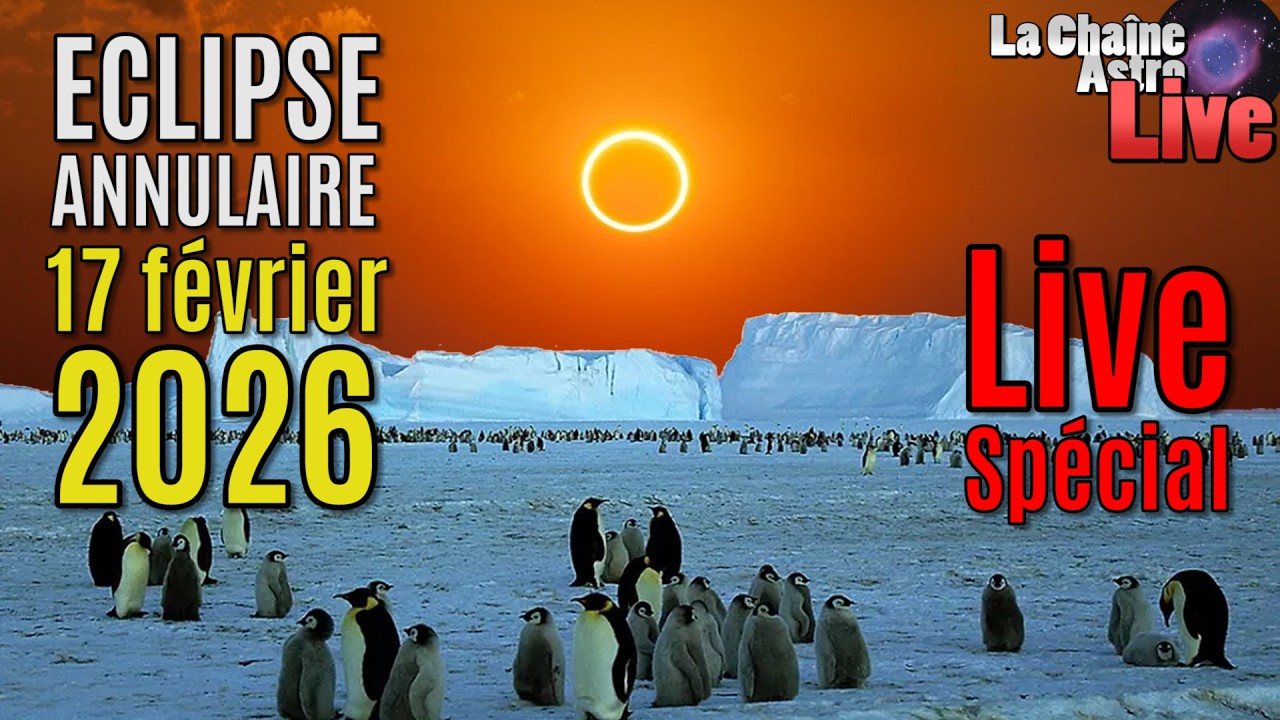
ECLIPSE SOLAIRE en LIVE! 17fév26!!!
Keywords
Summary
175 words
Critical Evaluation
Value of the Information & Strength of the Argument
The video offers valuable real-time coverage of a rare astronomical event, combining multiple observational sources. The host’s explanations about the eclipse’s mechanics, satellite imagery, and the behavior of solar observation equipment are informative. The argumentation is solid, relying on direct observations and simulations, though the live format introduces variability. The inclusion of remote observers adds depth, but the lack of a direct view of the eclipse limits the visual payoff.
Scientific Rigor, Source Quality, Title Accuracy
The scientific rigor is moderate: the host uses credible tools like satellite data and simulations, but the reliance on amateur equipment and live conditions introduces potential inaccuracies. Sources cited include the Himawari-8 satellite, Meteosat-9, and Antarctic base webcams, all legitimate. The title accurately describes the content, though ‘LIVE’ might overpromise given the indirect viewing. The description provides links to community and equipment, but no formal scientific references.
152 words
Title / Content Match
The title accurately reflects the live eclipse coverage, though the 'LIVE' emphasis is somewhat misleading as the eclipse itself is not directly visible.
Quality & Reliability
7/10
The live stream provides real-time observations and simulations of a solar eclipse, with technical explanations and multiple webcam feeds. The content is informative but relies on amateur equipment and live conditions, limiting precision.
Key Moments
Markers derived by PSI from the transcript: the creator did not define chapters.
- Introduction and technical setup, weather concerns at Casey Station.
- Discussion of satellite imagery and simulation of eclipse path.
- Live solar views in H-alpha from remote observers, showing prominences.
- Explanation of sun's motion in southern hemisphere and webcam saturation.
- Timelapse of Antarctic bases over months, illustrating seasonal illumination.
- Simulation of eclipse shadow on Mawson base, expected first impact.
- Q&A with chat, technical adjustments, and coordination of remote feeds.
- Continued observation attempts, cloud cover challenges.
- Discussion of eclipse visibility from Madagascar and Réunion.
- Final updates and wrap-up of live coverage.
Cited Sources
- Univers Astro (affiliate link) — Mentioned as a support link for the channel.
- Carnets astro (YouTube channel) — Recommended channel for astronomy content.
- Enastros Astronomie (YouTube channel) — Recommended channel for astronomy content.
- La Chaine Astro playlists — Link to channel's playlists for further learning.
- Jean-Luc Dauvergne (YouTube channel) — Recommended channel for astronomy content.
- Big Universe (YouTube channel) — Recommended channel for astronomy content.
- Quel télescope choisir? (video) — Referenced as a guide for telescope selection.
- 18 formations 100% gratuites pour apprendre l'astronomie (video) — Referenced as free astronomy tutorials.
- Comment gérer intelligemment votre budget astro (video) — Referenced as a guide for managing astronomy budget.
Concurring Sources
- Solar eclipse — General information on solar eclipses aligns with the video's content.
- Himawari 8 — The satellite used in the video for Earth imagery is documented.
- Meteosat — The satellite series used for weather imagery is documented.
Contribution & Novelties
The video provides a unique real-time coverage of an Antarctic solar eclipse using multiple webcam feeds and satellite imagery, offering an educational perspective on the event. It demonstrates the practical challenges of live astronomy broadcasting and the use of simulations to visualize eclipse paths.
Pour aller plus loin :
- Solar eclipse — Overview of solar eclipse mechanics and types.
- Himawari 8 — Information on the geostationary satellite used for Earth imagery.
- Meteosat — Details on the European meteorological satellite series.
- H-alpha telescope — Explanation of solar observation in H-alpha wavelength.
- Antarctic bases — List of research stations in Antarctica, including Casey, Davis, and Mawson.
104 words
Radar Profile
The radar profile shows balanced scores across information quantity, quality, technical level, and reliability, indicating a moderately high-quality educational stream. The technical level is slightly lower due to the live format's limitations, but the overall reliability is solid.
💬 No comments were provided for analysis.