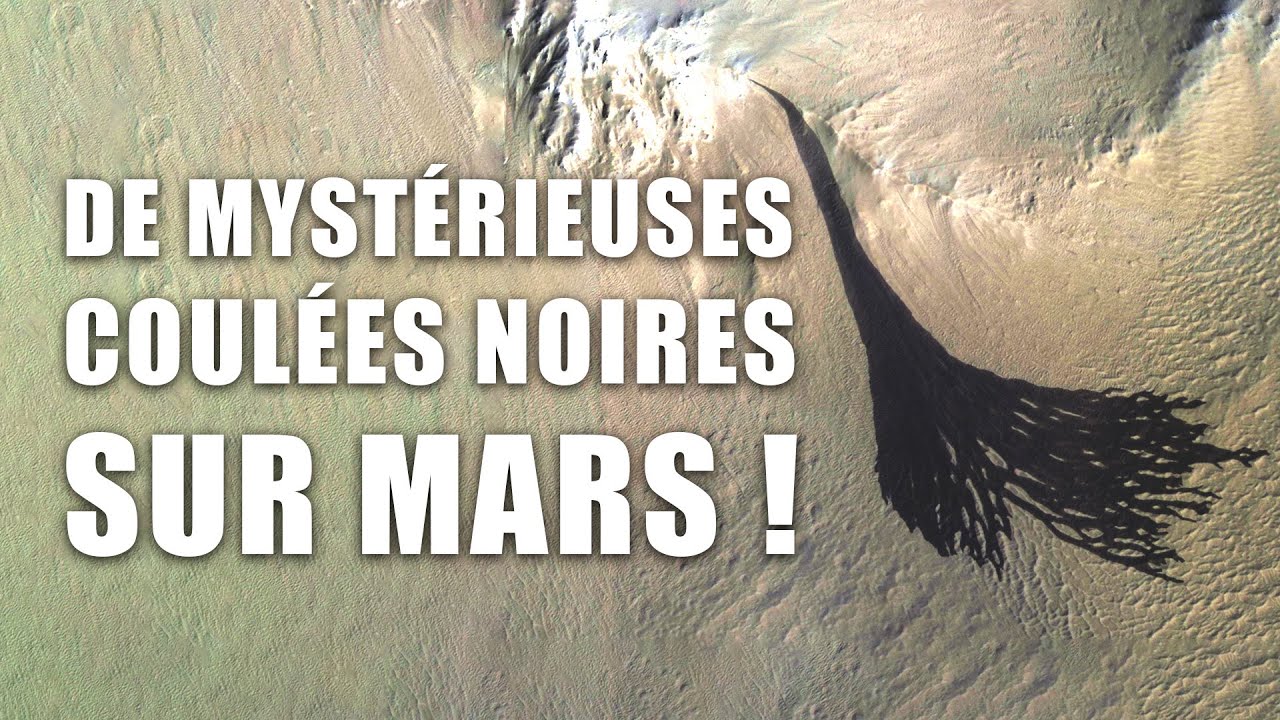
De mystérieuses coulées noires sur Mars continuent d'intriguer les scientifiques !
Keywords
Summary
142 words
Critical Evaluation
Value of the Information & Strength of the Argument
The video provides substantial value by synthesizing the current scientific understanding of Martian slope streaks. It presents the two main hypotheses (liquid brine vs. dry granular flow) with their supporting evidence and limitations, and introduces a plausible hybrid model. The argumentation is solid, as it systematically compares the hypotheses against observed features such as seasonality, slope angle, morphology, and lack of debris accumulation. The video also highlights the importance of planetary protection, adding an ethical dimension. The reasoning is logical and avoids overstating claims, acknowledging uncertainties and the need for future exploration.
Scientific Rigor, Source Quality, Title Accuracy
The video demonstrates scientific rigor by referencing credible sources, including NASA press releases and JPL news articles, which are listed in the description. It accurately represents the scientific debate and the evolution of interpretations. The title is appropriate and not sensationalist, matching the content’s focus on the ongoing mystery. The video does not overstate the evidence and clearly distinguishes between confirmed findings and hypotheses. The inclusion of multiple perspectives and the mention of the 2017 alternative explanation show a balanced approach. Overall, the sources are reliable and the content is well-aligned with the title.
201 words
Title / Content Match
The title accurately reflects the content, focusing on the ongoing mystery and scientific intrigue surrounding Martian dark streaks.
Quality & Reliability
8/10
The video presents a balanced overview of the scientific debate on Martian slope streaks, citing NASA and JPL sources, and clearly distinguishes between confirmed facts and hypotheses.
Key Moments
Markers derived by PSI from the transcript: the creator did not define chapters.
- Introduction to Mars' arid landscape and the mystery of dark streaks.
- NASA's 2015 announcement of liquid water on Mars and the role of perchlorates.
- Discovery of the streaks by HiRISE in 2011 and their seasonal behavior.
- The dry avalanche hypothesis and its supporting evidence.
- Critique of the dry hypothesis and the hybrid model combining salts and dry flows.
- Astrobiological implications and the possibility of microbial life.
- Planetary protection concerns and the role of future drones in exploration.
Cited Sources
- NASA Confirms Evidence That Liquid Water Flows on Today’s Mars — NASA press release announcing the 2015 detection of hydrated minerals in slope streaks.
- HiRISE Science - 2011 August 4 — HiRISE page describing the discovery of recurring slope lineae.
- Recurring Martian Streaks: Flowing Sand, Not Water? — JPL news article presenting the dry granular flow hypothesis.
Concurring Sources
- NASA Confirms Evidence That Liquid Water Flows on Today’s Mars — Supports the liquid water hypothesis with the detection of hydrated minerals.
- Recurring Martian Streaks: Flowing Sand, Not Water? — Supports the dry granular flow hypothesis, presenting an alternative explanation.
Dissenting Sources
- Recurring Martian Streaks: Flowing Sand, Not Water? — This source contradicts the liquid water hypothesis by arguing that the streaks are dry flows, based on morphological and slope angle evidence.
External References
Contribution & Novelties
The video offers a comprehensive and up-to-date synthesis of the scientific debate on Martian slope streaks, effectively communicating the complexity and the current state of research. It goes beyond simple reporting by critically evaluating the evidence for each hypothesis and introducing the hybrid model, which is a nuanced perspective. The discussion of planetary protection and future drone exploration adds original value, framing the topic within broader astrobiological and exploration contexts.
Pour aller plus loin :
- Recurring slope lineae — Wikipedia article providing background and references on RSL.
- Perchlorate on Mars — Wikipedia section on perchlorates and their role in Martian brines.
- Planetary protection — Wikipedia article on the policies to prevent contamination of celestial bodies.
115 words
Radar Profile
The radar profile shows high scores across all dimensions, indicating a well-rounded and reliable video. The strong scores in information quantity and quality reflect the comprehensive coverage and use of credible sources. The technical level is appropriate for a general audience while maintaining scientific accuracy.
💬 Très positif. Sur les 30 commentaires analysés, les spectateurs expriment un fort enthousiasme pour la qualité de la vidéo, sa clarté et son intérêt scientifique, avec quelques remarques humoristiques et des références culturelles.