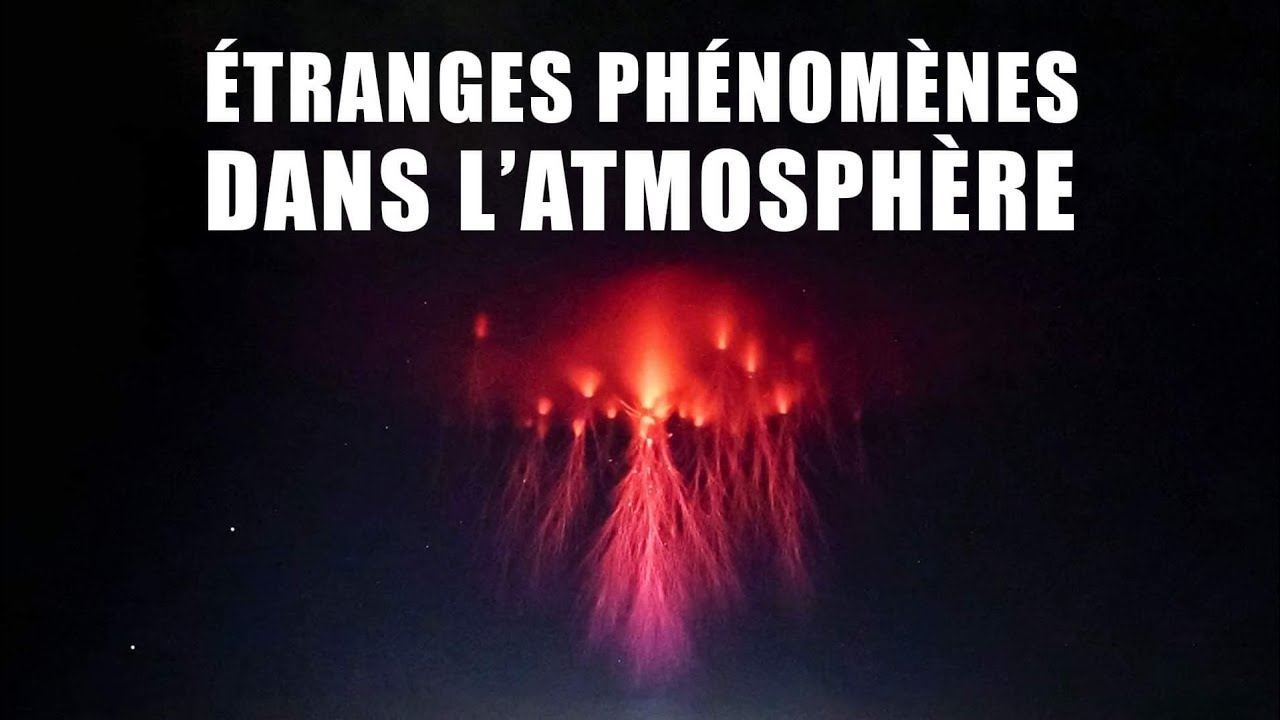
Ces ÉTRANGES phénomènes LUMINEUX filmés dans notre ATMOSPHÈRE !
Keywords
Summary
214 words
Critical Evaluation
Value of the Information & Strength of the Argument
The video provides a comprehensive overview of TLEs, covering their discovery, classification, scientific importance, and future research directions. It effectively uses infographics and animations to illustrate complex concepts, making the information accessible. The argumentation is solid, relying on established scientific knowledge and recent observations. The host presents the information in a logical flow, from historical context to current research and future prospects. However, the video could benefit from more in-depth explanations of the physical mechanisms and the specific instruments used, as it sometimes glosses over technical details.
Scientific Rigor, Source Quality, Title Accuracy
The video demonstrates strong scientific rigor by citing multiple credible sources, including ESA, NASA, and peer-reviewed articles from journals like Springer and ScienceDirect. The sources are directly relevant to the topic and support the claims made. The title accurately reflects the content, though it uses sensational language (‘ÉTRANGES’, ‘filmés’) that may overstate the mystery, but the content itself is factual and well-researched. The video also mentions the loss of the TARANIS satellite, providing context on the challenges of space missions. Overall, the sources are reliable and the title-content alignment is good, with only a minor discrepancy in tone.
200 words
Title / Content Match
The title accurately reflects the content, focusing on strange luminous phenomena in the atmosphere, though it uses a clickbait style with capital letters and exclamation mark.
Quality & Reliability
8/10
The video presents scientifically accurate information about transient luminous events (TLEs), referencing multiple credible sources including ESA, NASA, and peer-reviewed articles. The content is well-structured and up-to-date, though it lacks in-depth technical detail and some claims are simplified for a general audience.
Key Moments
Markers derived by PSI from the transcript: the creator did not define chapters.
- Introduction to TLEs and the TARANIS satellite loss
- Explanation of TLE discovery and challenges in studying them
- Classification of TLEs: gnomes, blue jets, sprites, elves
- The mysterious Columbia TLE observation in 2003
- Mechanisms behind TLEs and their link to lightning
- Future research with CubeSats and conclusion
Cited Sources
- ESA - Chasse aux sylphes et aux elfes sur l'ISS — Source for TLE observations from the ISS
- Springer - Article on TLEs — Peer-reviewed article on TLEs
- ScienceDirect - Article on TLEs — Peer-reviewed article on TLEs
- AGU - Journal of Geophysical Research — Peer-reviewed article on TLEs
- NASA - Firefly Mission to Study Lightning — NASA mission related to TLEs
Concurring Sources
- ESA - Chasse aux sylphes et aux elfes sur l'ISS — Confirms TLE observations from ISS
- NASA - Firefly Mission to Study Lightning — Supports the use of CubeSats for TLE research
External References
Contribution & Novelties
The video provides a clear and engaging synthesis of current knowledge on TLEs, highlighting recent observations and the loss of the TARANIS satellite. It emphasizes the diversity of TLEs and the ongoing research efforts, including the use of CubeSats. The video also touches on the potential link between TLEs and UFO sightings, adding a speculative but intriguing angle.
Pour aller plus loin :
- Transient Luminous Events - Wikipedia — Comprehensive overview of TLEs.
- Sprites (lightning) - Wikipedia — Detailed information on sprites.
- Elves (lightning) - Wikipedia — Information on elves.
- TARANIS satellite - Wikipedia — Details on the TARANIS mission.
- ASIM - Wikipedia — Information on the ASIM instrument.
109 words
Radar Profile
The radar profile shows high scores in information quantity and quality, with a moderate technical level. This indicates a well-balanced video that is informative and reliable, but not overly technical, making it suitable for a general audience interested in atmospheric phenomena.
💬 Très positif. Sur les 30 commentaires analysés, les spectateurs expriment un fort enthousiasme pour le sujet et la qualité de la vidéo, avec des remerciements et des demandes de sujets similaires.