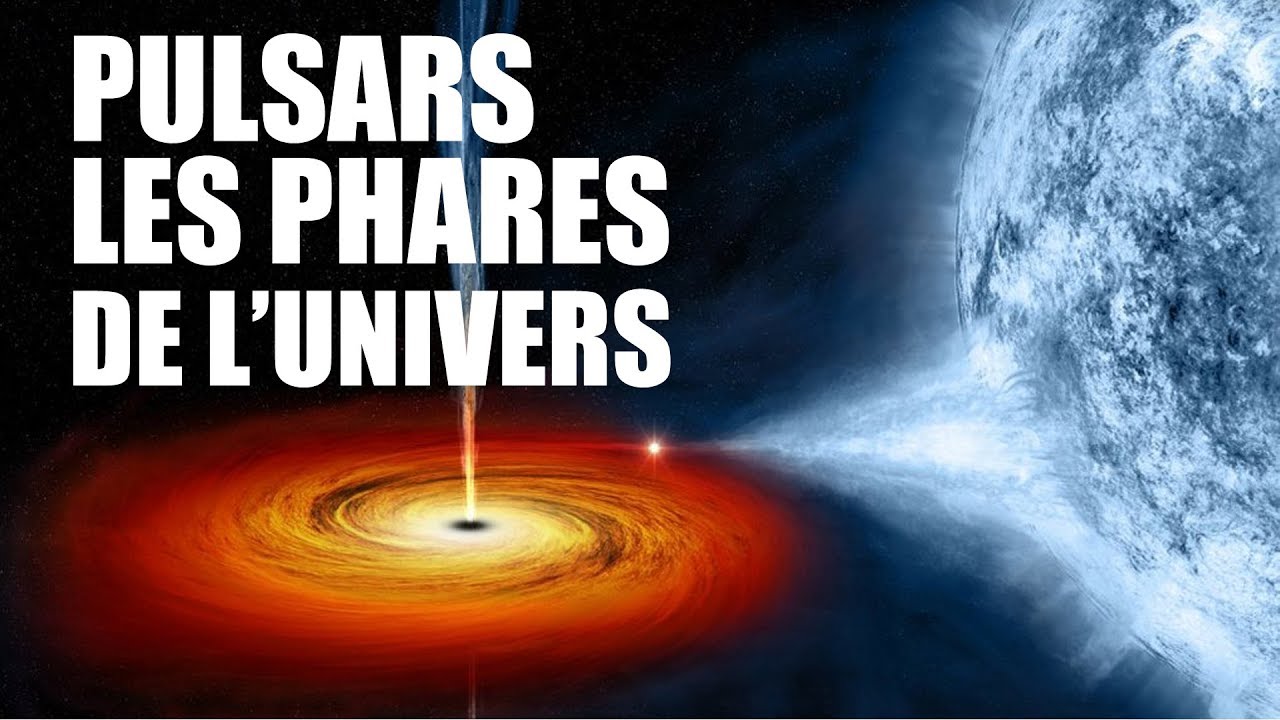
PULSARS : Les phares de l'univers - LDDE
Keywords
Summary
125 words
Critical Evaluation
Value of the Information & Strength of the Argument
The video offers substantial educational value, presenting complex astrophysical concepts in an accessible yet accurate manner. It builds a logical narrative from the discovery of pulsars to their underlying physics and broader implications. The argumentation is solid, relying on established scientific facts and theories, and it effectively uses analogies (e.g., lighthouse beam) to aid understanding. The inclusion of recent discoveries and ongoing research questions adds depth and encourages further curiosity.
Scientific Rigor, Source Quality, Title Accuracy
The video demonstrates strong scientific rigor by referencing reputable sources such as NASA, ESA, and Space.com. The information is presented with appropriate nuance, acknowledging uncertainties in areas like the internal structure of neutron stars. The title accurately reflects the content, which focuses on pulsars as cosmic beacons. The video maintains a clear focus and avoids sensationalism, contributing to its credibility.
145 words
Title / Content Match
The title accurately reflects the content, which focuses on pulsars as cosmic beacons, explaining their nature, formation, and significance.
Quality & Reliability
8/10
The video presents a well-structured and accurate overview of pulsars, based on established astrophysical knowledge and citing reliable sources such as NASA and ESA. The information is up-to-date as of 2018 and aligns with scientific consensus. Minor simplifications are made for a general audience, but no significant errors or misleading claims were identified.
Key Moments
Markers derived by PSI from the transcript: the creator did not define chapters.
- Introduction to the video and announcement of Jocelyn Bell Burnell's award.
- Discovery of the first pulsar by Jocelyn Bell Burnell in 1967.
- Explanation of neutron star formation from supernovae.
- Description of neutron star properties: density, gravity, rotation, and magnetic fields.
- Mechanism of pulsar emission: the lighthouse effect.
- Types of pulsars: accretion-powered and magnetars.
- Pulsars as tools: navigation and clocks, and conclusion.
Cited Sources
- Neutron Stars and Pulsars - NASA Imagine the Universe — Source for general information on neutron stars and pulsars.
- Pulsars: The Universe's Lighthouses - Space.com — Source for pulsar facts and characteristics.
- The Brightest, Furthest Pulsar in the Universe - ESA Science — Source for the record-breaking pulsar mentioned in the video.
- Pulsar Map - PBS The Farthest — Source for the pulsar map used on space probes.
- ESO Copyright — Source for image credits.
Concurring Sources
- NASA - Neutron Stars — General information on neutron stars and their formation.
External References
Contribution & Novelties
The video provides a clear and engaging synthesis of pulsar science, making it accessible to a broad audience while maintaining scientific accuracy. It highlights the historical context and recent discoveries, such as the most energetic pulsar found, and explains the different classes of pulsars. The video also touches on the practical applications of pulsars, which is often overlooked in popular science content.
Pour aller plus loin :
- Pulsar - Wikipedia — Comprehensive overview of pulsars, including types and research history.
- Neutron star - Wikipedia — Detailed article on neutron stars, their properties, and structure.
- Jocelyn Bell Burnell - Wikipedia — Biography of the discoverer of pulsars.
- Gravitational wave - Wikipedia — Explanation of gravitational waves, relevant to the binary pulsar evidence mentioned.
122 words
Radar Profile
The radar profile shows a balanced performance across all dimensions, with slightly lower scores in technical depth and information quantity, reflecting the video's focus on accessibility rather than exhaustive detail. The high reliability and quality scores indicate a trustworthy and well-presented educational content.
💬 Très positif. Sur les 30 commentaires analysés, l'immense majorité exprime une gratitude et une admiration sincères pour la qualité pédagogique et la beauté des vidéos, certains allant jusqu'à dire que la chaîne a transformé leur intérêt pour l'astronomie.