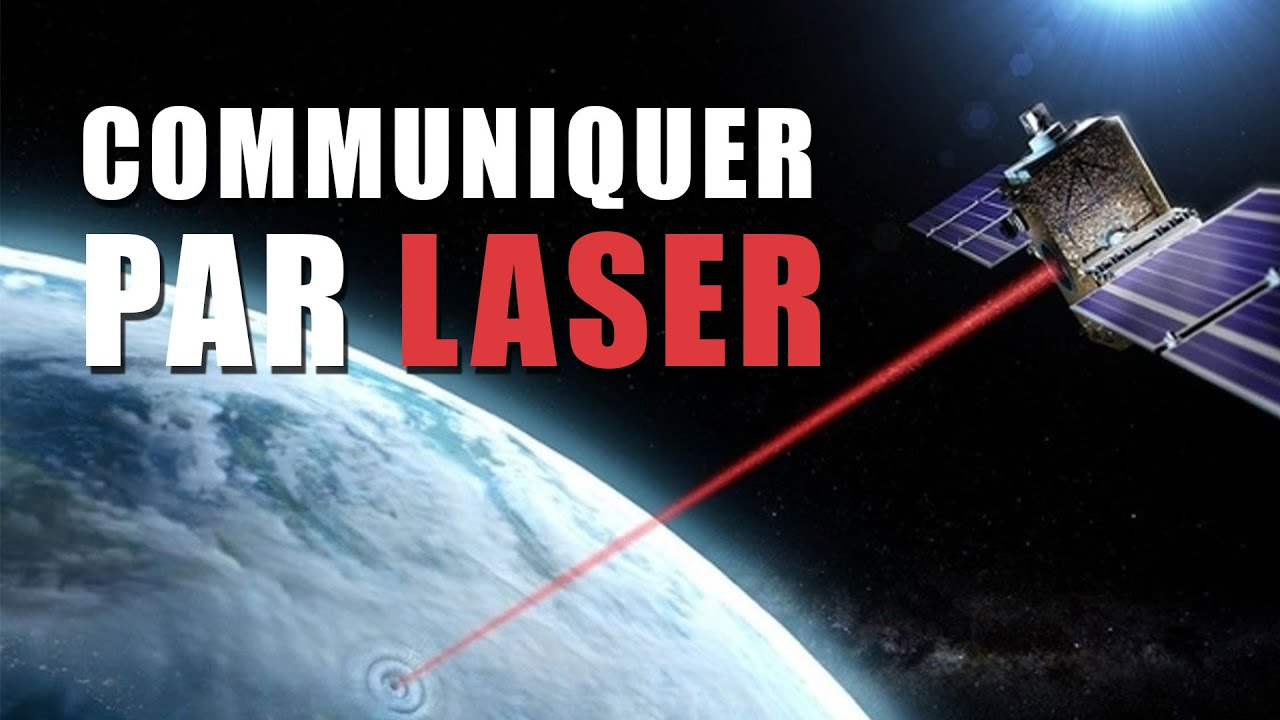
Des LASERS pour communiquer dans L'ESPACE – LDDE
Keywords
Summary
172 words
Critical Evaluation
Value of the Information & Strength of the Argument
The video provides a comprehensive and well-structured overview of laser communication in space. It effectively argues for the advantages of laser over radio, using concrete examples and data (e.g., data rates, mission examples). The argumentation is logical, progressing from the limitations of current technology to the potential of laser, and then to real-world implementations and future prospects. The video also presents a balanced view by acknowledging the technical challenges, which strengthens its credibility. The use of visual aids and clear explanations makes the content accessible without oversimplifying the science.
Scientific Rigor, Source Quality, Title Accuracy
The video demonstrates strong scientific rigor by referencing reputable sources such as NASA, ESA, and JPL. The sources are listed in the description, allowing viewers to verify the information. The content is accurate and up-to-date as of 2020, with no major errors or misleading claims. The title accurately reflects the content, and the video stays on topic throughout. The presentation is professional and well-researched, with a clear structure that enhances understanding.
175 words
Title / Content Match
The title accurately reflects the content, which focuses on the use of lasers for space communications.
Quality & Reliability
8/10
The video presents a well-structured overview of laser communication in space, supported by credible sources (NASA, ESA, JPL) and recent examples. The information is accurate and up-to-date as of 2020, with clear explanations of technical concepts. Minor simplifications for a general audience do not undermine the overall reliability.
Key Moments
Markers derived by PSI from the transcript: the creator did not define chapters.
- Introduction to the topic and comparison with radio communications.
- Explanation of the advantages of laser communication: high data rates, low dispersion, and security.
- Discussion of the challenges: pointing accuracy, atmospheric interference, and power requirements.
- Historical overview: early experiments (ETS-6, Artemis) and the European Data Relay System (EDRS).
- Future applications: Deep Space Optical Communications, lunar missions (Artemis, Blue Moon), and Starlink.
- Conclusion: laser communication will complement but not replace radio, enabling new capabilities.
Cited Sources
- NASA - Laser Communications Relay Demonstration (LCRD) — Referenced as a source for NASA's laser communication projects.
- ESA - Laser Communications (EDRS) — Referenced for the European Data Relay System and laser communication technology.
- Mynaric - Why Laser Communication is the Only Choice for Constellation Builders — Referenced for the advantages of laser communication in satellite constellations.
- ResearchGate - Key Challenges in Establishing Laser Space Communication Standards — Referenced for challenges and standards in laser space communication.
- JPL - Deep Space Optical Communication (DSOC) — Referenced for NASA's Deep Space Optical Communications project.
- NASA - Mona Lisa Transmitted to Lunar Reconnaissance Orbiter — Referenced for the 2013 lunar laser communication experiment.
Concurring Sources
- NASA - Laser Communications Relay Demonstration (LCRD) — Supports the claim that laser communication is being developed by NASA.
- ESA - Laser Communications (EDRS) — Confirms the existence and purpose of the EDRS system.
- JPL - Deep Space Optical Communication (DSOC) — Supports the information about NASA's DSOC project.
Dissenting Sources
- No discordant sources found — All cited sources are consistent with the video's content.
External References
Contribution & Novelties
The video provides a clear and accessible synthesis of laser communication in space, covering both technical aspects and recent missions. It stands out for its balanced treatment of advantages and challenges, and for connecting historical experiments to future projects like Starlink and Artemis. The video adds value by explaining complex concepts in an engaging manner, making it a useful resource for those new to the topic.
Pour aller plus loin :
- Laser communication in space - Wikipedia — Overview of the technology and its applications.
- European Data Relay System - ESA — Details on the EDRS program.
- Deep Space Optical Communications - NASA — Information on NASA’s DSOC project.
- Lunar Laser Communication Demonstration - NASA — Details on the 2013 lunar laser communication experiment.
- Starlink - Wikipedia — Overview of SpaceX’s satellite constellation and its laser inter-satellite links.
138 words
Radar Profile
The radar profile shows high scores in information quantity, quality, technical level, and reliability, indicating a well-rounded and informative video. The balance between technical depth and accessibility is reflected in the scores, with a slight emphasis on information quality and reliability.
💬 Très positif. Sur les 30 commentaires analysés, tous expriment une appréciation très positive, louant la qualité de la vulgarisation, la richesse des informations et le travail de recherche. Aucun commentaire négatif ou critique n'a été relevé.