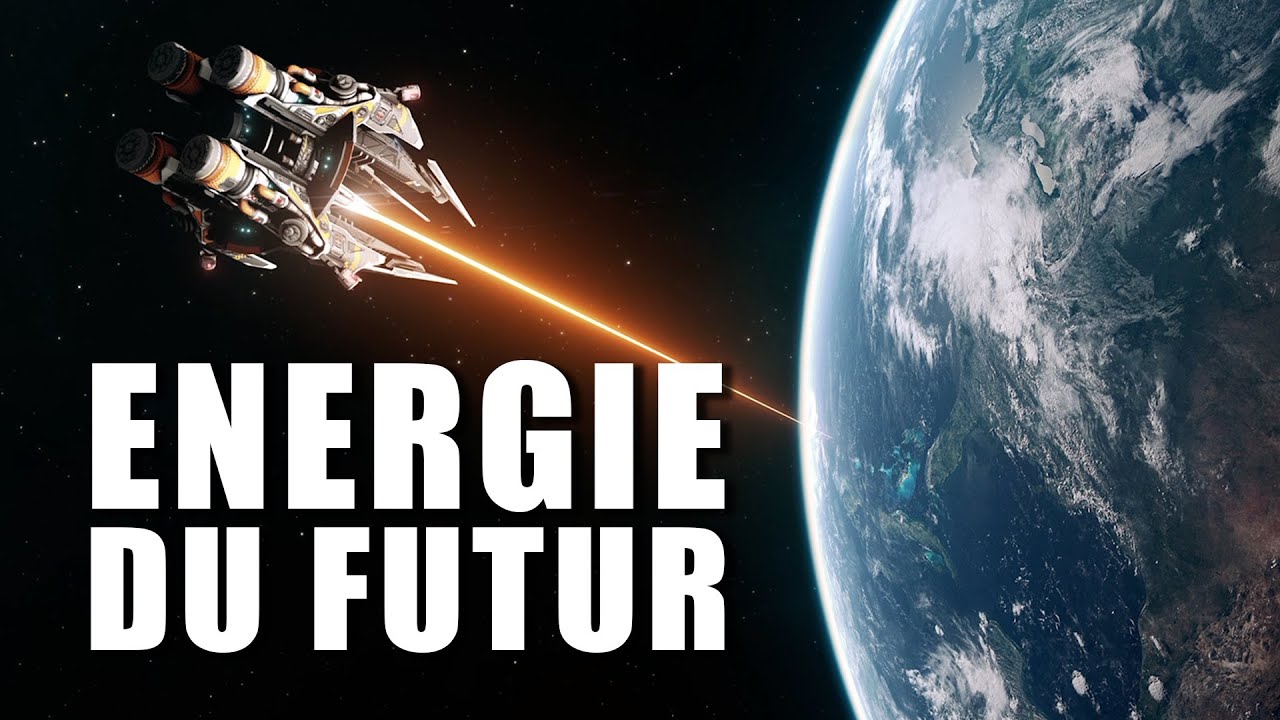
L’Energie du FUTUR Viendra-t-elle de l’Espace ? LDDE
Keywords
Summary
132 words
Critical Evaluation
Value of the Information & Strength of the Argument
The video provides a clear and balanced overview of space-based solar power, presenting both its potential benefits and significant challenges. The argumentation is structured logically, moving from the concept and its advantages to the technical and economic hurdles. It effectively uses comparisons (e.g., solar panels in Normandy vs. orbit) to illustrate points. However, it does not delve deeply into quantitative analysis, such as energy return on investment (EROI), which is a critical factor for assessing viability. The video also briefly touches on alternative concepts like orbital mirrors, adding breadth but not depth. Overall, the information is valuable for a general audience seeking an introduction to the topic, but it lacks the rigor of a detailed technical or economic analysis.
Scientific Rigor, Source Quality, Title Accuracy
The video cites several credible sources, including SpaceNews, NASA Climate, and Space.com, which are listed in the description. These sources support the key claims about Chinese plans and historical experiments. The title accurately reflects the content, which is a general overview rather than a deep dive. The video does not present original research but synthesizes existing information. The adéquation between title and content is good, though the title might imply a more definitive answer than the video provides. The sources are used appropriately, though the video could have benefited from more direct citations during the narration.
230 words
Title / Content Match
The title accurately reflects the content, which explores the potential of space-based solar energy as a future energy source.
Quality & Reliability
7/10
The video provides a balanced overview of space-based solar power, citing credible sources such as SpaceNews and NASA, and clearly distinguishes between concepts and current limitations. However, it lacks in-depth technical details and does not address the energy return on investment (EROI) concern raised by viewers.
Key Moments
Markers derived by PSI from the transcript: the creator did not define chapters.
- Introduction to the energy challenge and the concept of space-based solar power.
- Details of the Chinese proposal for a geostationary solar power station.
- Advantages of space-based solar power: continuous production and high efficiency.
- Discussion of technical challenges: launch costs, maintenance, and energy transmission.
- Alternative concepts: orbital mirrors for nighttime illumination, referencing Russian experiments.
- Conclusion: the future of space-based solar power depends on cost reduction and further experimentation.
Cited Sources
- China’s super-heavy rocket to construct space-based solar power station — Source for the Chinese proposal for a space-based solar power station.
- Will Orbiting 'Flying Carpets' Light the World? — Source for the concept of orbital mirrors and related experiments.
- X-37B space plane solar power beaming — Source for space-based solar power beaming experiments.
- Znamya experiments — Source for the Russian Znamya mirror experiments.
Concurring Sources
- Space-based solar power - Wikipedia — General reference on the concept, consistent with the video's content.
Dissenting Sources
- Comment on energy return on investment — A viewer comment points out that the video does not address the energy return on investment (EROI), which is a critical factor for assessing the viability of space-based solar power.
External References
Contribution & Novelties
The video provides a concise and accessible synthesis of the current state of space-based solar power, highlighting recent Chinese initiatives and historical precedents. It effectively communicates the potential benefits and challenges without oversimplifying. The inclusion of alternative concepts like orbital mirrors adds a novel perspective. However, it does not introduce new research or data, but rather compiles existing information for a general audience.
Pour aller plus loin :
- Space-based solar power - Wikipedia — Overview of the concept and history.
- Wireless power transfer - Wikipedia — Background on the technology for transmitting energy without wires.
- Energy return on investment - Wikipedia — Key metric for evaluating the viability of energy systems, as raised by viewers.
115 words
Radar Profile
The radar profile shows a balanced performance across all dimensions, with slightly higher scores in information quality and reliability, reflecting the video's solid sourcing and clear presentation. The lower score in technical depth indicates that while the content is accurate, it does not delve into advanced technical details.
💬 Positif. Sur les 30 commentaires analysés, la majorité exprime un intérêt et une appréciation pour la vidéo, avec quelques réserves sur la faisabilité économique et énergétique du concept.