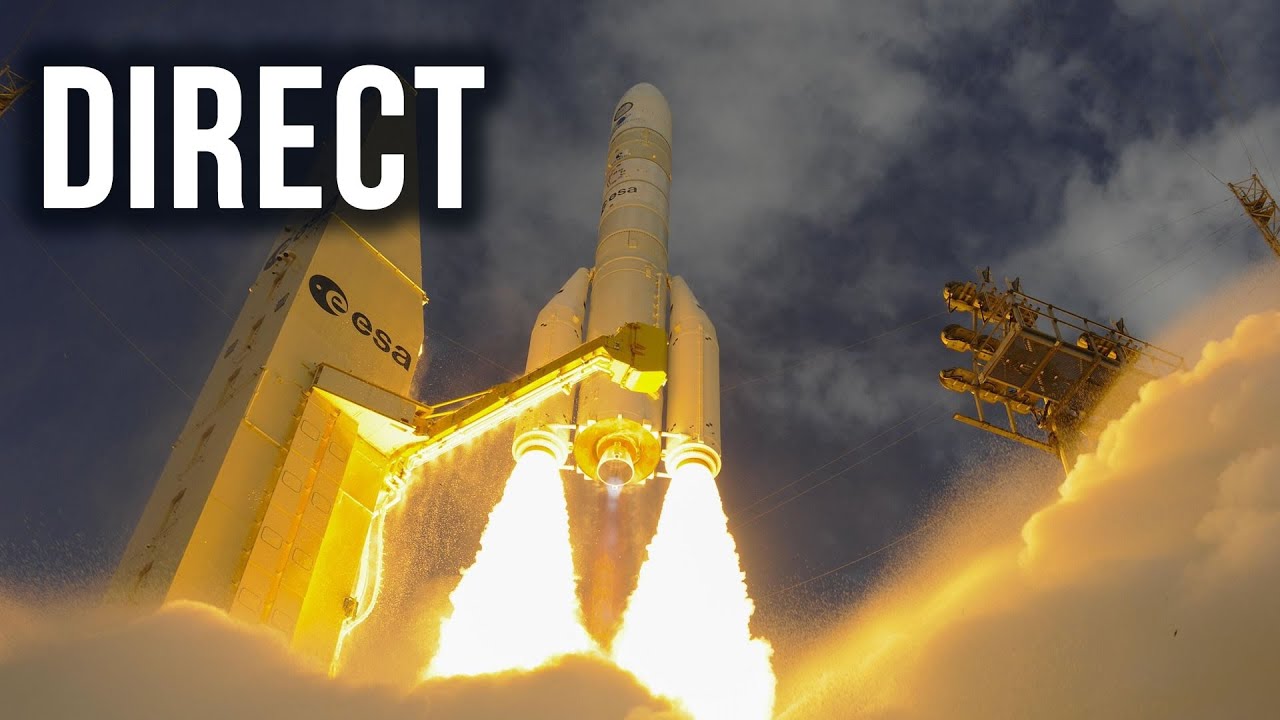
🔴 Lancement ARIANE 6 Galileo FOC FM33-FM34 (VA-266) commenté FR
Keywords
Summary
154 words
Critical Evaluation
Value of the Information & Strength of the Argument
The video provides substantial value through its combination of real-time launch coverage and educational context. The host’s historical narrative on European rocketry is engaging and informative, offering viewers a deeper understanding of the program’s evolution. The argumentation is solid, based on the host’s evident expertise and the inclusion of specific technical details. The live format allows for immediate clarification of viewer questions, enhancing the educational value. However, the informal tone and occasional digressions may detract from the focus for some viewers.
Scientific Rigor, Source Quality, Title Accuracy
The scientific rigor is generally good, with the host referencing the official CNES press kit and providing accurate mission parameters. The historical account, while mostly accurate, contains minor simplifications and potential inaccuracies (e.g., the exact configuration of the Europa launcher). The title accurately reflects the content, and the video’s ad-hoc nature is appropriate for a live event. The host’s expertise is evident, but the lack of formal citations for some historical claims is a minor weakness.
172 words
Title / Content Match
The title accurately reflects the content: a live French commentary of the Ariane 6 launch of Galileo satellites.
Quality & Reliability
7/10
The live commentary is technically informed, with accurate details about the mission, launcher, and payload. The historical digressions are generally accurate but occasionally imprecise (e.g., Europa program details). The host relies on official sources (CNES press kit) and personal expertise, but the format is informal and not peer-reviewed.
Key Moments
Markers derived by PSI from the transcript: the creator did not define chapters.
- Introduction and start of live commentary.
- Historical overview of European launchers, from Diamant to Ariane 6.
- Discussion of the Galileo system and its importance for European autonomy.
- Technical details of the Ariane 6 launcher and mission profile.
- Countdown and liftoff of Ariane 6.
- Live coverage of stage separation and payload deployment.
- Confirmation of successful mission and concluding remarks.
Cited Sources
- Espace & Exploration magazine — Mentioned as a supporting magazine.
- CNES press kit for VA-266 — Official press kit for the mission.
Concurring Sources
- Ariane 6 - Wikipedia — General information on Ariane 6.
- Galileo (satellite navigation) - Wikipedia — General information on Galileo.
External References
Contribution & Novelties
The video provides a unique blend of live launch coverage and historical context, making it accessible to a broad audience. It offers real-time commentary from an experienced space enthusiast, adding a personal touch. The historical narrative on European rocketry is a valuable educational component.
Pour aller plus loin :
- Ariane 6 — Overview of the Ariane 6 launcher.
- Galileo (satellite navigation) — Details on the Galileo GNSS system.
- Europa (rocket) — Information on the failed Europa program.
77 words
Radar Profile
The radar profile shows a balanced performance across all dimensions, with slightly higher scores in information quantity and quality, reflecting the video's rich content and educational value. The technical level is moderate, suitable for a general audience, while reliability is solid due to the host's expertise and use of official sources.
💬 Sur les 0 commentaires analysés, aucune tendance n'est disponible.