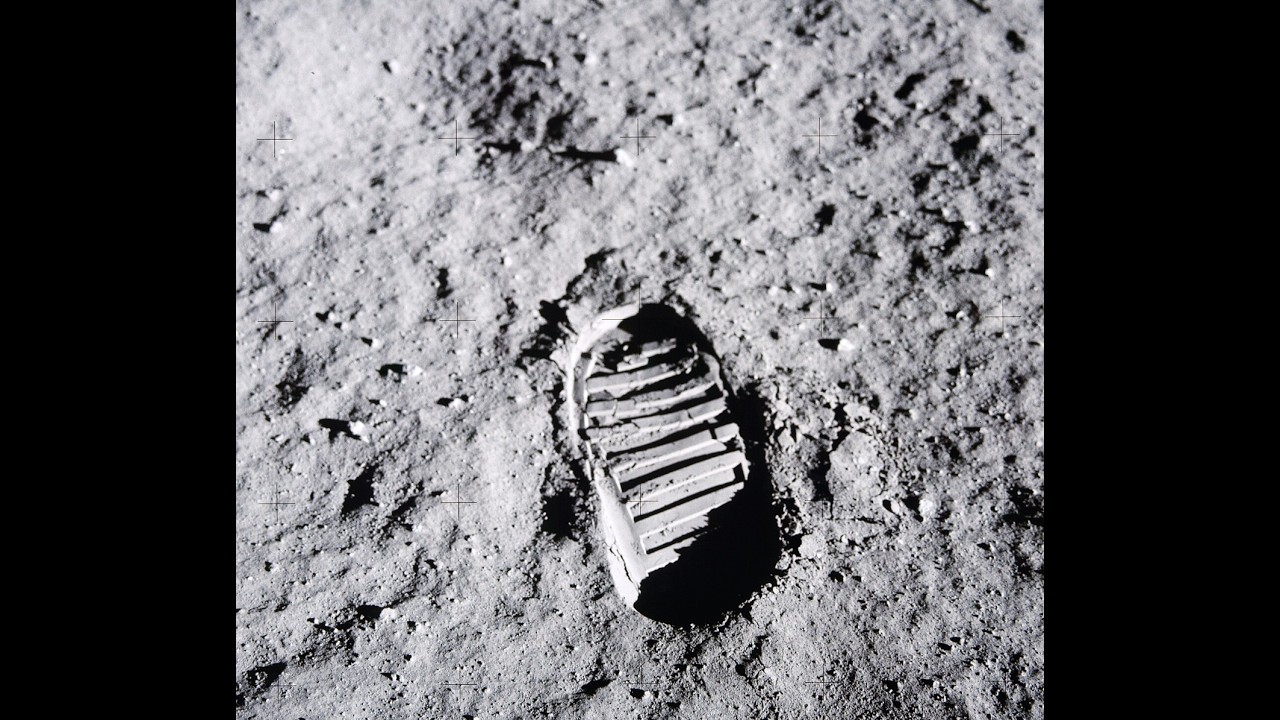
Searching the Moon for Alien Technosignatures
Keywords
Summary
183 words
Critical Evaluation
Value of the Information & Strength of the Argument
The video provides a compelling and well-structured argument for the plausibility of finding alien technosignatures on the Moon. It effectively combines known scientific facts (e.g., lunar surface preservation, LRO data) with speculative but reasoned scenarios. The argumentation is logical, moving from the rationale for searching the Moon to the practical challenges and potential methods, particularly the use of AI. The discussion of AI’s advantages and potential biases adds depth and shows a balanced perspective. The value lies in synthesizing existing ideas and presenting them in an engaging narrative, though it does not introduce new scientific data or original research.
Scientific Rigor, Source Quality, Title Accuracy
The video demonstrates a good understanding of the relevant scientific concepts, such as lunar gardening and the capabilities of the LRO. However, it does not provide formal citations or links to specific scientific papers, relying instead on general knowledge and references to popular culture. The title accurately reflects the content, and the video stays on topic throughout. The lack of explicit sources is a minor weakness, but the information presented is generally consistent with established scientific understanding. The video also correctly notes the role of private funding in US SETI efforts.
205 words
Title / Content Match
The title accurately reflects the content, which focuses on the concept and methods of searching for alien technosignatures on the Moon.
Quality & Reliability
7/10
The video presents a well-reasoned speculative discussion grounded in known lunar science (e.g., micrometeorite gardening, LRO data) and references to SETI concepts. It clearly distinguishes between established facts and hypotheses, though it lacks formal citations and relies on narrative extrapolation.
Key Moments
Markers derived by PSI from the transcript: the creator did not define chapters.
- Introduction to the concept of close technosignatures and the Moon as a preservation environment.
- Discussion of Arthur C. Clarke's 'The Sentinel' and '2001: A Space Odyssey' as inspiration.
- The Moon as an ideal location for a radio telescope on the far side.
- Challenges of searching the lunar surface and the potential role of AI in analyzing LRO images.
- AI discoveries: collapsed lava tubes and fresh impact craters, and their implications.
- Potential for finding intentional messages or unintentional debris, and the value of a physical artifact.
- Conclusion: the search for lunar technosignatures as a possible answer to the Fermi paradox.
Cited Sources
- Cylinder Eight by Chris Zabriskie — Background music used in the video.
- Creative Commons Attribution 4.0 License — License for the music used.
- Intermission in D by Miguel Johnson — Additional background music.
- Event Horizon Channel — Related channel by the same author.
Concurring Sources
- Lunar Reconnaissance Orbiter — The spacecraft and its mission to map the Moon, which is the primary data source for the proposed AI search.
- Technosignature — The scientific term for evidence of technology, which is the focus of the video.
Contribution & Novelties
The video’s original contribution lies in synthesizing the concept of lunar technosignature searches with the application of modern AI to analyze existing datasets, particularly from the Lunar Reconnaissance Orbiter. It presents a compelling case for why the Moon is an ideal target for such searches and discusses the potential scientific value of a physical artifact over a radio signal. The discussion of AI’s potential biases adds a nuanced perspective.
Pour aller plus loin :
- Lunar Reconnaissance Orbiter — The spacecraft whose data is central to the proposed AI search.
- Technosignature — The broader scientific context for detecting signs of technology.
- Fermi paradox — The paradox that motivates the search for extraterrestrial intelligence.
- Pareidolia — The psychological phenomenon mentioned in the video as a human bias that AI might avoid.
129 words
Radar Profile
The radar profile shows a balanced performance across all dimensions, with slightly higher scores in information quantity and quality, and lower in technical depth. This reflects the video's nature as an accessible science communication piece that is informative and reliable but not highly technical.
💬 Très positif. Sur les 30 commentaires analysés, l'écrasante majorité exprime un soutien enthousiaste et une appréciation personnelle pour le contenu et le créateur, avec quelques commentaires humoristiques et des suggestions de sujets connexes.