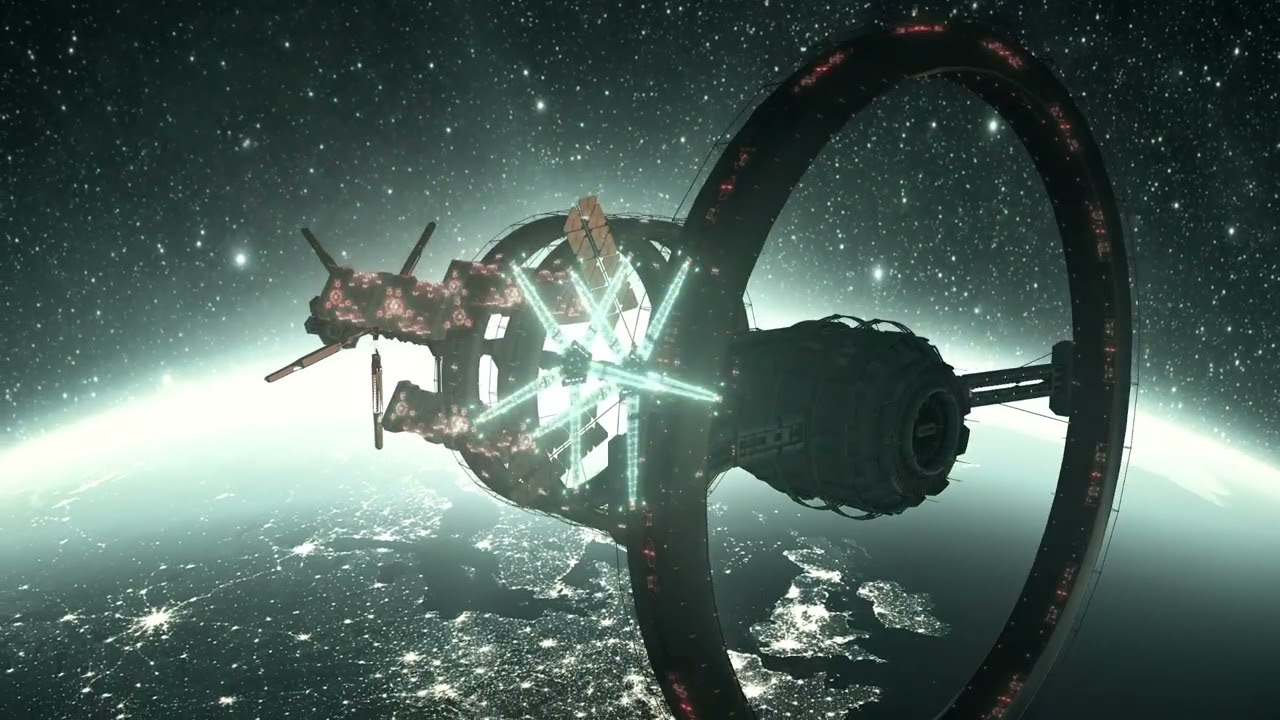
Fermi Paradox: The Partial Galactic Colonization Hypothesis
Keywords
Summary
146 words
Critical Evaluation
Value of the Information & Strength of the Argument
The video provides valuable insights by synthesizing multiple scientific concepts and models, such as the steady-state expansion model by Frank et al. and the Hart-Tipler conjecture, into a coherent argument. It effectively argues that the assumption of full galactic colonization is not necessarily valid, presenting logical and physical constraints. The argumentation is solid, though it relies on speculative elements inherent to the topic. The discussion of von Neumann probe engineering challenges and relativistic effects adds depth, but the lack of direct citations to primary sources weakens the scientific rigor.
Scientific Rigor, Source Quality, Title Accuracy
The video demonstrates a good understanding of the scientific literature, referencing models and conjectures accurately. However, it does not provide direct citations or links to the specific papers, which limits the ability to verify claims. The title is appropriate and accurately reflects the content. The description includes links to music sources and the creator’s other channel, but no direct scientific references. The video’s strength lies in its clear explanation of complex ideas, but it would benefit from more explicit sourcing.
184 words
Title / Content Match
The title accurately reflects the content, which focuses on the partial galactic colonization hypothesis as a potential resolution to the Fermi Paradox.
Quality & Reliability
7/10
The video presents a well-structured exploration of a specific Fermi Paradox solution, referencing scientific models (Frank et al., Hart-Tipler conjecture) and physical principles (relativity, self-replication challenges). However, it lacks direct citations to primary sources and relies heavily on speculative reasoning, typical of science communication rather than rigorous scientific review.
Key Moments
Markers derived by PSI from the transcript: the creator did not define chapters.
- Introduction to the partial galactic colonization hypothesis as a Fermi Paradox solution.
- Discussion on why alien civilizations might not colonize entire galaxies, citing human territorial behavior as an analogy.
- Exploration of the idea that we might be in the wrong part of the galaxy, with distant signals being undetectable.
- Consideration of population limits and the impossibility of fully colonizing a galaxy with finite beings.
- Introduction of the steady-state expansion model by Frank and colleagues, suggesting civilizations may reach a balance.
- Discussion on stellar encounters as a slow but viable method of colonization over millions of years.
- Critique of the Hart-Tipler conjecture and the challenges of building self-replicating von Neumann probes.
- Conclusion on the possibility of a partially colonized galaxy and the unsettling implications of the Zoo hypothesis.
Cited Sources
- Cylinder Five by Chris Zabriskie — Background music used in the video.
- Creative Commons Attribution 4.0 License — License for the music used.
- Event Horizon Channel — Related channel by the same creator.
Concurring Sources
- Fermi paradox — General context for the paradox discussed.
- Hart–Tipler conjecture — Directly referenced in the video.
- Von Neumann probe — Central concept in the discussion.
Dissenting Sources
- Zoo hypothesis — The video mentions the Zoo hypothesis as a potential alternative, but it is not the main focus.
Contribution & Novelties
The video offers a fresh perspective on the Fermi Paradox by emphasizing the plausibility of partial galactic colonization, a concept often overlooked in favor of galaxy-spanning empires. It synthesizes existing models and adds original thought on population limits and the engineering challenges of von Neumann probes. The discussion of relativistic time dilation as a factor in intergalactic colonization is particularly thought-provoking.
Pour aller plus loin :
- Fermi paradox — Overview of the paradox and its proposed solutions.
- Hart–Tipler conjecture — The argument that absence of von Neumann probes implies no other civilizations.
- Von Neumann probe — Concept of self-replicating spacecraft.
- Zoo hypothesis — The idea that aliens deliberately avoid contact.
- Drake equation — Probabilistic estimate of communicative civilizations.
118 words
Radar Profile
The radar profile shows high scores in quantity and quality of information, with moderate technical depth and reliability. This indicates a well-informed but accessible presentation, suitable for a general audience interested in astrobiology and the Fermi Paradox.
💬 Positif. Sur les 30 commentaires analysés, les spectateurs expriment une forte appréciation pour la qualité et la régularité des vidéos, avec des discussions constructives sur les hypothèses présentées.