TESS Mission | NASA's Next Exoplanet Hunter
Keywords
Summary
163 words
Critical Evaluation
Value of the Information & Strength of the Argument
The video provides valuable information about the TESS mission, clearly explaining its scientific objectives and technical innovations. The argumentation is solid, supported by comparisons with Kepler and quantitative estimates (e.g., expected number of planets). The presenter’s expertise adds credibility, and he transparently separates mission facts from his personal hopes for an extended mission. The explanation of the orbit’s stability and the rationale for focusing on bright stars is particularly well-argued.
Scientific Rigor, Source Quality, Title Accuracy
The scientific rigor is high for a popular science video: the presenter is an academic, and the information aligns with official mission details. The description includes links to NASA’s TESS homepage and a live stream, which serve as primary sources. The title accurately reflects the content. No comments were provided, so no public reception analysis is possible.
142 words
Title / Content Match
The title accurately reflects the content: a detailed presentation of the TESS mission as NASA's next exoplanet hunter.
Quality & Reliability
8/10
The video is presented by an academic astronomer (David Kipping) from Columbia University, providing a clear and accurate overview of the TESS mission. The information is consistent with known mission parameters, and the presenter explicitly distinguishes between mission goals and personal hopes. The content is well-structured and technically sound, though it is a popular science presentation rather than a peer-reviewed source.
Key Moments
Markers derived by PSI from the transcript: the creator did not define chapters.
- Introduction to the TESS mission and its imminent launch.
- Explanation of the transit method for detecting exoplanets.
- Comparison between Kepler and TESS: statistical survey vs. all-sky survey.
- Importance of bright stars for follow-up characterization.
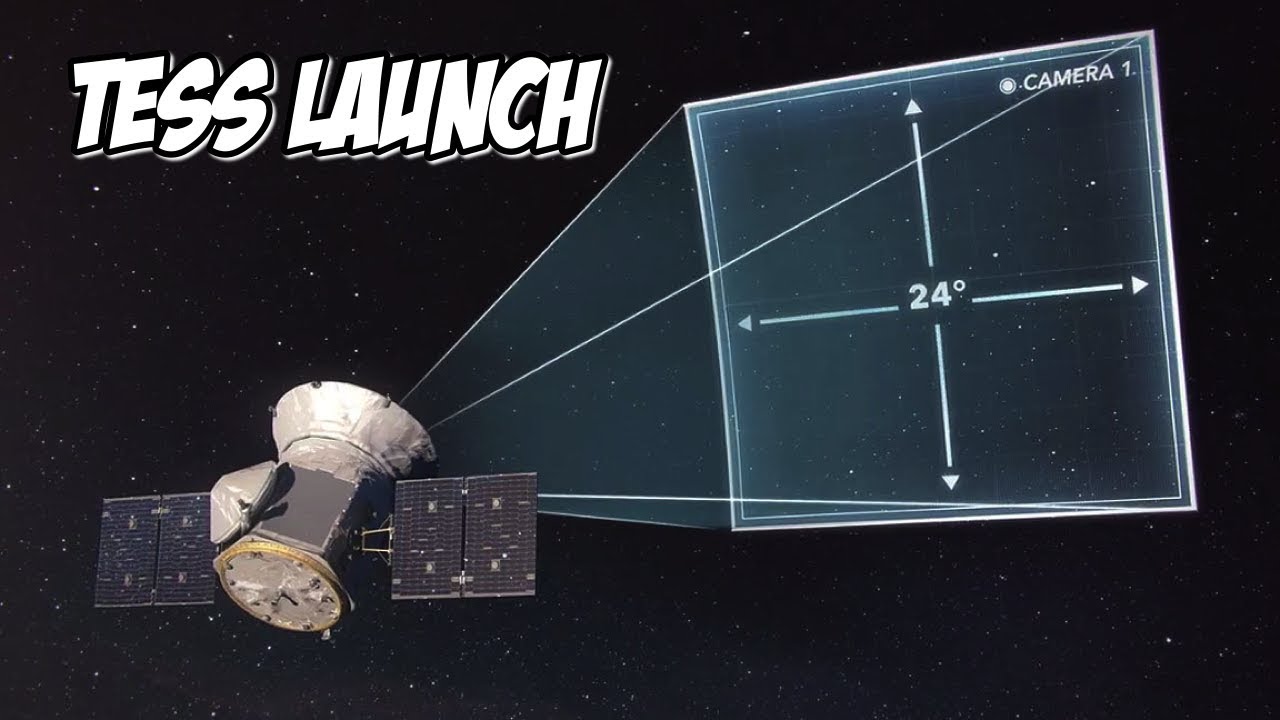
- Technical design of TESS: orbit, cameras, and filters.
- Cost comparison and expected number of planet discoveries.
- Potential for extended mission and search for exomoons.
- Closing remarks and invitation for questions for Natalie Batalha.
Cited Sources
- NASA TESS homepage — Official mission page for TESS.
- NASA live stream link — NASA press release and live stream for the TESS launch.
- Columbia University Department of Astronomy — Affiliation of the presenter.
- Cool Worlds Lab website — The presenter's research lab.
- Outro music by 8-bit Universe — Background music credit.
Concurring Sources
- NASA TESS homepage — Official mission page confirming the details presented in the video.
Contribution & Novelties
The video offers a clear and accessible explanation of the TESS mission, highlighting its unique approach to exoplanet discovery compared to Kepler. It provides valuable context on why bright stars are crucial for follow-up studies and explains the technical design choices, such as the lunar resonant orbit. The presenter’s personal perspective on the potential for an extended mission adds an original angle.
Pour aller plus loin :
- TESS mission overview — Provides a comprehensive summary of the TESS mission, its objectives, and results.
- Transit method — Explains the transit method used by TESS and Kepler.
- Exomoon — Discusses the search for moons around exoplanets, a key interest of the presenter.
110 words
Radar Profile
The radar profile shows high scores across all dimensions, with a slight dip in technical level, reflecting the video's balance between accessibility and scientific depth. The overall strong performance indicates a reliable and informative presentation.