Turning Earth Into a Telescope | The Terrascope
Keywords
Summary
223 words
Critical Evaluation
Value of the Information & Strength of the Argument
The video provides substantial value by presenting a novel, peer-reviewed concept that could revolutionize telescope design. The argumentation is well-structured, starting with the historical context of telescope limitations, then logically introducing the Terrascope as a natural extension of known physics (atmospheric refraction). Kipping effectively uses analogies and clear explanations to make the complex physics accessible. He also honestly addresses the limitations and challenges of the concept, which strengthens the credibility of the proposal. The personal narrative adds an emotional dimension but does not detract from the scientific content.
Scientific Rigor, Source Quality, Title Accuracy
The scientific rigor is high: the video is based on a paper accepted for publication in a reputable journal (PASP), and the presenter is the lead author. The description provides a direct link to the paper. Historical references (e.g., Galileo, Eddington) are accurate. The video also cites various external sources for footage and music. The title accurately reflects the content. The presentation is clear and well-supported, though it remains a theoretical proposal that requires further study and validation.
181 words
Title / Content Match
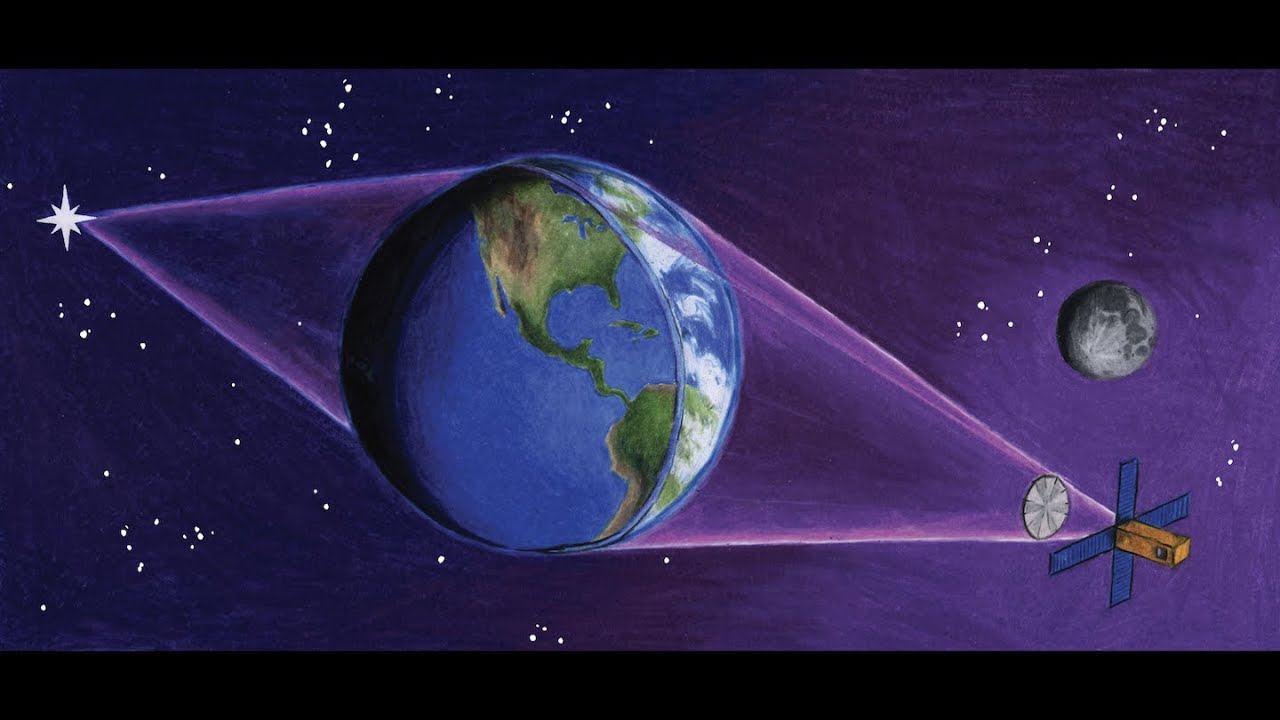
The title accurately reflects the content: the video presents the concept of using the Earth's atmosphere as a giant refractive lens, termed the 'Terrascope'.
Quality & Reliability
9/10
The video is presented by the lead researcher, Professor David Kipping, and is based on a peer-reviewed paper accepted for publication in PASP. The content is clearly explained, with references to historical and contemporary research, and the presenter demonstrates deep expertise. The main limitations are the inherent uncertainties of a theoretical proposal and the lack of independent verification at this stage.
Chapters
Cited Sources
- The Terrascope: On the Possibility of Using the Earth as an Atmospheric Lens — The research paper by David Kipping that this video is based on.
- Cool Worlds Lab — The research lab at Columbia University where the work was conducted.
- Columbia University Department of Astronomy — The academic department of the presenter.
- Cool Worlds Lab Support — Link to support the research program.
- NASA SVS: JWST Timelapse — Footage used in the video.
- GTC footage by Gianluca Lombardi — Footage of the Gran Telescopio Canarias used in the video.
- ELT animation by ESO — Animation of the Extremely Large Telescope used in the video.
- GMT mirror casting by University of Arizona — Footage of mirror casting for the Giant Magellan Telescope.
- Green Flash footage by Mila Zinkova — Footage of the green flash phenomenon used in the video.
- NASA SVS: Earth Timelapse from EPIC — Earth timelapse footage used in the video.
- NASA SVS: WFIRST Animation — Animation of the WFIRST mission used in the video.
- NASA SVS: JWST Deployment Animation — Animation of the James Webb Space Telescope deployment used in the video.
Concurring Sources
- The Terrascope: On the Possibility of Using the Earth as an Atmospheric Lens — The peer-reviewed paper that forms the basis of the video's claims.
External References
Contribution & Novelties
The video presents a novel and original concept for a telescope that uses the Earth’s atmosphere as a natural lens, potentially achieving the power of a 150-meter telescope at a fraction of the cost. This idea, developed over 13 years, is a significant departure from traditional telescope designs and could open new avenues for astronomical observation. The video also provides a personal narrative that highlights the importance of perseverance in scientific research.
Pour aller plus loin :
- Gravitational lensing — The phenomenon used by the Sun as a lens, which inspired the Terrascope concept.
- Atmospheric refraction — The physical effect that the Terrascope exploits.
- Green flash — The optical phenomenon that was the starting point for Kipping’s research.
- FOCAL mission — A proposed mission to use the Sun’s gravitational lens, which is a related concept.
- Extremely Large Telescope — An example of current large telescope projects that the Terrascope could surpass.
151 words
Radar Profile
The radar profile shows a strong performance across all dimensions, with particularly high scores in information quantity, quality, and reliability. The technical level is also high, reflecting the advanced nature of the topic. This indicates a well-rounded and trustworthy scientific presentation.
💬 Très positif. Sur les 30 commentaires analysés, l'écrasante majorité exprime une admiration profonde pour le contenu scientifique et la présentation, avec de nombreux témoignages personnels sur l'inspiration reçue et l'encouragement à poursuivre ses rêves.