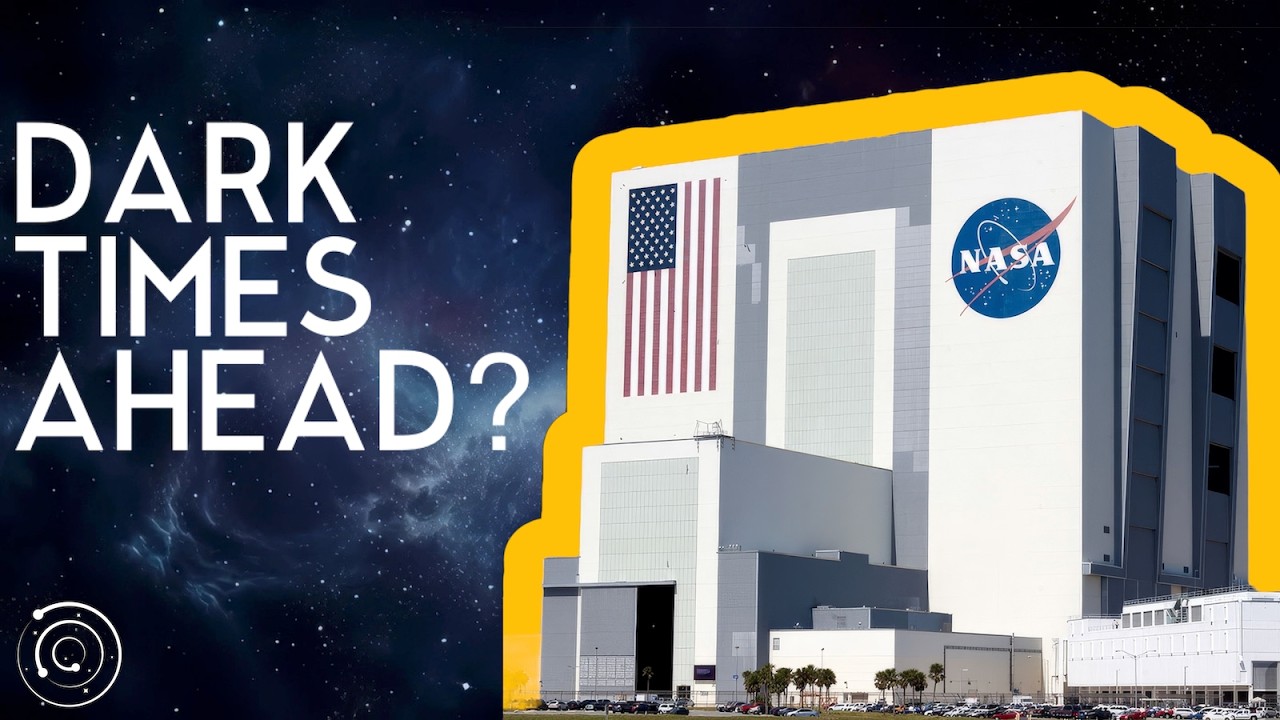
NASA's in Trouble
Keywords
Summary
179 words
Critical Evaluation
Value of the Information & Strength of the Argument
The video provides valuable insights into the funding challenges of NASA, supported by specific budget figures and references to reports and academic papers. The argumentation is well-structured, presenting a clear cause-and-effect narrative linking flagship mission overruns and climate change to potential future cuts. Kipping effectively uses comparisons (e.g., cost relative to military spending) to illustrate the relatively small investment in astronomy. The inclusion of expert opinions and references to decadal surveys adds credibility. However, some projections, such as the impact of climate change on NASA’s budget, are speculative and presented as plausible rather than certain. The call to action is clear and practical, encouraging viewers to engage in advocacy.
Scientific Rigor, Source Quality, Title Accuracy
The video demonstrates a strong commitment to scientific rigor, citing specific budget figures, committee reports (e.g., HST & Beyond, NASA IRB), and academic papers (e.g., Van Belle, Elvis). The sources are relevant and add depth to the analysis. The title accurately reflects the content, which is a critical examination of NASA’s financial situation. The presentation is balanced, acknowledging both the achievements of NASA and the challenges it faces. The inclusion of a sponsor segment is clearly marked and does not detract from the scientific content. Overall, the sourcing is robust and the title is appropriate.
219 words
Title / Content Match
The title accurately reflects the content, which discusses the financial and structural challenges facing NASA.
Quality & Reliability
8/10
The video presents a well-structured argument supported by specific budget figures, references to committee reports, and academic papers. The author, an academic astronomer, provides context and cites sources, though some claims rely on projections and opinion. The presentation is clear and the reasoning is transparent, but the topic is inherently political and the analysis is partly speculative.
Key Moments
Markers derived by PSI from the transcript: the creator did not define chapters.
- Introduction to NASA's funding crisis and the importance of astronomy funding.
- Details of the 2024 budget cut and its impact on NASA programs, including layoffs and mission delays.
- Contextualization of NASA's astrophysics budget relative to other spending and individual wealth.
- Introduction of the two main threats: flagship mission overruns and climate change.
- Analysis of JWST's cost overruns and their impact on the astrophysics budget.
- Discussion of the Habitable Worlds Observatory and potential cost and schedule risks.
- Exploration of climate change as an indirect threat to NASA funding.
- Conclusion emphasizing the value of scientific discovery and a call to action.
Cited Sources
- NASA budget figures spreadsheet — Referenced for budget data.
- Rasmussen, S. 2023, 'Has the Last Great Space Observatory Already Launched?', Scientific American — Cited for the argument that JWST could be the last great observatory due to climate change.
- HST & Beyond Committee Report 1996 — Referenced for the original recommendations for JWST.
- NASA IRB JWST Report 2018 — Cited for details on JWST development errors.
- Reichhardt, T. 2006, 'Is the next big thing too big?', Nature — Referenced for discussion on flagship mission costs.
- Elvis, M. 2016, 'What Can Space Resources do for Astronomy and Planetary Science?', Space Policy, 37, 65 — Cited for arguments favoring many smaller missions.
- Van Belle, G., 2021, 'The Scaling Relationship Between Telescope Cost and Aperture Size for Very Large Telescopes', Proceedings of the SPIE, 5489, 563 — Referenced for the cost scaling of telescopes.
Concurring Sources
- Rasmussen, S. 2023, 'Has the Last Great Space Observatory Already Launched?', Scientific American — Supports the argument that climate change could threaten future observatories.
- Elvis, M. 2016, 'What Can Space Resources do for Astronomy and Planetary Science?', Space Policy, 37, 65 — Supports the critique of flagship missions consuming budgets.
Dissenting Sources
- No direct discordant sources cited — The video does not present opposing viewpoints, but the speculative nature of climate change impacts on NASA funding could be contested.
External References
Contribution & Novelties
The video provides a clear and accessible synthesis of the current funding challenges facing NASA, linking immediate budget cuts to long-term structural issues. It offers a unique perspective by connecting flagship mission overruns and climate change as dual threats, and it provides actionable advocacy steps. The discussion of potential solutions, such as innovative telescope designs, adds a forward-looking element.
Pour aller plus loin :
- Habitable Worlds Observatory — A proposed NASA mission to directly image Earth-like exoplanets, central to the video’s discussion of future flagships.
- James Webb Space Telescope — The flagship mission whose cost overruns are analyzed in detail.
- Chandra X-ray Observatory — The telescope facing budget cuts, which the video urges viewers to help save.
- Decadal survey — The process that sets priorities for US astronomy, referenced in the video.
132 words
Radar Profile
The radar profile shows high scores in information quantity, quality, technical level, and reliability, indicating a well-researched and informative video. The balance across these dimensions suggests a comprehensive and credible presentation.
💬 Positif. Sur les 30 commentaires analysés, les spectateurs expriment un fort soutien à la NASA et une frustration face aux coupes budgétaires, avec des appels à une meilleure priorisation des dépenses publiques.