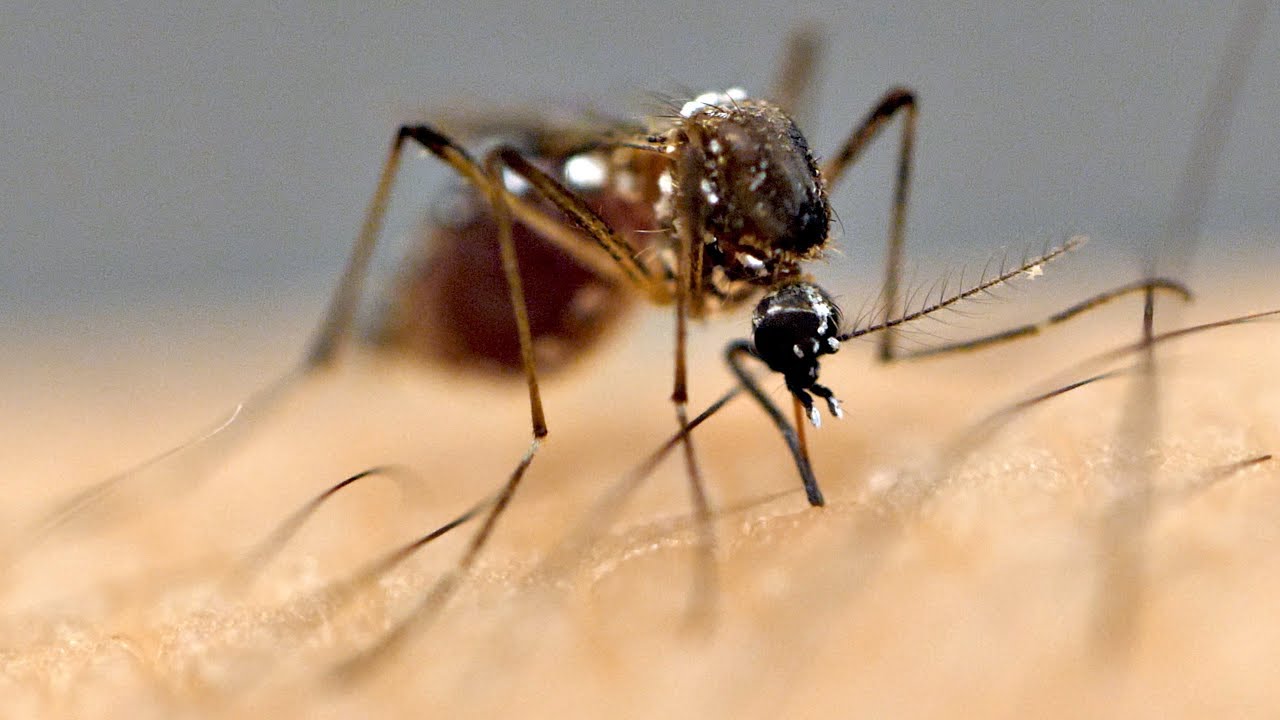
Why Mosquitoes Bite Some People More Than Others
Keywords
Summary
174 words
Critical Evaluation
Value of the Information & Strength of the Argument
The video provides valuable information by combining personal experimentation, expert interviews, and references to scientific studies. The argumentation is solid, as it presents evidence from twin studies and GWAS to support the genetic basis of mosquito attractiveness. The host’s own experiment with his wife adds a relatable and engaging element, though it is acknowledged as not rigorously scientific. The explanation of other factors (CO2, heat, sweat) is well-supported by scientific consensus. The evolutionary discussion about malaria parasites is intriguing but somewhat speculative, as it is presented as a hypothesis rather than established fact.
Scientific Rigor, Source Quality, Title Accuracy
The video demonstrates scientific rigor by citing specific studies (twin study, GWAS) and providing references in the description. The sources are credible, including academic research and expert testimony. The title accurately reflects the content, which is a clear exploration of the factors influencing mosquito bites. The video also includes a sponsored segment for 23andMe, which is disclosed, but the scientific content remains objective. The public comments are overwhelmingly positive, with many viewers sharing personal anecdotes and expressing appreciation for the informative content.
190 words
Title / Content Match
The title accurately reflects the content, which explores genetic and physiological factors influencing mosquito attraction.
Quality & Reliability
8/10
The video presents scientific studies (twin study, GWAS) and expert interviews, with references provided. However, it includes a sponsored segment and some speculative evolutionary claims, slightly reducing the score.
Key Moments
Markers derived by PSI from the transcript: the creator did not define chapters.
- Professor Hansen feeds mosquitoes with his own arm, getting about 25 bites.
- Explanation of mosquito life cycle and that only females bite.
- Y-tube olfactometer test demonstrates host's attractiveness to mosquitoes.
- Discussion of twin study showing genetic influence on mosquito attractiveness.
- Comparison of host and wife's genetic results from 23andMe.
- Explanation of other factors like CO2, body heat, and skin chemicals.
- Discussion of malaria parasite altering host odor to attract mosquitoes.
Cited Sources
- 23andMe — Sponsor and source of genetic data for the GWAS study.
- Professor Immo Hansen's lab — Expert interview and demonstration of mosquito experiments.
- GWAS study on mosquito attractiveness — Reference for the genome-wide association study identifying genetic loci.
- Twin study on mosquito attractiveness — Reference for the twin study showing genetic influence.
- Snatoms molecular models — Used for animations in the video.
Concurring Sources
- CDC - Mosquito-Borne Diseases — Supports the public health impact of mosquitoes.
- WHO - Malaria — Provides statistics on malaria deaths, aligning with the video's claims.
Dissenting Sources
- Skeptical analysis of mosquito attractiveness genetics — Some researchers argue that the genetic component is overestimated and environmental factors play a larger role.
Contribution & Novelties
The video provides an engaging and accessible explanation of the genetic and physiological factors behind mosquito attraction, combining personal experimentation with scientific evidence. It highlights the role of genetics through twin and GWAS studies, and discusses the public health implications of mosquito-borne diseases. The evolutionary angle on malaria parasites manipulating host odor is a thought-provoking addition.
Pour aller plus loin :
- Mosquito (Wikipedia) — Overview of mosquito biology and behavior.
- Genome-wide association study (Wikipedia) — Explanation of the methodology used in the study.
- Malaria (Wikipedia) — Background on the disease and its transmission.
- Twin study (Wikipedia) — Explanation of the twin study design and its implications.
106 words
Radar Profile
The radar profile shows high scores in information quantity, quality, and technical level, with a slightly lower but still strong reliability score. This indicates a well-researched and informative video that maintains scientific credibility.
💬 Très positif. Sur les 30 commentaires analysés, la grande majorité exprime de l'humour et de l'appréciation pour le contenu, avec de nombreux témoignages personnels sur l'attractivité des moustiques.