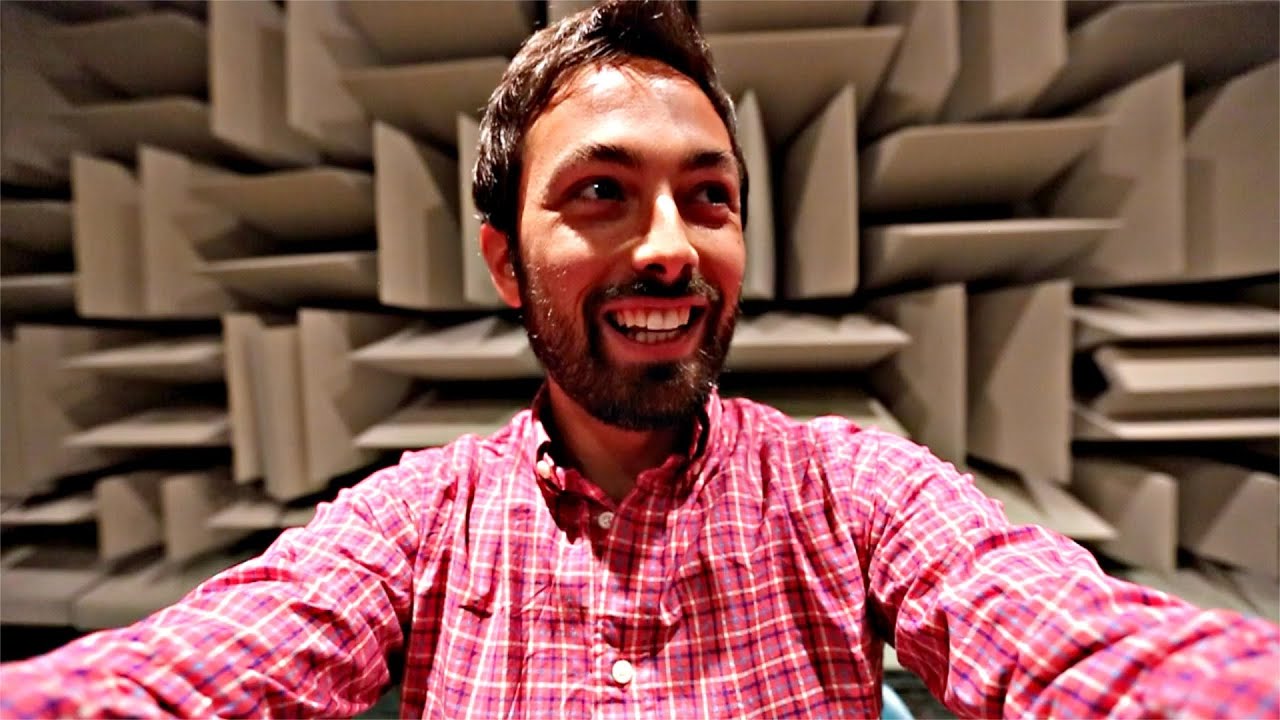
Testing if 60 minutes of silence drives you crazy
Keywords
Summary
134 words
Critical Evaluation
Value of the Information & Strength of the Argument
The video provides valuable firsthand data on the subjective experience of extreme silence, which is rarely documented. The argumentation is solid: the presenter directly challenges a widely circulated claim with a personal experiment, and he explains the physical principles behind the chamber’s design. He also discusses potential psychological effects, such as claustrophobia and anxiety, and offers a plausible explanation for why some people might feel uncomfortable. However, the evidence is anecdotal and based on a single subject, so it cannot be generalized.
Scientific Rigor, Source Quality, Title Accuracy
The scientific rigor is adequate for a popular science video. The presenter is transparent about the limitations of his experiment, and he provides a link to the full hour of silence for viewers to verify. The title is accurate and not misleading. The sources cited are minimal, but the video is based on direct observation and the presenter’s expertise. The description includes a link to the full video, which serves as a primary source.
171 words
Title / Content Match
The title accurately reflects the content: the video tests whether 60 minutes of silence in an anechoic chamber drives a person crazy, and the presenter successfully stays for over an hour.
Quality & Reliability
8/10
The video is a well-conducted personal experiment in a professional anechoic chamber, with clear explanations of the physics of sound absorption and the physiological effects of extreme silence. The presenter's approach is empirical and transparent, though the sample size is limited to himself and the claims are anecdotal rather than statistically robust.
Key Moments
Markers derived by PSI from the transcript: the creator did not define chapters.
- Introduction to the anechoic chamber and the myth of 45 minutes.
- Demonstration of sound absorption with claps.
- Explanation of how the chamber works and the feeling of claustrophobia.
- Discussion of the sounds one can hear in the chamber, including blood flow.
- Start of the experiment: the presenter enters the chamber and lights are turned off.
- The presenter describes his experience, including hearing his heartbeat.
- The presenter asks to turn on the lights and leaves the chamber.
- Conclusion: the myth is debunked, and the presenter discusses the experience.
Cited Sources
- Full hour of silence in anechoic chamber — The complete video of the hour spent in the anechoic chamber, provided as evidence.
Concurring Sources
- Anechoic chamber — Confirms the design and purpose of anechoic chambers, supporting the video's explanation.
Contribution & Novelties
The video contributes a direct, personal test of a widely circulated myth, providing a unique data point on the human experience of extreme silence. It also highlights the physiological sounds that become audible in such an environment, which is rarely discussed in popular media.
Pour aller plus loin :
- Anechoic chamber — Provides background on the design and uses of anechoic chambers.
- Sensory deprivation — Explores the broader effects of reduced sensory input, which is relevant to the experiment.
- Tinnitus — The presenter mentions hearing a ringing in his ears, which is a common phenomenon in quiet environments.
98 words
Radar Profile
The radar profile shows high scores in quality and reliability, reflecting the video's solid scientific approach and clear presentation. The lower score in quantity of information is due to the narrow focus on a single experiment, while the technical level is moderate, making it accessible to a general audience.
💬 Très positif. Sur les 30 commentaires analysés, la majorité exprime un intérêt amusé et une appréciation de l'expérience, avec des blagues sur les situations de silence et des réflexions sur les sensations corporelles.