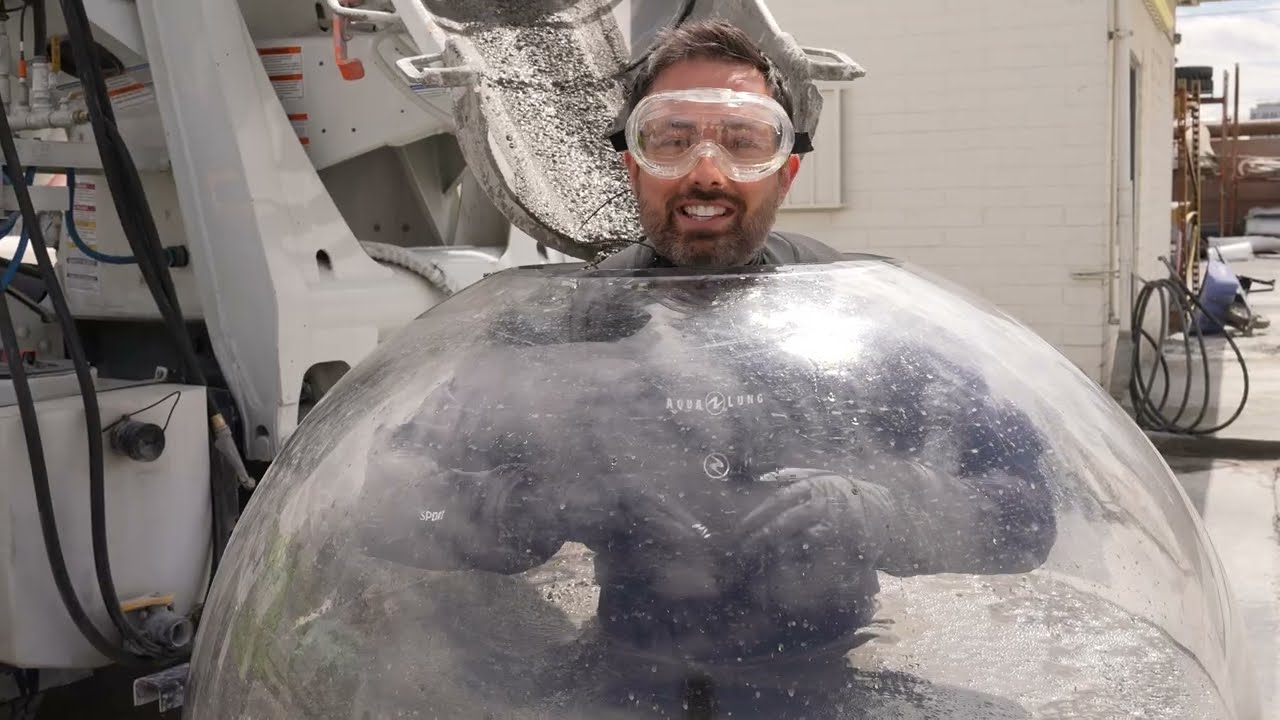
I got buried in concrete to explain how it works
Keywords
Summary
121 words
Critical Evaluation
Value of the Information & Strength of the Argument
The video provides valuable information about concrete, a material often overlooked despite its ubiquity. It combines hands-on demonstration with expert commentary and scientific references, making complex chemistry accessible. The argumentation is solid, supported by experiments and citations to peer-reviewed studies, such as the one on Roman concrete durability. The video also addresses common misconceptions and provides a balanced view on the superiority of Roman concrete, acknowledging survivor bias and cost considerations.
Scientific Rigor, Source Quality, Title Accuracy
The video maintains high scientific rigor, with references to academic papers and expert interviews. The sources cited in the description include a study on sugar’s effect on cement setting and a recent paper on Roman concrete, both from reputable journals. The title accurately reflects the content, which is both educational and engaging. The video does not overstate claims and provides context for the limitations of concrete technology.
153 words
Title / Content Match
The title accurately reflects the video's content and engaging approach.
Quality & Reliability
9/10
High-quality science communication with direct demonstrations, expert interviews, and references to peer-reviewed studies. The video is well-researched, accurate, and transparent about uncertainties.
Key Moments
Markers derived by PSI from the transcript: the creator did not define chapters.
- Introduction: Derek prepares to be buried in concrete and explains the difference between cement and concrete.
- Discussion on the importance of cement as the most used man-made material.
- Explanation of primitive cement production from limestone and its limitations.
- Roman concrete and the use of pozzolana, with mention of the Pantheon.
- Demonstration of concrete strength testing with hydraulic press.
- Explanation of Portland cement and its discovery.
- Tour of a concrete plant, showing aggregate processing and batching.
- Comparison of strength between pure cement, cement+sand, and concrete.
- Discussion on concrete consistency and slump test.
- Explanation of cement hydration and the role of water.
- Environmental impact of cement production and sponsor message about carbon offsetting.
Cited Sources
- Instant stone (just add water) — Historical background on cement and concrete.
- Cement Redux — Further historical context on cement development.
- Effect of sugar dosage on setting time, microstructure and strength of Type I and Type V Portland cements — Peer-reviewed study on sugar's effect on cement setting.
- Hot mixing: Mechanistic insights into the durability of ancient Roman concrete — Recent study on Roman concrete durability.
- Wren — Sponsor link for carbon offsetting.
- Six Foot Productions — Production company that provided equipment and safety.
Concurring Sources
- Cement hydration — Confirms the chemical process described in the video.
- Portland cement — Confirms the history and composition of Portland cement.
- Roman concrete — Confirms the properties and durability of Roman concrete.
Dissenting Sources
- No discordant sources found — The video's claims are consistent with established scientific knowledge and the cited studies.
Contribution & Novelties
The video offers a unique and engaging approach to explaining concrete, combining a personal stunt with scientific rigor. It provides clear explanations of complex chemistry and engineering concepts, supported by expert interviews and demonstrations. The comparison of Roman and modern concrete is particularly insightful, addressing common myths with evidence.
Pour aller plus loin :
- Cement hydration — Overview of the chemical process.
- Portland cement — Detailed information on the most common cement type.
- Roman concrete — Historical and chemical aspects of ancient concrete.
- Carbon footprint of cement — Report on the environmental impact of cement production.
96 words
Radar Profile
The radar profile shows high scores across all dimensions, indicating a well-rounded and reliable educational video. The strengths are particularly notable in information quality and technical level, reflecting the depth of the content and the expertise of the contributors.
💬 Très positif. Sur les 30 commentaires analysés, les spectateurs expriment une grande appréciation pour la démonstration pratique et la pédagogie, avec des anecdotes personnelles sur les dangers du béton et des remerciements pour la précision des informations.