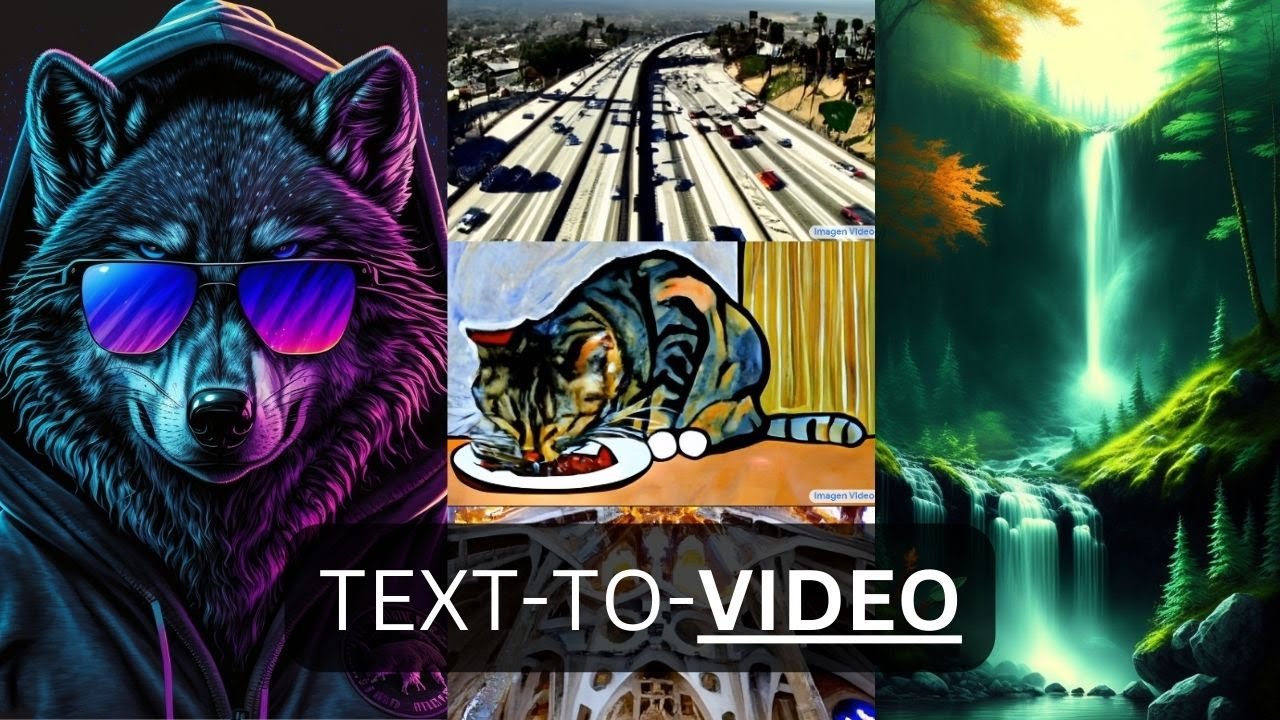
Using AI To Generate Text-To-VIDEO! Things Are Moving Fast.
Keywords
Summary
188 words
Critical Evaluation
Value of the Information & Strength of the Argument
The video provides valuable, up-to-date information on the state of AI video generation, including both research projects and accessible tools. The demonstrations are practical and help viewers understand the current capabilities and limitations. The argumentation is straightforward and enthusiastic, but it lacks critical analysis of the technology’s broader implications or potential biases. The creator’s excitement is clear, but the video is more of a showcase than a deep dive.
Scientific Rigor, Source Quality, Title Accuracy
The video references official sources for the research tools: Meta’s Make-A-Video (makeavideo.studio) and Google’s Imagen Video (imagen.research.google/video). These are credible and directly related to the content. The title accurately reflects the content, focusing on the rapid advancement of text-to-video AI. The video does not cite academic papers or provide in-depth technical explanations, but it does point viewers to the official pages for more information. The demonstrations are transparent about the tools’ limitations, which adds to the overall reliability.
162 words
Title / Content Match
The title accurately reflects the content, which focuses on the rapid advancement of AI text-to-video generation and showcases both upcoming and currently available tools.
Quality & Reliability
7/10
The video provides a clear overview of current text-to-video AI tools, with direct demonstrations and references to official research pages. However, it lacks in-depth technical analysis and relies on the creator's subjective impressions.
Chapters
Cited Sources
- Make-A-Video — Meta's AI research page for text-to-video generation, showcased in the video.
- Imagen Video — Google's AI research page for text-to-video generation, showcased in the video.
- LeiaPix Converter — Tool that converts images into 3D-like animated videos, demonstrated in the video.
- Genmo — Text-to-video platform that generates videos from text prompts, demonstrated in the video.
- Kaiber — Text-to-video platform with style options, demonstrated in the video.
- FutureTools.io — Website curated by the creator, listing AI tools, mentioned throughout the video.
Concurring Sources
- Make-A-Video — Official page confirming the existence and capabilities of Meta's text-to-video tool.
- Imagen Video — Official page confirming the existence and capabilities of Google's text-to-video tool.
External References
Contribution & Novelties
The video offers a timely overview of the rapidly evolving text-to-video AI landscape, highlighting both research prototypes and accessible tools. It provides practical demonstrations that help viewers understand the current state of the technology. The creator’s enthusiasm and clear presentation make it accessible to a broad audience.
Pour aller plus loin :
- Make-A-Video research paper — Official page with research details.
- Imagen Video research page — Official page with technical explanation.
- Stable Diffusion — A key text-to-image model that underpins many current generative tools.
- DALL-E 2 — Another influential text-to-image model.
- Generative adversarial network — A foundational concept in generative AI.
101 words
Radar Profile
The radar profile shows a balanced performance across information quantity, quality, and reliability, with a slightly lower technical depth. This reflects a video that is informative and reliable but not highly technical, suitable for a general audience interested in AI applications.
💬 Très positif. Sur les 30 commentaires analysés, l'enthousiasme domine, avec des utilisateurs exprimant leur émerveillement et leur impatience de voir ces technologies se développer, certains partageant leurs expériences positives avec les outils présentés.