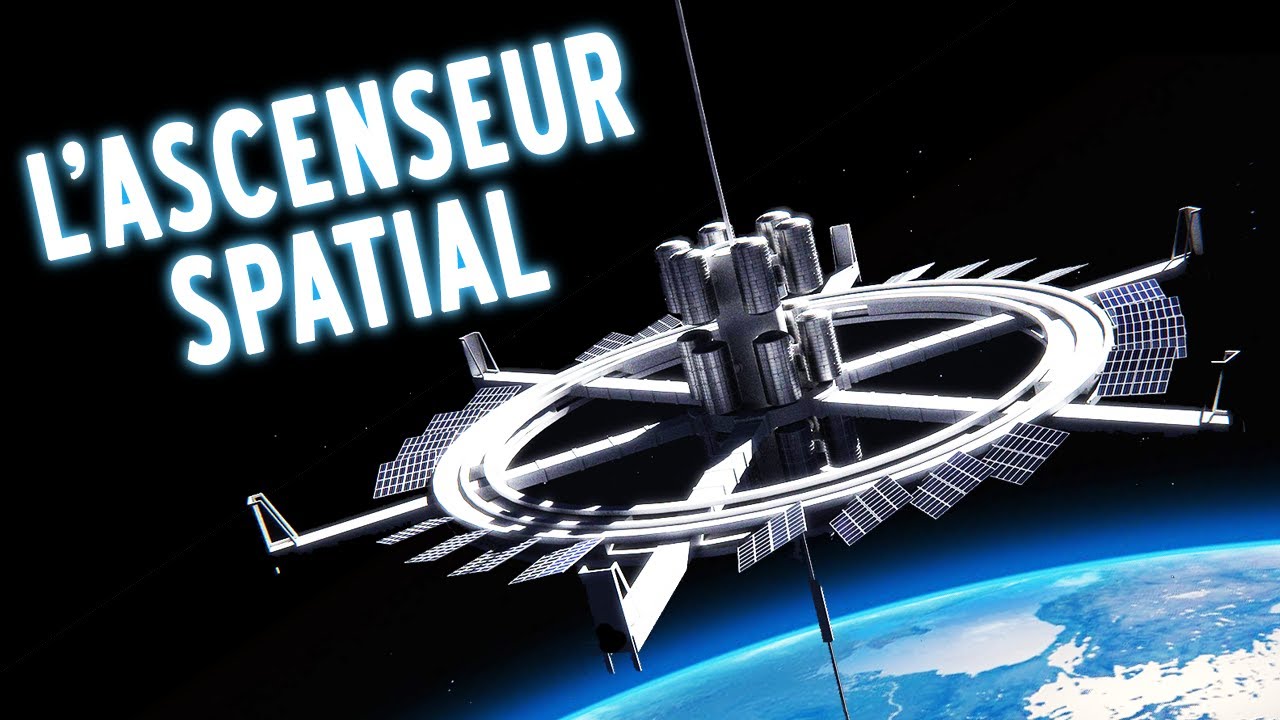
L’ascenseur spatial d’Arthur C. Clarke - Scientifiction #3
Keywords
Summary
122 words
Critical Evaluation
Value of the Information & Strength of the Argument
The video provides substantial value by synthesizing historical and technical information about space elevators. It clearly explains the physics and engineering challenges, such as orbital mechanics, material science, and energy requirements. The argumentation is solid, supported by references to specific historical figures and their contributions. The presentation is balanced, acknowledging both the potential and the significant obstacles. The inclusion of expert commentary and the author’s willingness to correct errors in the comments enhance the credibility of the content.
Scientific Rigor, Source Quality, Title Accuracy
The video demonstrates high scientific rigor, with input from experts like Christophe Bonnal and Roland Lehoucq. It cites historical sources and provides a link to a document with further references. The title accurately reflects the content, focusing on Clarke’s role and the concept’s development. The author also addresses inaccuracies in the comments, showing a commitment to factual precision. The production quality is high, with clear visuals and animations that aid understanding.
164 words
Title / Content Match
Title accurately reflects the content: a deep dive into the space elevator concept as popularized by Arthur C. Clarke, with historical and technical analysis.
Quality & Reliability
9/10
High-quality production with expert review (Christophe Bonnal, Roland Lehoucq), detailed historical and technical content, and transparent corrections in comments. Minor inaccuracies (e.g., semi-conductor terminology) are acknowledged and corrected by the author.
Key Moments
Markers derived by PSI from the transcript: the creator did not define chapters.
- Introduction to Arthur C. Clarke and his contributions to satellite communications.
- Explanation of geostationary orbit and Clarke's 1945 article.
- Introduction of the space elevator concept in 'The Fountains of Paradise'.
- Historical overview: Tsiolkovsky's tower, Artsutanov's space cable, and Sky Hook.
- Jerome Pearson's contribution and collaboration with Clarke.
- Discussion of materials: carbon nanotubes and graphene.
- Practical journey: speed limits, Coriolis force, and radiation belts.
- Energy supply options and the problem of space debris.
- Feasibility on the Moon and Mars, and the future outlook.
Cited Sources
- References and resources document — Provided in the video description for further reading.
- Support on Utip — Mentioned as a support link, not a scientific source.
Concurring Sources
- The Fountains of Paradise by Arthur C. Clarke — The novel that popularized the space elevator concept.
- Tsiolkovsky's 'Dreams of Earth and Sky' — Early conceptualization of a space tower.
Dissenting Sources
- Comment on semi-conductor terminology — A viewer pointed out a minor error in the video's explanation of semi-conductors, which the author acknowledged.
Contribution & Novelties
The video offers a comprehensive and accessible overview of the space elevator concept, integrating historical development with modern engineering challenges. It highlights the often-overlooked contributions of multiple inventors and the role of science fiction in inspiring real-world research. The presentation of current material limitations and potential solutions provides a balanced perspective.
Pour aller plus loin :
- Space elevator - Wikipedia — Overview of the concept and its history.
- Carbon nanotube - Wikipedia — Properties and applications relevant to space elevator materials.
- Graphene - Wikipedia — Material with exceptional strength, a candidate for space elevator cables.
- Geostationary orbit - Wikipedia — Explanation of the orbit crucial to the space elevator concept.
110 words
Radar Profile
The radar profile shows high scores across all dimensions, indicating a well-rounded and reliable video. The strongest aspects are information quantity and quality, with slightly lower but still high scores in technical level and reliability, reflecting the accessible yet detailed approach.
💬 Très positif. Sur les 30 commentaires analysés, la grande majorité exprime une forte appréciation, saluant la qualité, la précision et le caractère passionnant de la vidéo, avec quelques suggestions de thèmes futurs.