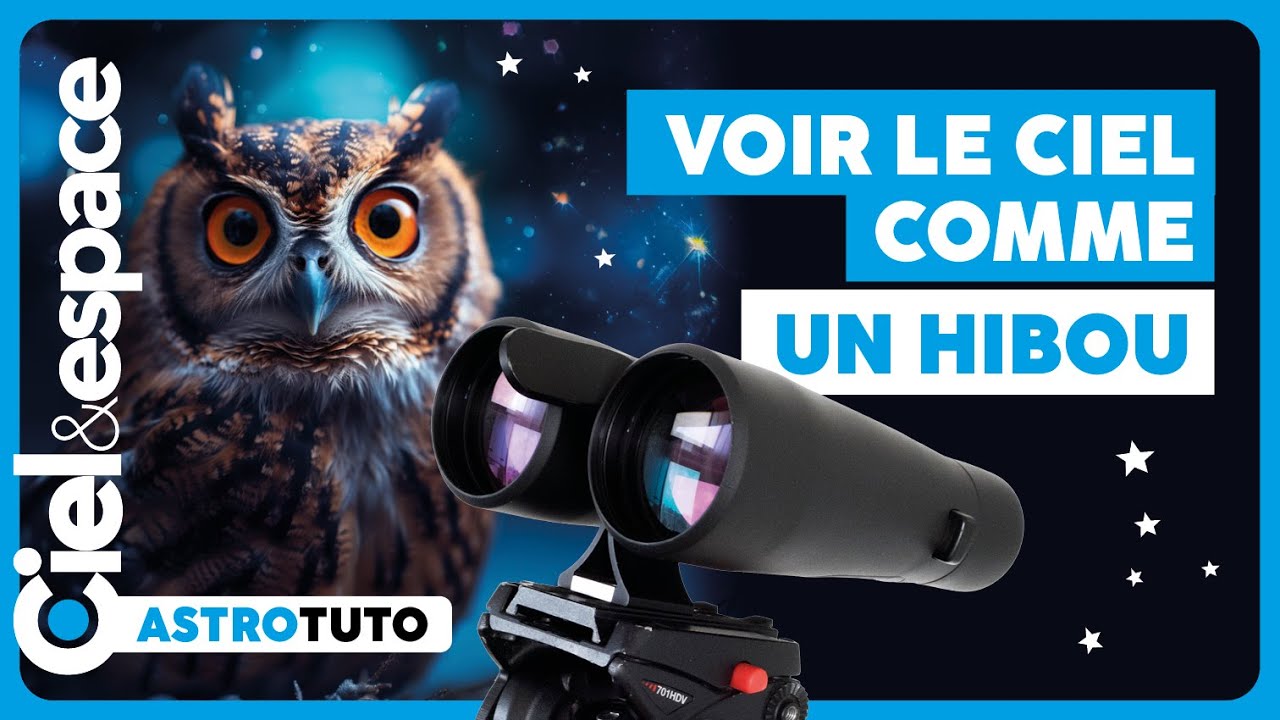
Des jumelles pour voir le ciel en XXL !
Keywords
Summary
217 words
Critical Evaluation
Value of the Information & Strength of the Argument
The video provides valuable, practical advice for amateur astronomers, especially beginners, on selecting binoculars. The argumentation is based on the presenters’ experience and references to tests conducted by the magazine. They explain technical concepts like exit pupil and prism types in an accessible way, supporting their recommendations with logical reasoning (e.g., why 10x50 is a good compromise). The advice is consistent and actionable, though it could benefit from more quantitative comparisons or references to independent studies.
Scientific Rigor, Source Quality, Title Accuracy
The video cites several sources from the Ciel & Espace website, including tests of 8x56 binoculars and a comic explaining how to choose binoculars. These are relevant and credible within the field of amateur astronomy. The title accurately reflects the content, which focuses on using binoculars for wide-field observation. The video is a tutorial, so it does not present original research but rather synthesizes existing knowledge and practical experience.
160 words
Title / Content Match
The title accurately reflects the content, which focuses on using binoculars for wide-field astronomical observation.
Quality & Reliability
7/10
The video provides practical, experience-based advice on choosing binoculars for astronomy, with references to tests published by the channel. The information is accurate and consistent with general knowledge, but lacks detailed scientific citations or rigorous methodology.
Chapters
Cited Sources
- Banc d'essai : neuf jumelles 8x56 testées pour l'astronomie — Referenced as a test of 56mm binoculars for astronomy.
- Comment choisir des jumelles ? On vous l'explique en BD — Referenced as a guide to choosing binoculars.
- Jumelles Omegon 2.1x42 : des yeux de hibou au banc d'essai — Referenced as a test of large binoculars.
- Tests de jumelles par Ciel & Espace — General reference to binocular tests.
- Rayon jumelles d'Optique Unterlinden — Link to the sponsor's binocular section.
- Astrotuto : les accessoires indispensables — Referenced as a related video on essential accessories.
Concurring Sources
- Banc d'essai : neuf jumelles 8x56 testées pour l'astronomie — The video's recommendations align with the test results published by the same source.
Contribution & Novelties
The video offers a practical, experience-based guide to choosing binoculars for astronomy, emphasizing the importance of exit pupil and prism type. It provides specific model recommendations and highlights objects best observed with binoculars, such as the Andromeda Galaxy and the Milky Way. This is a valuable resource for beginners, though it does not introduce novel scientific concepts.
Pour aller plus loin :
- Exit pupil — Explanation of the optical concept central to the video’s advice.
- Porro prism — Details on the prism type recommended for budget options.
- Schmidt–Pechan prism — Information on the prism type used in higher-end binoculars.
- Andromeda Galaxy — Background on one of the key objects recommended for binocular observation.
113 words
Radar Profile
The radar profile shows a balanced performance across all dimensions, with slightly higher scores in information quantity and quality, reflecting the video's practical and informative nature. The technical level is moderate, suitable for beginners, and the reliability is good due to the use of credible sources.