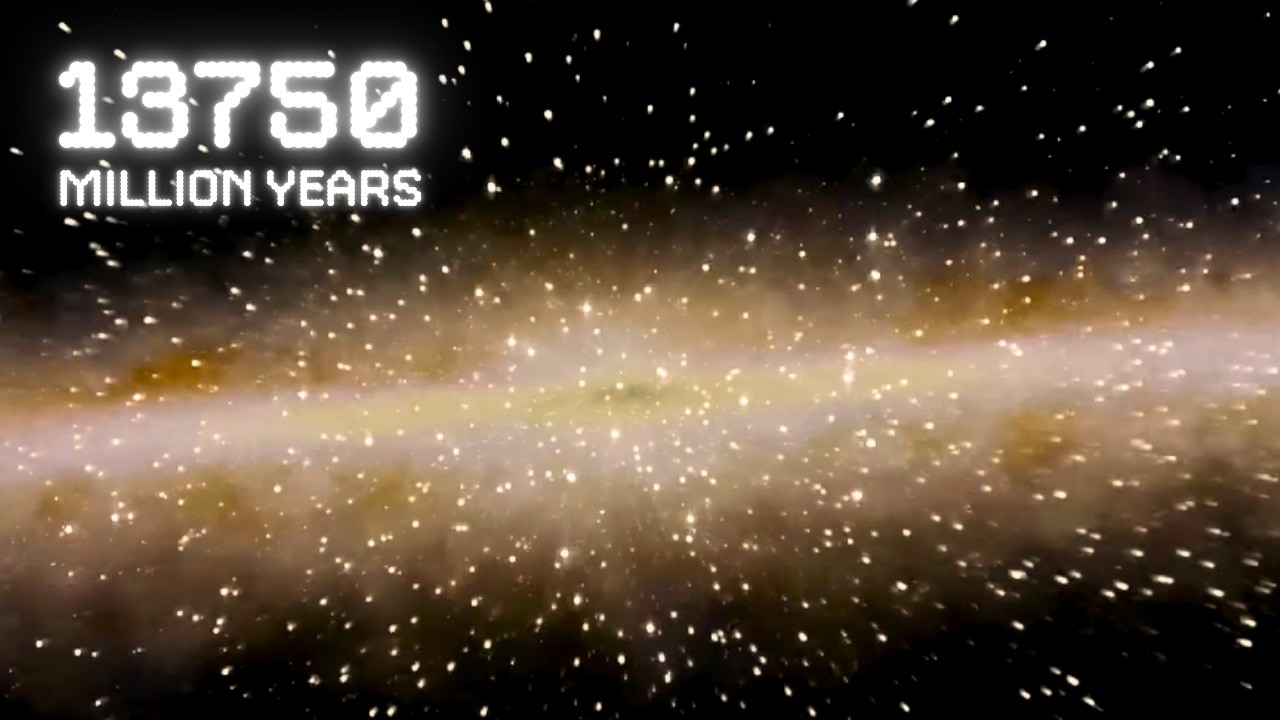
The Universe in a Box: Simulating the Cosmos with Supercomputers
Keywords
Summary
185 words
Critical Evaluation
Value of the Information & Strength of the Argument
The lecture provides valuable insights into the methodology of cosmological simulations, explaining complex concepts in an accessible manner. Pontzen’s argumentation is solid, grounded in established physics and observational evidence. He effectively demonstrates how simulations are essential for bridging the gap between initial conditions and the observed universe. The historical context enriches the narrative, showing the evolution of computational methods. The presentation is engaging and logically structured, making a compelling case for the importance of simulations in modern cosmology.
Scientific Rigor, Source Quality, Title Accuracy
The lecture demonstrates scientific rigor, with Pontzen referencing key missions like Planck and DESI, and institutions like the Vera Rubin Observatory. He is transparent about the uncertainties, such as the unknown nature of dark matter and dark energy. The title accurately reflects the content, focusing on the concept of simulating the universe. The sources cited are primarily the speaker’s own expertise and well-known scientific projects, though specific references are not provided in the description. The content aligns with current scientific consensus, and the speaker’s credentials lend credibility.
180 words
Title / Content Match
The title accurately reflects the content: the lecture explains how supercomputer simulations are used to model the universe, from dark matter to galaxy formation.
Quality & Reliability
8/10
Lecture by a leading cosmologist (Andrew Pontzen, Durham University) presenting established cosmological models and simulation techniques. Content is consistent with current scientific consensus, though simplified for a general audience.
Key Moments
Markers derived by PSI from the transcript: the creator did not define chapters.
- Introduction to the concept of the universe and the scale of galaxies.
- Discussion of dark matter and dark energy, and the cosmic web.
- History of simulation: from weather forecasting to early computers.
- Explanation of sub-grid physics and the components of a simulation.
- Demonstration of a state-of-the-art simulation showing galaxy formation.
- Concluding thoughts on the possibility that we live in a simulation.
Cited Sources
- Perimeter Institute on Bluesky — Official social media channel of the Perimeter Institute.
- Perimeter Institute Newsletter Signup — Sign up for updates from Perimeter Institute.
- Perimeter Institute Donations — Support Perimeter Institute's research.
- Perimeter Institute on LinkedIn — Official LinkedIn page of the Perimeter Institute.
Concurring Sources
- Planck satellite — Provides data on the cosmic microwave background, supporting the initial conditions used in simulations.
- Vera C. Rubin Observatory — Will provide detailed maps of the sky, helping to constrain simulations of dark matter and galaxy formation.
Contribution & Novelties
The lecture provides a comprehensive overview of cosmological simulations, emphasizing their role in understanding the universe. It highlights the importance of sub-grid physics and the iterative process of comparing simulations with observations. The historical perspective on simulation, from weather forecasting to modern supercomputers, adds depth. The speaker’s engaging style makes complex topics accessible.
Pour aller plus loin :
- Cosmological simulation — Overview of the methods and purpose of cosmological simulations.
- Dark matter — The mysterious substance that constitutes most of the universe’s mass.
- Cosmic web — The large-scale structure of the universe.
- Planck satellite — Mission that mapped the cosmic microwave background.
- Vera C. Rubin Observatory — Telescope designed to survey the sky and study dark matter and dark energy.
120 words
Radar Profile
The radar profile shows high scores in information quantity, quality, and reliability, with a moderate technical level. This indicates a lecture that is informative and trustworthy, but not overly technical, suitable for a general audience.