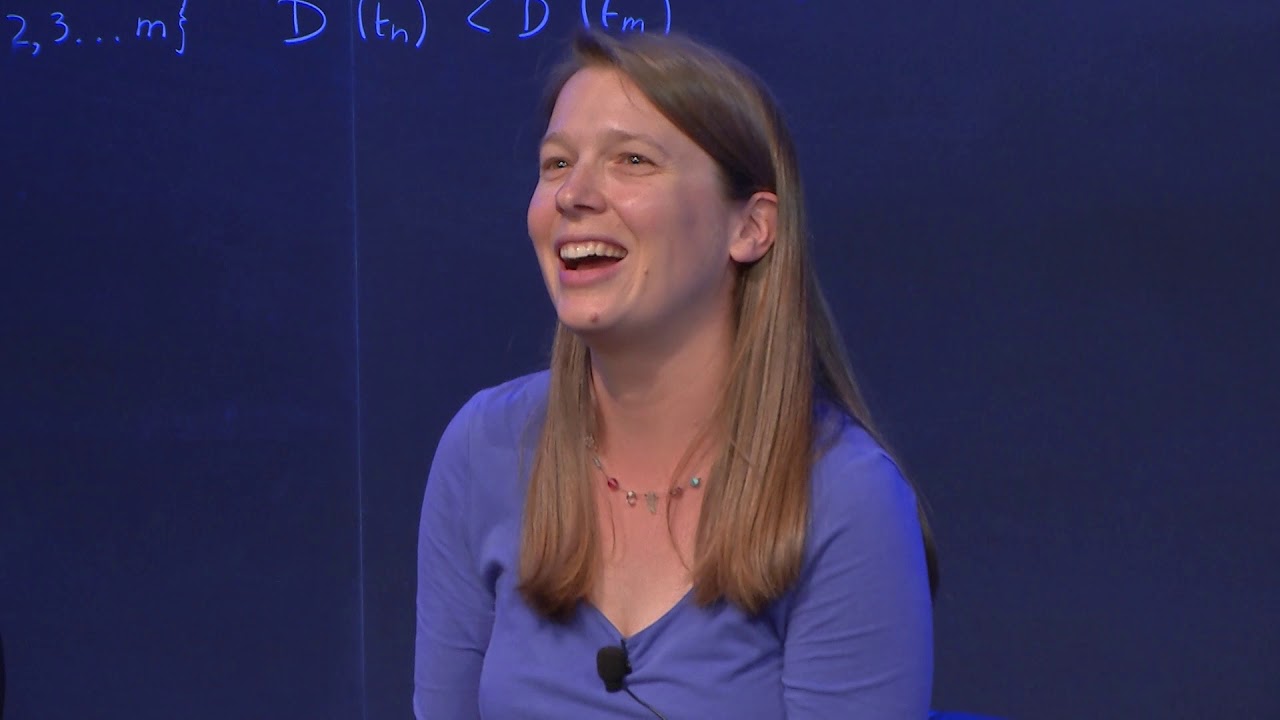
2019 Career Trajectories Panel Discussion: The road to academia
Keywords
Summary
178 words
Critical Evaluation
Value of the Information & Strength of the Argument
The value of the information lies in its practical, first-hand accounts of navigating academic careers. The panelists provide concrete examples of how they overcame obstacles, such as Rowan Thomson’s pivot from string theory to medical physics and Alioscia Hamma’s experience with failed job applications. The argumentation is persuasive because it is based on personal experience rather than abstract theory. The panelists offer actionable advice, such as seeking teaching opportunities beyond TA positions and crafting engaging research statements. The discussion is well-structured, with the moderator guiding the conversation to cover key aspects of faculty life, including workload, work-life balance, and the application process. The panelists’ diverse perspectives—from a liberal arts college to a startup university—enrich the discussion and provide a nuanced view of the academic landscape.
Scientific Rigor, Source Quality, Title Accuracy
The scientific rigor of the content is moderate, as it is based on anecdotal evidence and personal opinions rather than systematic research. However, the panelists are established academics with significant experience, lending credibility to their insights. The sources cited are limited to the Perimeter Institute’s career trajectories page, which is a relevant resource for further exploration. The title accurately reflects the content, which is a panel discussion on academic career paths. The discussion does not present new scientific findings but rather synthesizes practical knowledge about the academic profession. The absence of formal citations is appropriate for this format, and the information is presented in a clear and engaging manner.
249 words
Title / Content Match
The title accurately reflects the content: a panel discussion on career trajectories in academia, specifically the road to faculty positions.
Quality & Reliability
7/10
The video is a panel discussion featuring four academics with diverse career paths in physics. The information is based on personal experience and practical advice, not on peer-reviewed research. The content is credible and well-articulated, but the subjective nature of career advice limits its generalizability. The panelists are established professionals, and the discussion is moderated by a Perimeter Institute staff member, adding to its authority.
Key Moments
Markers derived by PSI from the transcript: the creator did not define chapters.
- Introduction of panelists and their diverse career paths.
- Chris Herdman discusses the liberal arts college environment and the importance of teaching.
- Rowan Thomson shares her journey from string theory to medical physics and back to academia.
- Alexandra Terrana describes her role at Minerva Schools and the innovative teaching model.
- Alioscia Hamma talks about his postdoc experiences and the challenges of finding a faculty position.
- Discussion on the balance between teaching and research, and the realities of faculty workload.
- Advice on writing research statements and preparing for the academic job market.
- Panelists share skills they had to develop as faculty, such as project management and mentorship.
Cited Sources
- Perimeter Institute Career Trajectories — Referenced in the video description as a resource for career paths in and outside academia.
Concurring Sources
- Perimeter Institute Career Trajectories — The video description points to this resource, which likely contains additional information on career paths, aligning with the panel's advice.
Contribution & Novelties
The video provides a unique and candid look at the academic career path, offering insights that are often not discussed in formal academic settings. The panelists’ diverse experiences highlight the variety of faculty positions available and the importance of aligning one’s career with personal values and strengths. The discussion on the application process, including the significance of research statements and teaching experience, is particularly valuable for early-career researchers. The video also addresses the often-overlooked aspects of faculty life, such as service duties and the need for project management skills.
Pour aller plus loin :
- Academic tenure — Provides background on the tenure system, a key concept in academic careers.
- Liberal arts college — Explains the type of institution discussed by Chris Herdman.
- Physics education research — Relevant to Alexandra Terrana’s work and the pedagogical approaches mentioned.
136 words
Radar Profile
The radar profile shows high scores in information quantity and technical level, reflecting the detailed and specialized nature of the discussion. The quality of information and reliability are slightly lower, consistent with the anecdotal and experience-based nature of the content. The overall balance suggests a valuable resource for those seeking practical career advice in academia.
💬 Sur les 0 commentaires analysés, aucune tendance n'est disponible.