Julie Payette Public Lecture at Perimeter Institute
Keywords
Summary
167 words
Critical Evaluation
Value of the Information & Strength of the Argument
The value of the information is high, as it provides a first-hand, detailed account of space shuttle operations and life on the ISS, which is rare and authentic. The argumentation is solid, based on personal experience and supported by actual mission footage. Payette explains technical concepts clearly, such as orbital mechanics and the effects of microgravity, making them accessible without oversimplifying. The talk is well-structured, moving from launch to landing, and includes practical details like the ‘Canadian handshake’ and the importance of teamwork. The argument for international cooperation in space is compelling, backed by examples of the ISS’s construction and operation.
Scientific Rigor, Source Quality, Title Accuracy
The scientific rigor is high, as the speaker is a trained astronaut with direct involvement in the missions described. The sources are primarily her own experiences and the official mission video, which is reliable. The talk does not cite external scientific papers, but it is consistent with known facts about the ISS and spaceflight. The title accurately reflects the content: a public lecture by Julie Payette at Perimeter Institute, focusing on her space missions. There is no discrepancy between the title and the content.
200 words
Title / Content Match
The title accurately reflects the content: a public lecture by Julie Payette at Perimeter Institute, focusing on her space missions.
Quality & Reliability
8/10
High reliability due to first-hand account by a trained astronaut, corroborated by official mission footage and institutional context (Perimeter Institute). Minor limitations: no external citations, and some technical details are simplified for a general audience.
Key Moments
Markers derived by PSI from the transcript: the creator did not define chapters.
- Introduction of Julie Payette by Greg Dick, highlighting her background and achievements.
- Launch sequence of STS-127, with narration on the physical sensations and acceleration.
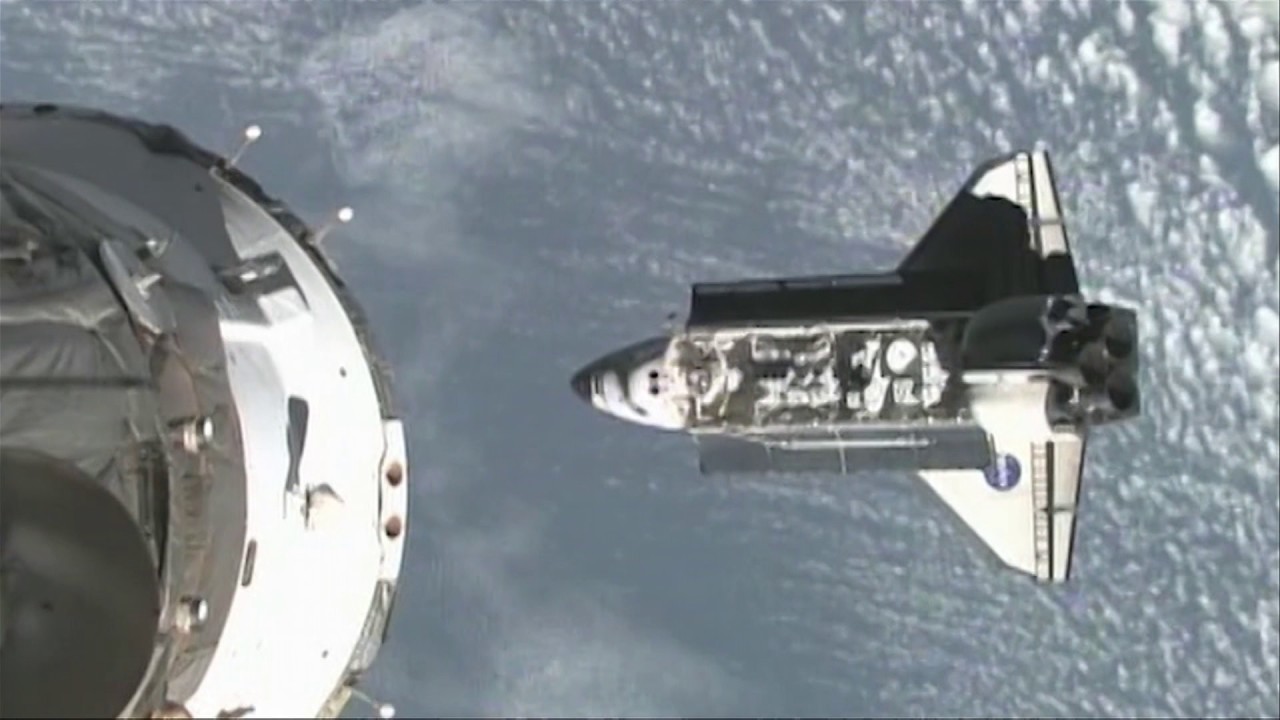
- Rendezvous and docking with the International Space Station, including the inspection maneuver.
- Tour of the ISS modules, including Columbus, Kibo, and the Russian segment.
- Explanation of robotic arm operations, including the 'Canadian handshake'.
- Description of spacewalks, including preparation and the use of tethers.
- Daily life in microgravity, including exercise and meals.
- Departure from the ISS and views of Earth, including auroras and weather phenomena.
- Re-entry and landing sequence, with description of the physical sensations.
- Reflections on the importance of space exploration and the fragility of Earth's atmosphere.
Cited Sources
- Perimeter Institute Public Lecture Series — Mentioned as the platform for this lecture and related public outreach.
- Perimeter Institute Newsletter — Mentioned for updates on future events and webcasts.
- Perimeter Institute Donation Page — Mentioned for supporting the institute's public lectures.
Concurring Sources
- NASA STS-127 Mission Page — Official NASA page for STS-127, confirming mission details and objectives.
- Canadian Space Agency - Julie Payette Biography — Official biography of Julie Payette, confirming her missions and roles.
Contribution & Novelties
The lecture provides a unique first-hand perspective on space shuttle missions and ISS operations, offering insights not commonly found in textbooks. It emphasizes the human and collaborative aspects of space exploration, which is valuable for inspiring public interest. The talk also highlights the importance of basic research in space, linking it to future exploration goals.
Pour aller plus loin :
- International Space Station — Overview of the ISS, its modules, and international collaboration.
- Space Shuttle — Details on the Space Shuttle program, including STS-127.
- Canadarm — Information on the robotic arms used on the ISS, a key topic in the lecture.
- Microgravity — Explanation of the effects of microgravity on the human body, as discussed in the talk.
118 words
Radar Profile
The radar profile shows high scores in quantity and quality of information, reflecting the rich first-hand content. The technical level is moderate, suitable for a general audience, while reliability is high due to the speaker's expertise. The overall balance indicates a valuable educational resource.
💬 Sur les 0 commentaires analysés, aucune tendance n'est disponible.