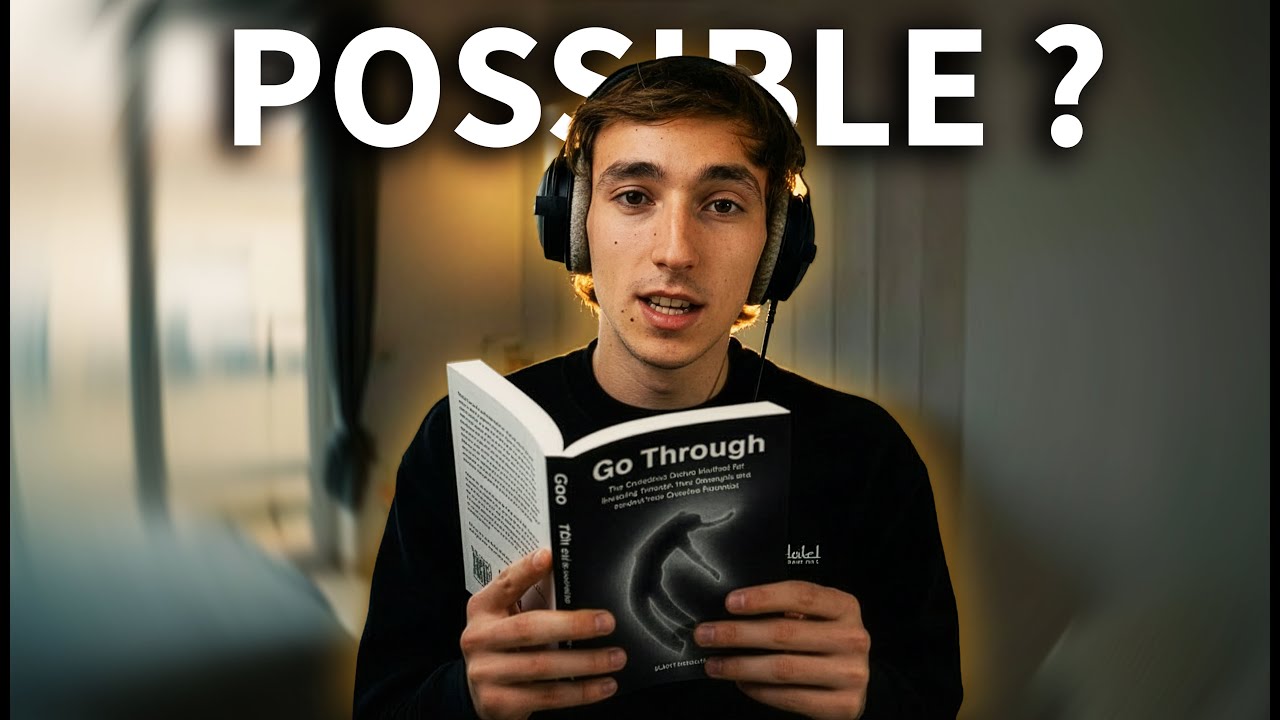
Comment j’ai écrit un livre en 3 semaines
Keywords
Summary
147 words
Critical Evaluation
Value of the Information & Strength of the Argument
The video provides valuable, actionable insights for aspiring authors, especially on combining a second brain with AI to accelerate writing. The author’s argumentation is coherent and based on his personal experience, which adds credibility. He explains the rationale behind each tool choice (e.g., Scrivener for versioning, Pinecone for context) and demonstrates the workflow with real examples. However, the advice is anecdotal and may not be universally applicable, and the reliance on AI for 80% of the writing raises questions about originality and voice.
Scientific Rigor, Source Quality, Title Accuracy
The video is a personal tutorial, not a scientific presentation. The author mentions several books and authors (e.g., Gabrielle Roth, Bessel van der Kolk) but does not provide citations or references. The description includes links to his book and website, but these are promotional. The title accurately reflects the content, and the video is well-structured with clear chapters. The lack of external sources and the promotional nature of some links reduce the overall rigor.
172 words
Title / Content Match
The title accurately reflects the content: the author details his process of writing a book in three weeks, from ideation to publication.
Quality & Reliability
6/10
The video is a personal account of the author's process, with practical details on tools and workflow. It lacks external verification and scientific rigor, but the methods described are reproducible and the author shares concrete examples.
Chapters
Cited Sources
- Go Through book — The author's book, presented as the result of the process described.
- Go Through official site — The author's website for the Go Through approach, with open-source resources.
- Eliott Meunier's blog — The author's blog, where additional content and updates are shared.
- Perspectives presentation — A promotional link for a business model presentation, likely a sponsor or affiliate.
Concurring Sources
- Scrivener official site — The software's features align with the author's description of versioning and compilation.
- Pinecone official site — The vector database service used for the AI's knowledge base, as described in the video.
Dissenting Sources
- Potential concerns about AI-written content — The author admits that 80% of the book was written by AI, which may raise questions about originality and the author's voice. This is a potential point of contention for readers expecting a human-written work.
Contribution & Novelties
The video offers a concrete, step-by-step method for writing a book quickly by leveraging a ‘second brain’ and AI. The novelty lies in the integration of a vector database (Pinecone) to give the AI access to a curated corpus, enabling it to write with accurate context and cite sources. This approach could be adapted by other creators to produce content efficiently while maintaining a personal voice.
Pour aller plus loin :
- Second brain (Tiago Forte) — The concept of a second brain as a knowledge management system, foundational to the author’s method.
- Scrivener — The writing software used for its versioning and compilation features.
- Pinecone — The vector database used to create the AI’s knowledge base.
- Gabrielle Roth’s Five Rhythms — A dance practice that influenced the author’s approach, mentioned in the video.
133 words
Radar Profile
The radar profile shows high scores in information quantity and technical level, reflecting the detailed and practical nature of the tutorial. The lower scores in information quality and reliability are due to the lack of external sources and the anecdotal nature of the advice.
💬 Sur les 0 commentaires analysés, aucune tendance n'a pu être dégagée.