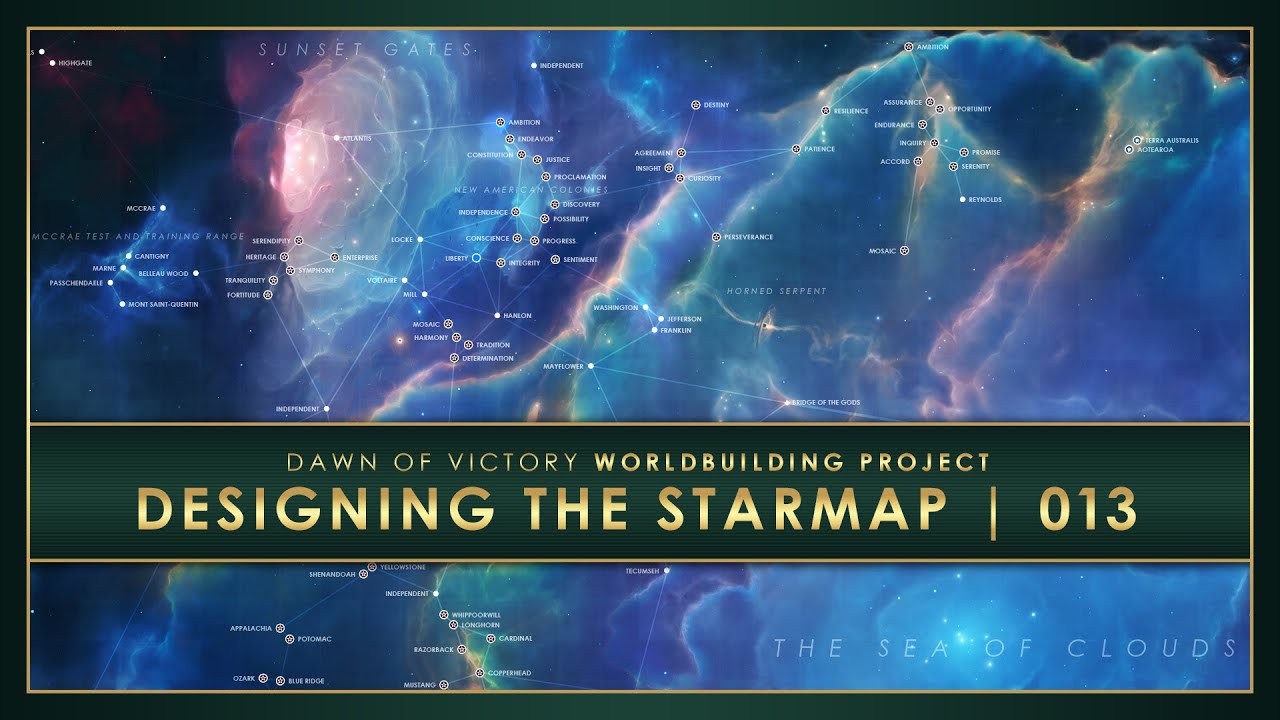
Back to Work on the Orion Arm | Dawn of Victory Worldbuilding Session #13
Keywords
Summary
144 words
Critical Evaluation
Value of the Information & Strength of the Argument
The value of the information is primarily for fans of the Dawn of Victory setting and those interested in the worldbuilding process. The host provides insights into the creative decisions behind naming and placing star systems, such as using regional themes for American colonies and grouping Native American nations based on cultural and historical ties. The argumentation is not scientific but rather creative and narrative-driven, with the host acknowledging his limitations and inviting community input. The discussion of fleet sizes provides some internal consistency to the setting, but it is not based on any external data.
Scientific Rigor, Source Quality, Title Accuracy
The video does not cite any scientific sources, as it is a creative worldbuilding session. The host references the Templin Institute’s wiki and community forums for lore and suggestions, but these are not authoritative sources. The title accurately describes the content, which is a return to worldbuilding the Orion Arm. The video is not intended to be rigorous or factual, so the lack of sources is not a flaw in this context.
183 words
Title / Content Match
The title accurately reflects the content: a return to worldbuilding the Orion Arm region of the Dawn of Victory setting.
Quality & Reliability
6/10
The video is a creative worldbuilding session, not a scientific or factual presentation. The information is internally consistent within the fictional setting but has no external verification. The host acknowledges his limitations in cultural representation and relies on community input. The production quality is decent, but the content is inherently subjective and speculative.
Key Moments
Markers derived by PSI from the transcript: the creator did not define chapters.
- Introduction and return to the Orion Arm, explanation of the stream's purpose.
- Discussion of recent updates to the wiki and social media, including a geopolitical map of the Juno Reach.
- Start of adding Native American star systems, with a list of tribes and their placement.
- Adding the Three Sisters system and discussing the Three Fires Council.
- Reading super chats, including a question about fleet sizes, answered with reference to a poster.
- Starting work on British systems, naming the central cluster 'Britannia'.
- Discussion of naming themes for British systems and reading more super chats.
- Continued map editing and community interaction.
- Further development of British systems and discussion of the setting's lore.
- Wrap-up and plans for future streams.
Cited Sources
- Templin Institute Website — Official website for the Templin Institute, providing information about the setting and community.
- Templin Institute Subreddit — Community forum for discussing the Templin Institute's content, including Dawn of Victory.
- Templin Institute Ideas Portal — Platform for submitting ideas for system names and other worldbuilding elements.
- Templin Institute Twitch — Live streaming platform where the Templin Institute hosts worldbuilding sessions.
Concurring Sources
- Templin Institute Wiki — The wiki is the primary repository for Dawn of Victory lore, and this video adds to it.
Contribution & Novelties
The video contributes to the ongoing development of the Dawn of Victory setting by adding new star systems and lore for Native American and British factions. It also showcases the collaborative worldbuilding process, where community input is solicited and incorporated. The discussion of naming conventions and geopolitical structures adds depth to the setting.
Pour aller plus loin :
- Worldbuilding (Wikipedia) — Provides an overview of the practice of constructing fictional worlds.
- Science Fiction (Wikipedia) — Contextualizes the genre and its conventions.
- Map (Wikipedia) — Discusses the creation and use of maps, relevant to the star map development.
97 words
Radar Profile
The radar profile shows a moderate level of information quantity and quality, with a lower technical level due to the casual and non-scientific nature of the content. The reliability is moderate, as the information is internally consistent but not externally verifiable.
💬 No comments were provided for analysis.