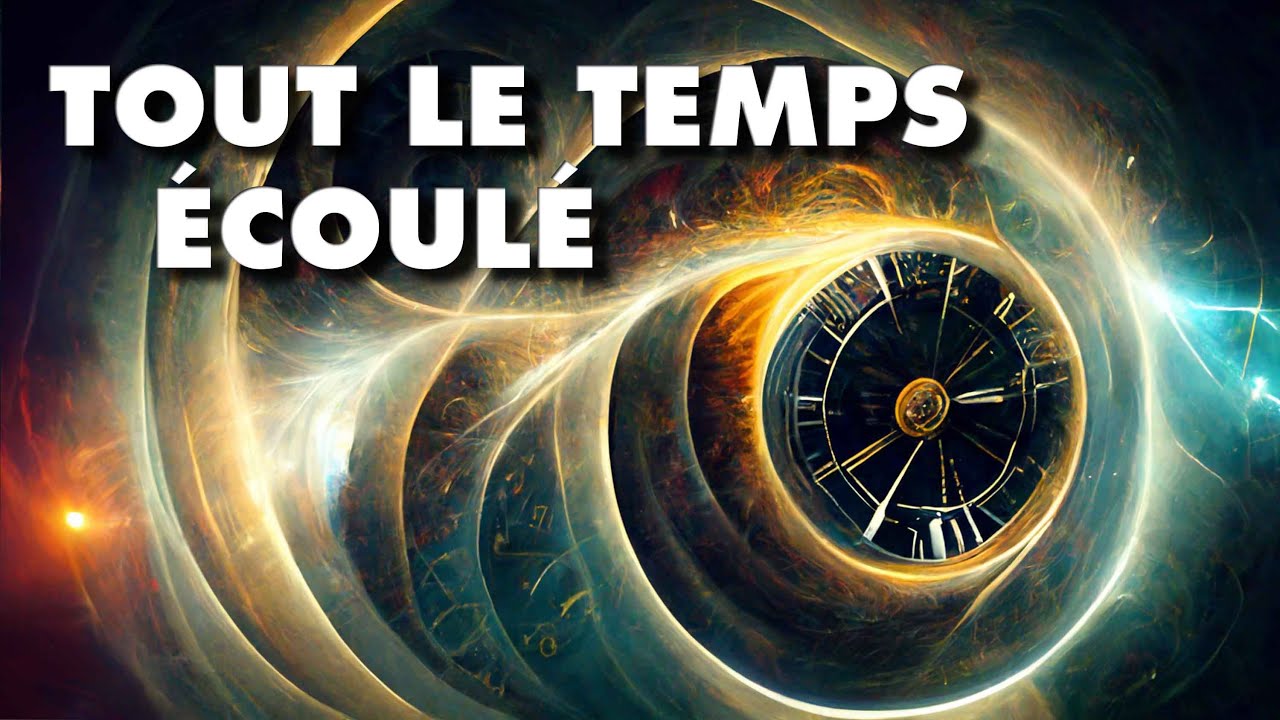
Le calendrier COSMIQUE - tout le temps qui s'est écoulé
Keywords
Summary
171 words
Critical Evaluation
Value of the Information & Strength of the Argument
The video provides a compelling and accessible visualization of deep time, effectively conveying the vastness of cosmic history. The argumentation is clear and logical, using a consistent scale to put human history into perspective. The narrative is engaging and emotionally resonant, making complex scientific concepts relatable. The video does not present new research but excels in synthesizing existing knowledge into a powerful educational tool.
Scientific Rigor, Source Quality, Title Accuracy
The video is scientifically rigorous, referencing Carl Sagan’s ‘The Dragons of Eden’ and providing links to reputable sources like Planet-Terre (ENS Lyon) and a Belgian newspaper’s dossier on the cosmic calendar. The title accurately reflects the content. The video’s strength lies in its faithful adaptation of a well-established concept, with no apparent distortions or inaccuracies. The sources cited are credible and support the information presented.
144 words
Title / Content Match
The title accurately reflects the content, which is a visual and narrative presentation of the cosmic calendar.
Quality & Reliability
8/10
The video presents a well-known scientific concept (the Cosmic Calendar) with accurate scaling and references to established sources. The information is consistent with current scientific understanding, though simplified for a general audience.
Key Moments
Markers derived by PSI from the transcript: the creator did not define chapters.
- Introduction: the challenge of grasping deep time
- Presentation of the Cosmic Calendar concept and its scale
- The Big Bang and the first moments of the universe
- Formation of galaxies and the Milky Way
- Formation of the solar system and the Earth
- Appearance of life and the oxygenation of the atmosphere
- Snowball Earth and the Cambrian explosion
- Colonization of land, dinosaurs, and the asteroid impact
- Rise of mammals and the last day of the cosmic year
- Human history in the final seconds, from Lascaux to the modern era
- Reflection on the brevity of human history and the cosmic perspective
Cited Sources
- Le calendrier cosmique (La Libre Belgique) — Reference for the cosmic calendar concept
- Chronologie de la Terre (Planet-Terre, ENS Lyon) — Source for Earth's geological timeline
- Balade Mentale merchandise — Promotional link for the channel's merchandise
- Utip support page — Crowdfunding platform for the channel
- Videvo stock footage — Source for some of the video's visual assets
Concurring Sources
- Cosmic Calendar (Wikipedia) — Provides a similar scale model of the universe's history, confirming the video's approach.
- Age of the universe (Wikipedia) — Confirms the 13.8 billion year age of the universe used in the video.
Contribution & Novelties
The video offers a visually stunning and emotionally engaging adaptation of Carl Sagan’s Cosmic Calendar, making deep time tangible for a broad audience. It does not introduce new scientific findings but excels in science communication, using a poetic narrative and high-quality visuals to convey the scale of cosmic history.
Pour aller plus loin :
- Cosmic Calendar (Wikipedia) — A detailed overview of the concept and its history.
- Big Bang (Wikipedia) — The prevailing cosmological model for the universe’s origin.
- Timeline of the early universe (Wikipedia) — A chronological account of the universe’s first moments.
94 words
Radar Profile
The radar profile shows high scores in information quality and reliability, with slightly lower scores in technical depth and quantity. This reflects the video's strength as a clear and accurate science communication piece rather than a technical lecture.
💬 Très positif. Sur les 30 commentaires analysés, l'enthousiasme est unanime : les spectateurs expriment une admiration profonde pour la beauté, la poésie et la clarté de la vidéo, certains la qualifiant de l'une des meilleures vues sur YouTube.