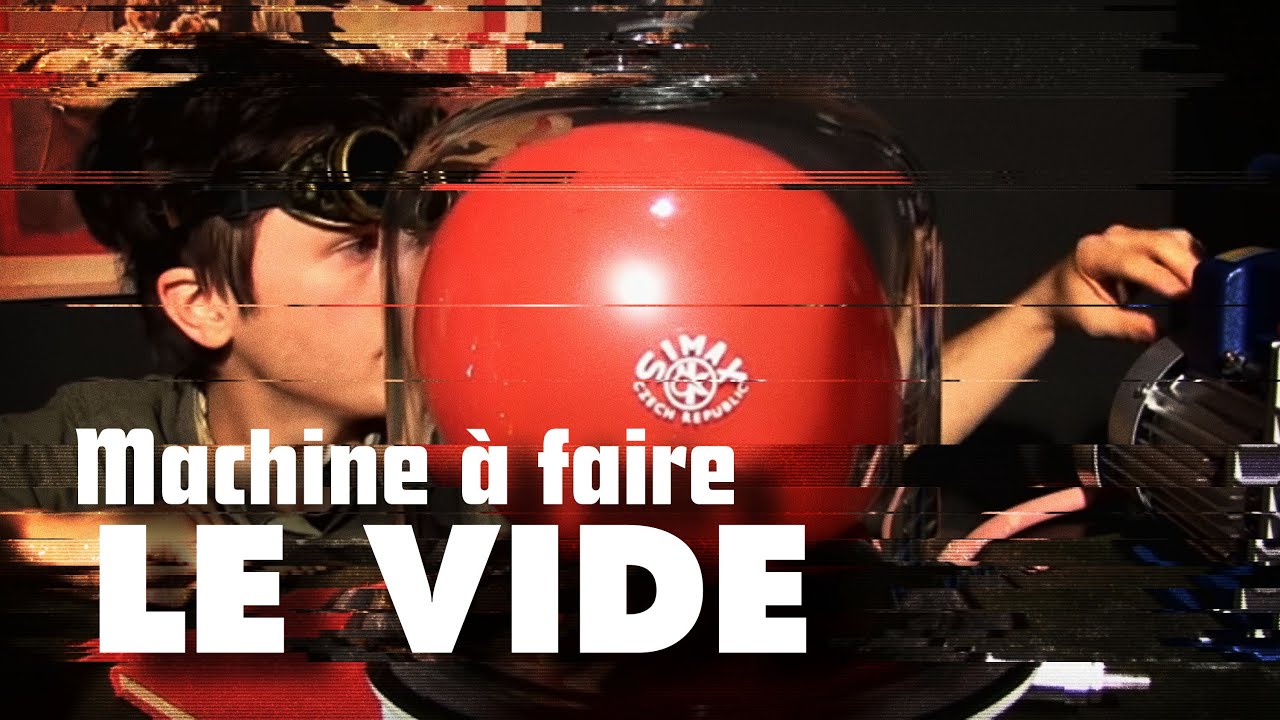
CLOCHE à VIDE / Étrange expérience
Keywords
Summary
173 words
Critical Evaluation
Value of the Information & Strength of the Argument
The video’s primary value lies in its clear, visual demonstrations of abstract physics concepts. The argumentation is built around direct observation: the host performs experiments and explains the results in simple terms. The explanation of why water boils at lower temperatures under reduced pressure is accurate and well-illustrated. The historical context of the Magdeburg hemispheres adds depth. The argumentation is solid for a popular science context, though it simplifies complex phenomena. The video’s strength is its ability to make scientific principles tangible and memorable through engaging demonstrations.
Scientific Rigor, Source Quality, Title Accuracy
The video does not cite academic sources directly, but it references historical figures (Otto von Guericke, Robert Boyle) and a famous painting. The description provides a link to the CCSTI La Rotonde, a science center that allowed filming, which adds a layer of institutional credibility. The title accurately describes the content. The video includes a clear erratum in the description, correcting a factual error about the Armstrong limit, which demonstrates a commitment to accuracy. The scientific rigor is appropriate for a general audience, with the main concepts being correctly presented.
192 words
Title / Content Match
The title accurately reflects the content, which is a demonstration and explanation of experiments with a vacuum bell.
Quality & Reliability
7/10
The video is a well-produced popular science piece. It correctly explains the basic principles of air pressure and vacuum, and includes a historical anecdote (Magdeburg hemispheres). However, it contains a significant error regarding the Armstrong limit, which is corrected in the description. The scientific content is simplified for a general audience, and the tone is humorous and engaging.
Key Moments
Markers derived by PSI from the transcript: the creator did not define chapters.
- Introduction of the pneumatic machine and its basic operation.
- Demonstration of the vacuum seal and explanation of atmospheric pressure.
- Historical segment on the Magdeburg hemispheres experiment.
- Experiment showing water boiling at room temperature under vacuum.
- Experiments with a tomato, mandarin, and marshmallow in the vacuum.
- Demonstration of a balloon expanding in the vacuum.
- Experiment with an alarm clock showing that sound does not travel in a vacuum.
Cited Sources
- CCSTI La Rotonde — The science center that allowed the filming of the video.
- Utip page for Balade Mentale — A platform for supporting the channel.
Concurring Sources
- Atmospheric pressure — Confirms the explanation of air pressure and its effects.
- Magdeburg hemispheres — Supports the historical account of the experiment.
- Boiling point — Validates the relationship between pressure and boiling temperature.
Contribution & Novelties
The video’s original contribution is its engaging, humorous, and accessible presentation of classic vacuum experiments. It effectively bridges historical experiments with modern-day demonstrations, making the science relatable. The use of everyday objects (marshmallows, balloons, water) helps demystify the concept of air pressure.
Pour aller plus loin :
- Atmospheric pressure — Provides a detailed scientific explanation of the force demonstrated in the video.
- Magdeburg hemispheres — Historical background on the famous experiment mentioned in the video.
- Boiling point — Explains the relationship between pressure and boiling temperature, a key concept demonstrated with the water experiment.
- Sound — Discusses the propagation of sound, which requires a medium, as shown by the alarm clock experiment.
112 words
Radar Profile
The radar profile shows a balanced video with strong scores in information quantity and quality, but a lower score in technical level, reflecting its popular science nature. The reliability score is moderate, indicating that while the core science is correct, the presentation is simplified and contains a minor error that was later corrected.
💬 Très positif. Sur les 30 commentaires analysés, l'accueil est extrêmement enthousiaste, avec des éloges pour le nouveau format, l'humour, la qualité du montage et la clarté des explications scientifiques.