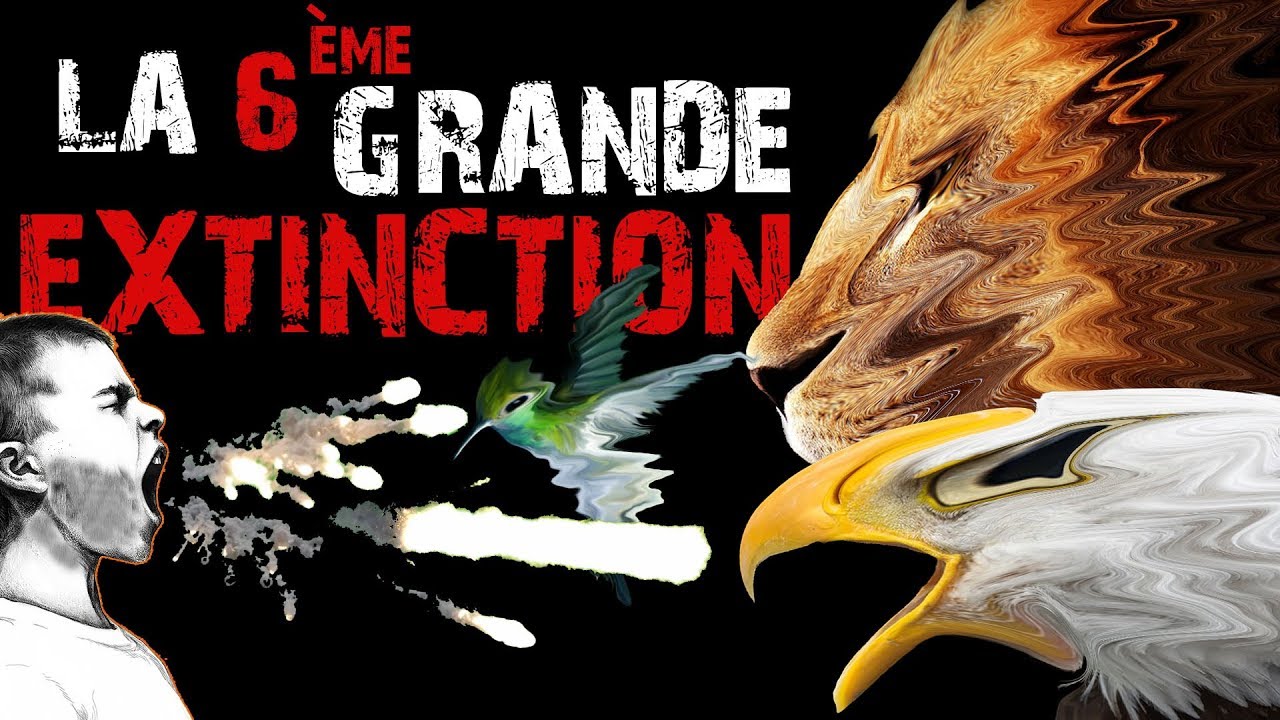
La 6ème GRANDE EXTINCTION
Keywords
Summary
172 words
Critical Evaluation
Value of the Information & Strength of the Argument
The video provides a comprehensive overview of the sixth extinction, supported by a wide range of scientific studies and data. It effectively argues that human activity is the primary driver of current biodiversity loss, using historical examples and modern statistics. The argumentation is solid, though it simplifies some complex ecological interactions. The inclusion of specific numbers (e.g., extinction rates, population declines) strengthens the credibility. The video also acknowledges uncertainties and alternative factors, such as climate change, which adds nuance. However, the humorous tone and rapid pacing may occasionally undermine the gravity of the subject, but overall, the information is valuable and well-presented.
Scientific Rigor, Source Quality, Title Accuracy
The video cites numerous scientific sources, including peer-reviewed articles from PNAS, Science Advances, and BioScience, as well as reports from the IUCN Red List. These sources are reputable and directly support the claims made. The description provides links to these sources, enhancing transparency. The title accurately reflects the content, which focuses on the ongoing extinction event. The video’s scientific rigor is high, though it is presented in a popularized format. The use of humor and pop culture references (e.g., JCVD) does not detract from the factual accuracy. Overall, the sources are well-chosen and the title is appropriate.
214 words
Title / Content Match
The title accurately reflects the content, which focuses on the ongoing Holocene extinction and its comparison to past mass extinctions.
Quality & Reliability
8/10
The video relies on multiple scientific sources (PNAS, Science Advances, BioScience, IUCN Red List) and presents data on extinction rates and population declines. While it simplifies complex topics for a general audience, the core information is accurate and well-supported. Minor simplifications and a humorous tone do not undermine the scientific integrity.
Key Moments
Markers derived by PSI from the transcript: the creator did not define chapters.
- Introduction to the topic: prehistoric megafauna and their extinction.
- Discussion of the role of early humans in megafauna extinctions in Australia and the Americas.
- Examples of island extinctions: Madagascar, New Zealand, and the Pacific islands.
- Introduction to the Holocene extinction and comparison with past mass extinctions.
- Statistics on current extinction rates and population declines.
- Causes of the current extinction: habitat loss, overconsumption, climate change.
- Call to action and message of hope: individual and collective solutions.
Cited Sources
- The biodiversity of species and their rates of extinction, distribution, and protection — Cited for background extinction rates and biodiversity data.
- Biological annihilation via the ongoing sixth mass extinction signaled by vertebrate population losses and declines — Cited for data on population declines and extinction rates.
- Vertebrates on the brink as indicators of biological annihilation and the sixth mass extinction — Cited for data on species at risk and extinction rates.
- Estimating the normal background rate of species extinction — Cited for background extinction rates.
- The Sixth Mass Extinction: Fact, Fiction or Speculation? — Cited for discussion of the sixth extinction.
- IUCN Red List of Threatened Species — Cited for species threat status.
- Extinction massive — Cited for general information on mass extinctions.
- Les extinctions massives — Cited for information on the five major extinctions.
- La sixième extinction de masse des animaux s'accélère de manière dramatique — Cited for news on the acceleration of the sixth extinction.
- La sixième extinction massive a déjà commencé — Cited for popular science article on the sixth extinction.
- Sixième extinction de masse : les animaux sous-estimés — Cited for news on underestimated extinction rates.
- Étude : une sixième extinction massive des animaux est en cours — Cited for news on the sixth extinction study.
- Le cercle des espèces disparues — Cited for examples of extinct species.
- Elizabeth Kolbert : l'homme est un loup pour les animaux — Cited for interview with Elizabeth Kolbert on the sixth extinction.
- Sixième extinction massive des espèces : que reste-t-il ? — Cited for radio discussion on the sixth extinction.
- Disparition d'espèces dans le monde — Cited for statistics on species disappearance.
- Extinctions de masse : avant les lions, des dinosaures et des trilobites — Cited for history of mass extinctions.
- Mégafaune du Pléistocène — Cited for information on Pleistocene megafauna.
- Extinction de l'Holocène — Cited for information on the Holocene extinction.
- Les premiers excès de la chasse il y a 45 000 ans — Cited for evidence of early hunting impacts.
- Mégafaune : des animaux incroyables — Cited for images and information on megafauna.
- Liste rouge de l'UICN — Cited for information on the IUCN Red List.
- Quelles sont les 5 grandes extinctions ? — Cited for overview of the five mass extinctions.
Concurring Sources
- Biological annihilation via the ongoing sixth mass extinction signaled by vertebrate population losses and declines — Supports the video's claims about population declines and extinction rates.
- Vertebrates on the brink as indicators of biological annihilation and the sixth mass extinction — Supports the video's data on species at risk.
- Estimating the normal background rate of species extinction — Provides background extinction rates used in the video.
- The Sixth Mass Extinction: Fact, Fiction or Speculation? — Discusses the scientific debate on the sixth extinction, aligning with the video's perspective.
Dissenting Sources
- Are we really in a 6th mass extinction? — Some scientists argue that current extinction rates may not yet qualify as a mass extinction event, though the video presents it as ongoing.
External References
Contribution & Novelties
The video synthesizes a large body of scientific literature on the sixth extinction into an accessible and engaging format. It effectively combines historical context with current data, making the urgency of biodiversity loss tangible. The use of humor and pop culture references helps to engage a broader audience, potentially increasing awareness. The video also emphasizes the role of human activity, particularly overconsumption, as a driver of extinction, which is a crucial message.
Pour aller plus loin :
- Holocene extinction - Wikipedia — Provides a comprehensive overview of the ongoing extinction event.
- IUCN Red List — Official source for species threat status.
- The Sixth Extinction: An Unnatural History — Book by Elizabeth Kolbert that explores the sixth extinction in depth.
- Biodiversity loss - Wikipedia — Discusses the causes and consequences of biodiversity decline.
- Anthropocene - Wikipedia — Concept of the current geological epoch shaped by human activity.
146 words
Radar Profile
The radar profile shows high scores in information quantity, quality, and reliability, with a slightly lower technical level. This indicates a well-researched and informative video that is accessible to a general audience, balancing scientific depth with engaging presentation.
💬 Très positif. Sur les 30 commentaires analysés, la grande majorité exprime une forte appréciation de la vidéo, saluant sa qualité, son humour et son utilité publique. Quelques commentaires apportent des critiques constructives, notamment sur la vision anthropocentrique de la nature, mais l'ensemble est extrêmement favorable.