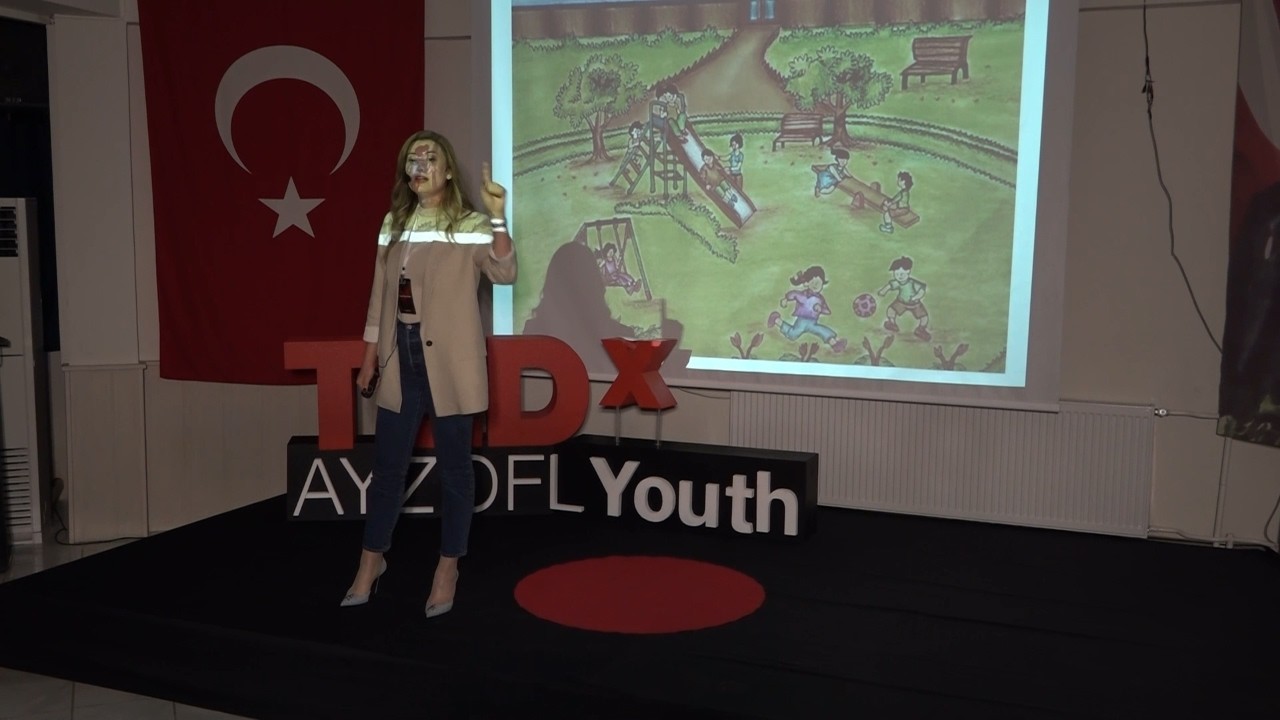
Hiç Susmayan Zihnim Bana Ne Anlatıyor? | Ayşe Günay Arıkan | TEDxAYZOFL Youth
Keywords
Summary
162 words
Critical Evaluation
Value of the Information & Strength of the Argument
The talk provides valuable insights into the connection between early attachment experiences and adult mental states, offering a compelling reframe of a common complaint. The argumentation is coherent and accessible, using metaphors like the smoke detector to illustrate complex concepts. However, it relies heavily on anecdotal evidence and general statements, with limited specific scientific citations. The speaker’s expertise lends credibility, but the argument would be strengthened by more concrete research examples.
Scientific Rigor, Source Quality, Title Accuracy
The talk demonstrates scientific rigor in its use of established concepts like attachment theory and neuroplasticity, but it lacks specific source citations. The only reference provided is the general TEDx link, which does not offer direct access to the mentioned studies. The title accurately reflects the content, and the speaker’s credentials as a psychiatrist support her authority on the subject. However, the absence of detailed references limits the verifiability of the claims.
158 words
Title / Content Match
The title accurately reflects the content, which explores why the mind never stops and what it communicates.
Quality & Reliability
7/10
The talk is based on established psychological concepts (attachment theory, stress response, neuroplasticity) and presented by a qualified psychiatrist. However, it relies heavily on anecdotal evidence and metaphors, with limited specific references to scientific studies. The content is generally accurate but lacks depth and empirical support.
Key Moments
Markers derived by PSI from the transcript: the creator did not define chapters.
- Introduction: Speaker introduces herself as a psychiatrist and addresses the common complaint of a never-silent mind.
- Evolutionary explanation: Brain designed for threat detection and survival, leading to constant scanning.
- Introduction of the smoke detector metaphor to explain overactive alarm systems.
- Attachment theory: John Bowlby's concept of secure base and its impact on stress regulation.
- Contrasting scenarios: Secure vs. insecure attachment and their effects on a child's sense of safety.
- Chronic stress: How prolonged hypervigilance leads to mental fatigue and a restless mind.
- Neuroplasticity: The brain can change, and secure relationships can help rewire the stress system.
- Conclusion: The mind may be on a long watch, and true rest requires feeling safe.
Cited Sources
- TEDx Program — General information about TEDx events, mentioned at the end of the talk.
Concurring Sources
- Attachment theory — Supports the talk's discussion of early attachment patterns and their influence on later functioning.
- Neuroplasticity — Aligns with the claim that the brain can change and adapt through experience.
Contribution & Novelties
The talk offers a fresh perspective on the common experience of a restless mind, framing it as a potential sign of an overactive threat-detection system rather than mere disorganization. It bridges evolutionary psychology, attachment theory, and neuroplasticity in an accessible way, providing a hopeful message that change is possible through relationships and therapy.
Pour aller plus loin :
- Attachment theory — Foundational concept for understanding early relationships and their long-term impact.
- Neuroplasticity — The brain’s ability to reorganize itself, central to the talk’s message of hope.
- Stress response — Physiological mechanisms underlying the ‘alarm system’ described.
- Polyvagal theory — A complementary framework on how the nervous system responds to safety and threat.
112 words
Radar Profile
The radar profile shows moderate scores across all dimensions, with slightly higher quality and reliability compared to quantity and technical depth. This suggests a balanced but not highly specialized talk, suitable for a general audience.