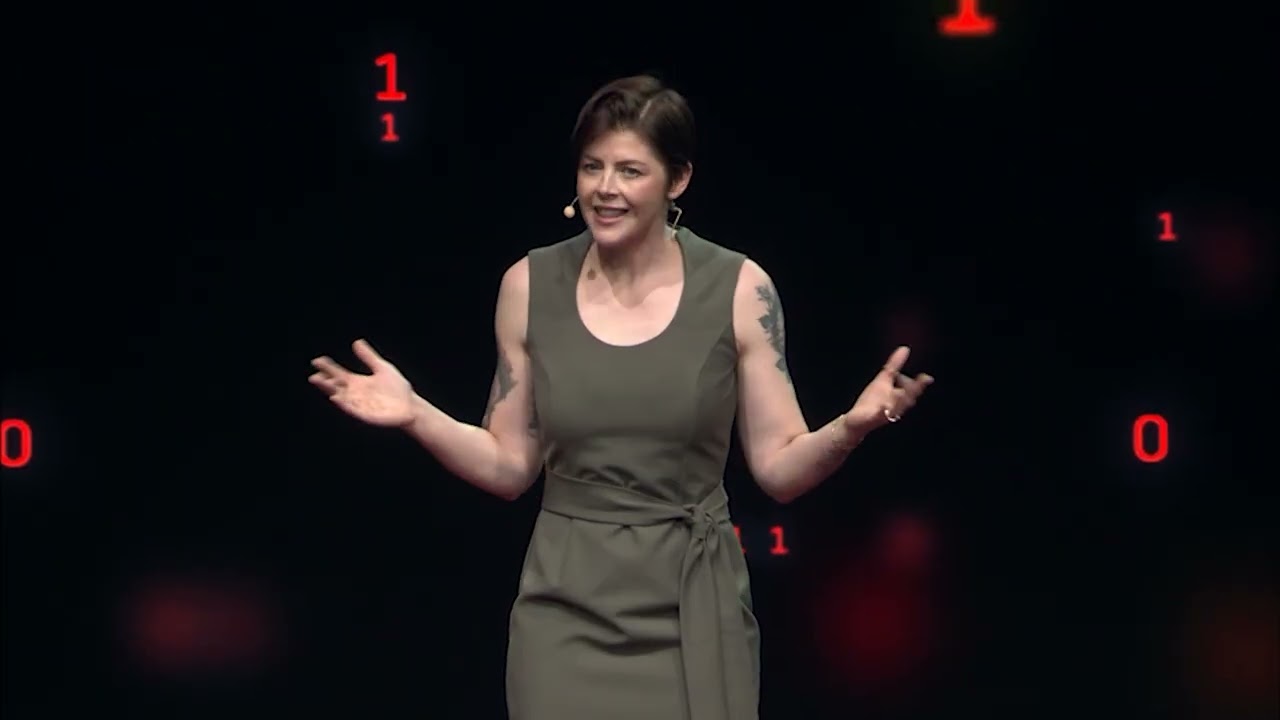
What prison taught me about gender violence | Meggie Mapes | TEDxKC
Keywords
Summary
180 words
Critical Evaluation
Value of the Information & Strength of the Argument
The talk provides valuable insights into the social construction of masculinity and its link to gender violence, drawing on the speaker’s firsthand research. The argument is compelling and well-structured, using personal anecdotes and a case study to illustrate the theoretical points. The speaker’s call for accountability and cultural change is persuasive, though the argumentation relies heavily on narrative rather than systematic evidence. The three practical steps offered are actionable and grounded in the research, enhancing the talk’s practical value.
Scientific Rigor, Source Quality, Title Accuracy
The talk is based on the speaker’s original research, which lends credibility, but it lacks explicit citations to academic literature or external sources. The description mentions her academic credentials and forthcoming book, but no specific studies are referenced. The title accurately reflects the content, and the talk is well-aligned with the TEDx format. The absence of citations limits the ability to verify claims, but the speaker’s expertise and the qualitative nature of the research provide a reasonable foundation.
172 words
Title / Content Match
The title accurately reflects the content: the speaker shares insights from her prison research on gender violence.
Quality & Reliability
7/10
The talk is based on the speaker's original research conducted in prison settings, which lends authenticity. However, it is presented as a personal narrative with limited methodological detail and no citations to external studies, making it difficult to independently verify claims.
Key Moments
Markers derived by PSI from the transcript: the creator did not define chapters.
- Introduction: Mapes explains her research in prison on gender violence.
- Musical chairs metaphor: how winning at all costs is learned.
- Introduction of AJ's story and the concept of violence as a meaning problem.
- Discussion of how comparison shields us from accountability.
- Mapes shares her own realization of perpetuating harm.
- Three practical steps for change: telling bad stories, recognizing the scoreboard, and perspective-taking.
- Call for cultural change and prevention.
Cited Sources
- TEDx program — The talk was given at a TEDx event, and this link provides general information about the TEDx format.
Concurring Sources
- TEDx program — The talk is part of the TEDx series, which is known for sharing ideas worth spreading.
Contribution & Novelties
The talk offers a unique perspective on gender violence by focusing on the narratives of perpetrators within a prison setting, challenging common perceptions of ‘monsters.’ It introduces the concept of violence as a ‘meaning problem’ and emphasizes the role of cultural narratives in shaping behavior. The speaker’s personal reflection adds depth, making the content relatable and actionable.
Pour aller plus loin :
- Batterer intervention programs — Provides background on the type of program the speaker co-facilitated.
- Hegemonic masculinity — Connects to the cultural ideals of masculinity discussed in the talk.
- Restorative justice — Relevant to the speaker’s emphasis on accountability over punishment.
102 words
Radar Profile
The radar profile shows relatively high scores in information quantity and quality, with moderate technical level and reliability. This indicates a talk that is informative and credible but not highly technical or heavily sourced, fitting its narrative-driven, expert-opinion nature.
💬 No comments were provided for analysis.