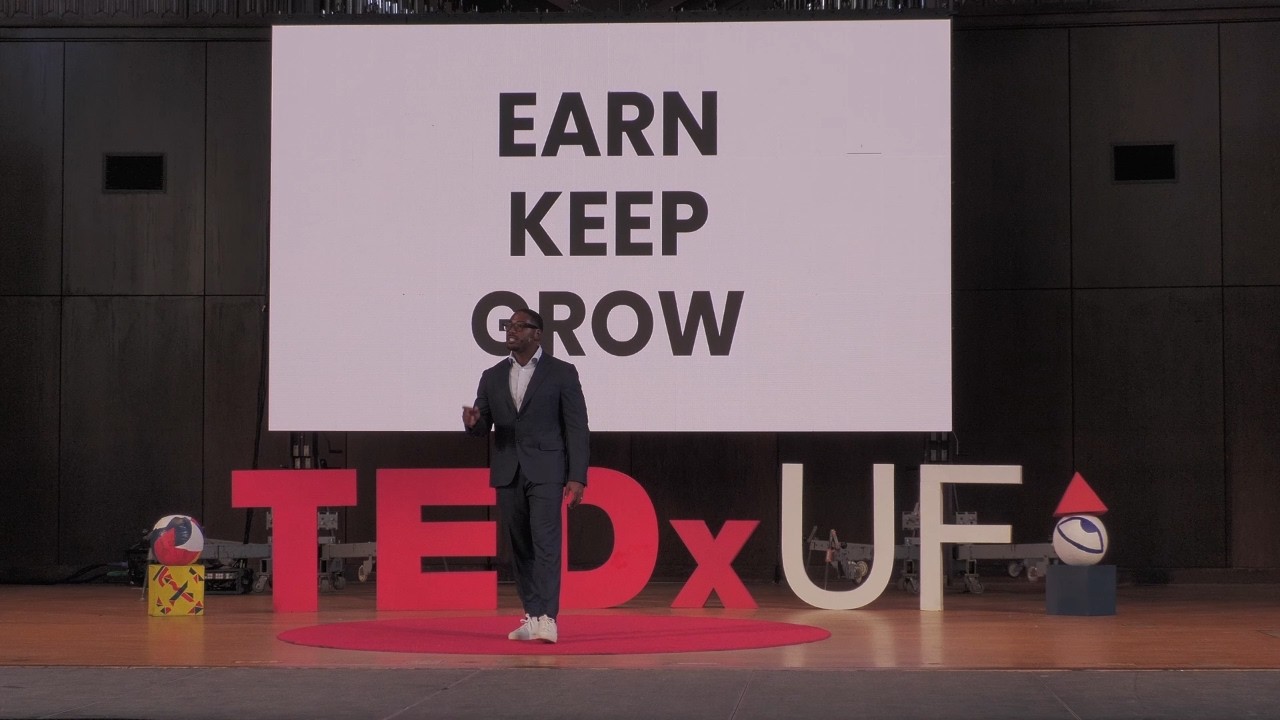
The Cost of Not Knowing | Karlton Dennis | TEDxUF
Keywords
Summary
169 words
Critical Evaluation
Value of the Information & Strength of the Argument
The talk provides a motivational perspective on tax planning, emphasizing the importance of financial literacy. The speaker’s personal story adds authenticity and makes the topic relatable. However, the argumentation is largely anecdotal and lacks rigorous data or evidence. The ‘Earn, Keep, Grow’ framework is a simple and memorable heuristic, but it is not backed by detailed analysis or case studies. The speaker’s assertion that the tax system is ‘instructional’ is thought-provoking but not fully developed. Overall, the value lies in inspiring the audience to take a more proactive approach to their finances, but the argumentation is not deeply substantive.
Scientific Rigor, Source Quality, Title Accuracy
The talk cites a few statistics (e.g., tax rates, BLS data on working months for taxes) but does not provide specific sources or citations. The speaker’s credentials as a tax strategist lend some authority, but the lack of verifiable references weakens the scientific rigor. The title accurately reflects the content, which focuses on the costs of financial ignorance. The talk is an opinion piece rather than a research-based presentation, so the absence of sources is somewhat expected, but it limits the overall reliability.
197 words
Title / Content Match
The title accurately reflects the central theme: the financial and personal costs of financial ignorance.
Quality & Reliability
5/10
The talk is a personal narrative and opinion piece with limited verifiable data. It cites a few statistics (e.g., tax rates, BLS data) but lacks specific sources or citations. The speaker's credentials as a tax strategist lend some authority, but the content is largely anecdotal and motivational.
Key Moments
Markers derived by PSI from the transcript: the creator did not define chapters.
- Introduction: The speaker asks the audience to examine their paycheck and highlights the significant portion taken by taxes.
- Discussion of the tax system as 'instructional' and examples of corporations paying zero taxes.
- Personal story: Receiving a $12,000 IRS bill and the emotional impact.
- Introduction of the 'Earn, Keep, Grow' framework.
- The speaker's journey to becoming an enrolled agent and gaining 'superpowers'.
- Analogy between gym training and understanding the tax code.
- Conclusion: Call to action to become a student of the systems that shape your life.
Cited Sources
- TEDx Program — The talk was given at a TEDx event, and this link provides information about the TEDx program.
Concurring Sources
- Bureau of Labor Statistics — The speaker references BLS data on the average American household working months to pay taxes.
Contribution & Novelties
The talk offers a personal and motivational perspective on tax planning, framing it as a tool for wealth building rather than a burden. The ‘Earn, Keep, Grow’ framework is a simple yet effective way to encourage financial literacy. The speaker’s emphasis on understanding the tax code as a ‘roadmap’ is a fresh angle for a general audience.
Pour aller plus loin :
- Tax planning — Provides an overview of tax planning strategies.
- Enrolled agent — Explains the role and credentials of enrolled agents.
- Financial literacy — Discusses the importance and components of financial literacy.
94 words
Radar Profile
The radar profile shows moderate scores across all dimensions, with slightly higher scores in information quality and reliability. This reflects a talk that is engaging and somewhat informative but lacks depth and rigorous sourcing.
💬 No comments were provided for analysis.