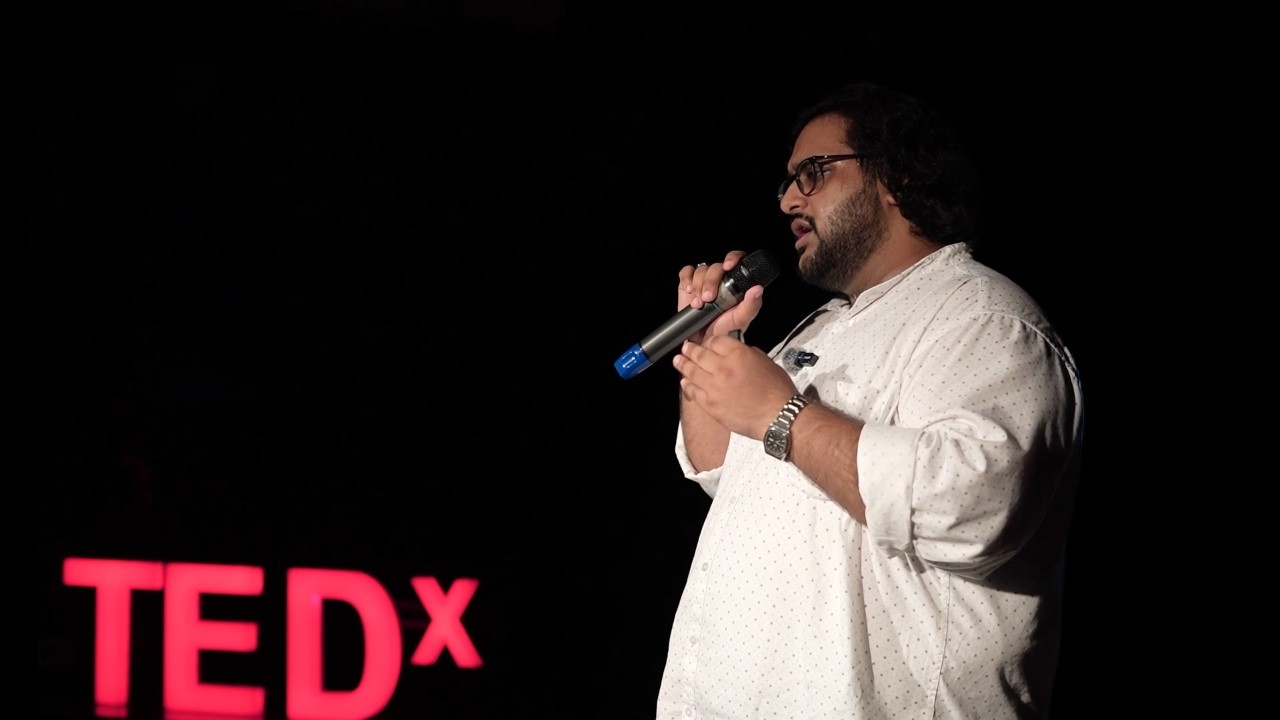
The Thinking Budget
Keywords
Summary
173 words
Critical Evaluation
Value of the Information & Strength of the Argument
The talk offers a compelling and timely perspective on the impact of AI on creative work. The central idea of reinvesting time saved by AI into thinking is valuable and resonates with current discussions about productivity and the future of work. The argument is built on a clear analogy (the project management triangle) and a novel extension (the emotional quotient axis), which makes it accessible and thought-provoking. However, the argumentation is largely anecdotal and lacks empirical evidence or case studies to support the claims. The proposed framework, while interesting, remains at a conceptual level and would benefit from concrete examples of how to implement it in practice.
Scientific Rigor, Source Quality, Title Accuracy
The talk does not cite any external sources or references. The argument is based on the speaker’s personal experience and a conceptual model. The title accurately reflects the content. The talk is a personal opinion piece rather than a rigorous scientific analysis, and it does not engage with existing literature on AI, productivity, or creativity. The lack of sources limits the ability to verify the claims made.
189 words
Title / Content Match
The title accurately reflects the core concept presented: reinvesting time saved by AI into thinking.
Quality & Reliability
5/10
The talk is a conceptual proposal based on personal experience and analogies, without empirical data or references to scientific literature. It is more of a philosophical/managerial perspective than a rigorous scientific analysis.
Key Moments
Markers derived by PSI from the transcript: the creator did not define chapters.
- Introduction and personal anecdote from film industry about time pressure.
- Introduction of the 'Thinking Budget' concept with visual diagrams.
- Explanation of the project management triangle and its limitations.
- Introduction of the 'Artist's Maslow' and the emotional quotient axis.
- Application of the framework to optimize quality, time, and cost.
- Conclusion and summary of the thinking budget concept.
Cited Sources
- TEDx Program — The talk is part of the TEDx program, which provides a platform for local, self-organized events.
Contribution & Novelties
The talk introduces a novel conceptual framework, the ‘Thinking Budget’, which reframes the impact of AI on creative work. It extends the classic project management triangle by adding an ’emotional quotient’ axis, suggesting that higher emotional states can allow for optimization of all three variables (quality, time, cost). This perspective is original and could inspire new approaches to managing creative teams and projects in the age of AI.
Pour aller plus loin :
- Project management triangle — The classic model that the talk builds upon.
- Maslow’s hierarchy of needs — The psychological theory adapted in the ‘Artist’s Maslow’.
- Emotional intelligence — The concept underlying the ’emotional quotient’ axis.
108 words
Radar Profile
The radar profile shows a balanced but moderate performance across all dimensions, with slightly higher scores in 'qualite_information' and 'fiabilite_globale' compared to 'quantite_information' and 'niveau_technique'. This suggests a talk that is conceptually sound but lacks depth and technical rigor.