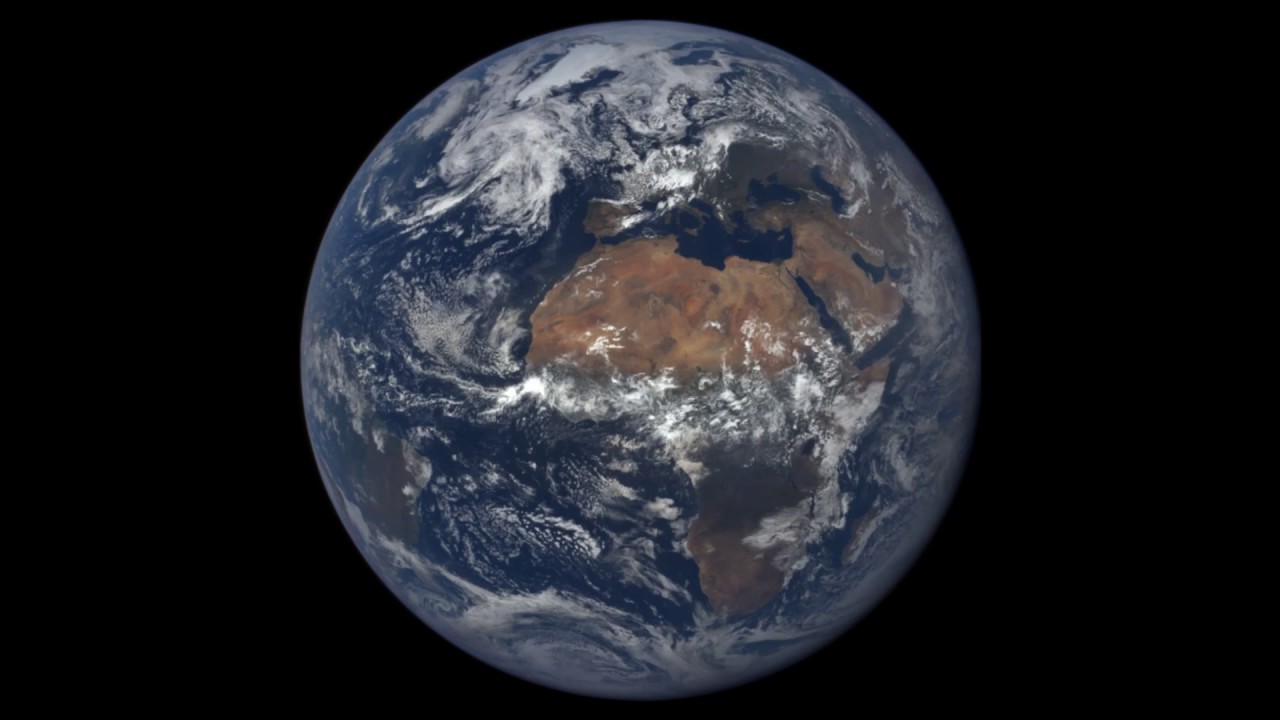
Le voyage immobile
Keywords
Summary
232 words
Critical Evaluation
Value of the Information & Strength of the Argument
The video provides substantial value by correcting a widespread misconception about the cause of temperature differences on Earth. It offers a clear, quantitative argument that the distance to the Sun is not the primary factor, using calculations and comparisons (e.g., 0.008% difference in solar flux between equator and pole vs. 90 W/m² due to orbital eccentricity). The argumentation is solid: it builds step by step, from a simplified model to a more realistic one, and supports each claim with visual aids and practical demonstrations (e.g., using a lux meter). The reasoning is accessible yet rigorous, making it valuable for both general audiences and those with some scientific background.
Scientific Rigor, Source Quality, Title Accuracy
The video demonstrates scientific rigor by accurately explaining the physics of solar radiation and Earth’s geometry. It explicitly corrects an error made by a professional meteorologist, showing a commitment to factual accuracy. However, it does not cite formal sources or references; the information is presented as general knowledge. The title ‘Le voyage immobile’ is somewhat poetic and may not immediately convey the scientific content, but it is justified by the video’s creative approach of ’traveling’ through the solar system by changing latitude. Overall, the content is reliable and well-presented, though lacking in explicit citations.
217 words
Title / Content Match
The title 'Le voyage immobile' is poetic and somewhat metaphorical, but it accurately reflects the video's concept of 'traveling' through the solar system by varying latitude and observing changes in sunlight. It is fitting and intriguing.
Quality & Reliability
8/10
The video provides a scientifically accurate explanation of why poles are colder than the equator, correcting a common misconception. The reasoning is rigorous, uses quantitative examples, and includes practical demonstrations. The main limitation is the lack of formal citations, but the content aligns with established physics.
Key Moments
Markers derived by PSI from the transcript: the creator did not define chapters.
- Introduction: The creator explains the motivation to make a video and plays a radio excerpt from France Info where a Météo France forecaster incorrectly explains why it is cold at the poles.
- The creator sets up a simplified model of Earth's orbit to analyze the effect of distance to the Sun on temperature.
- Demonstration that the Earth is tiny compared to its distance from the Sun, making the difference in solar flux between equator and poles negligible (0.008%).
- Discussion of the elliptical orbit and the 90 W/m² variation in solar flux between perihelion and aphelion, which is much larger but still does not cause seasons.
- Explanation that the real cause of temperature differences is the curvature of the Earth, causing grazing rays at the poles.
- Introduction of the lux unit and demonstration of how solar elevation affects ambient light, with examples from different latitudes.
- Comparison of light levels at high latitudes to those on other planets, and the poetic conclusion about sunset light resembling Pluto's noon.
Cited Sources
- Bensound - Relaxing — Music used in the video, licensed under Creative Commons.
- Kubbi - Cascade — Music used in the video, licensed under Creative Commons.
- Myuu - Tender Remains — Music used in the video, licensed under Creative Commons.
Concurring Sources
- Solar irradiance — Confirms the inverse-square law and the solar constant value mentioned in the video.
- Earth's axial tilt — Supports the explanation of seasons and the effect of ray angle on temperature.
Dissenting Sources
- France Info radio segment — The video explicitly corrects a statement made by a Météo France forecaster on France Info, which incorrectly attributed polar cold to distance from the Sun.
Contribution & Novelties
The video’s original contribution lies in its effective correction of a common misconception about the cause of temperature differences on Earth. It provides a clear, quantitative explanation that distance to the Sun is negligible compared to the effect of Earth’s curvature. The creative approach of ’traveling’ through the solar system by changing latitude and observing light levels is both educational and engaging. The video also introduces the concept of lux and demonstrates it with a lux meter, making the physics tangible.
Pour aller plus loin :
- Solar irradiance — Provides background on the solar constant and how it varies with distance.
- Earth’s axial tilt and seasons — Explains the role of axial tilt in causing seasons, complementing the video’s discussion.
- Lux — Defines the unit of illuminance used in the video to measure light perception.
135 words
Radar Profile
The radar profile shows high scores in information quality and reliability, with slightly lower scores in quantity and technical level. This indicates a well-crafted, accurate video that is accessible to a broad audience, though it may not delve into extremely technical details.
💬 Très positif. Sur les 30 commentaires analysés, tous expriment une admiration unanime pour la qualité de la vulgarisation, la clarté des explications et la beauté du montage, avec des éloges répétés sur le travail et la pédagogie.