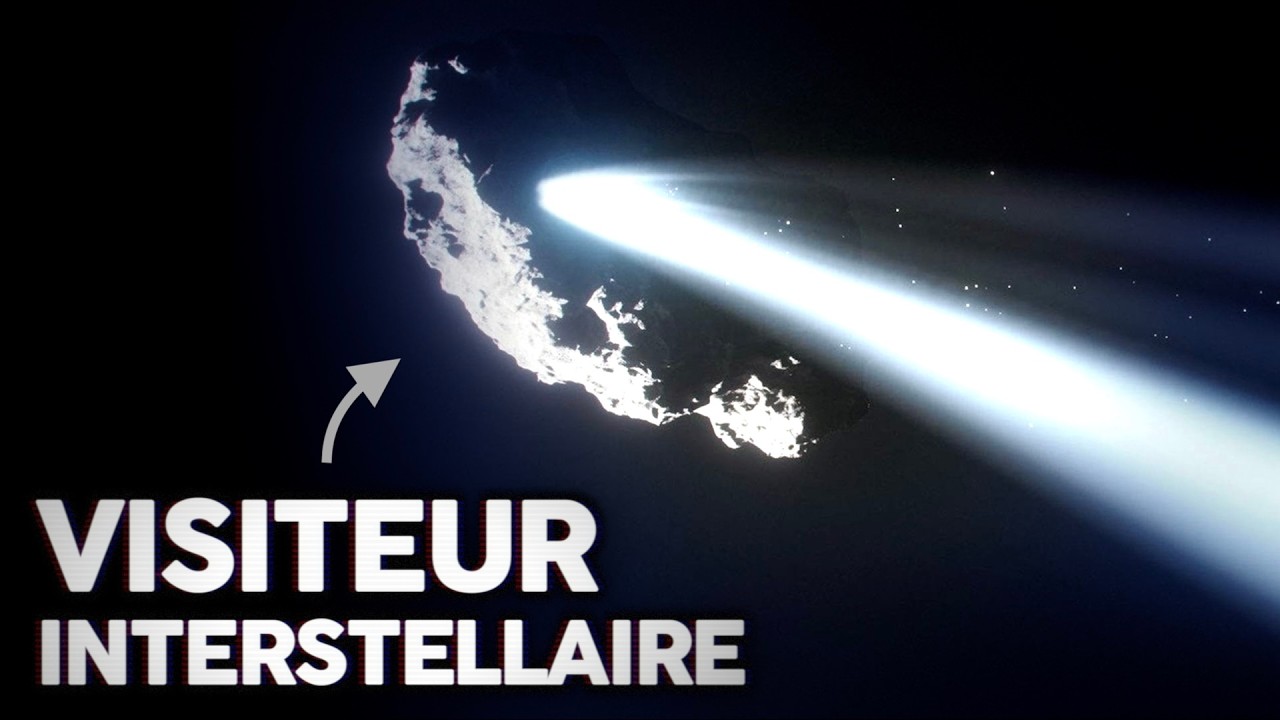
La COMÈTE qui vient de l'autre bout de la GALAXIE
Keywords
Summary
154 words
Critical Evaluation
Value of the Information & Strength of the Argument
The video offers substantial value by synthesizing a complex astronomical event into an accessible narrative. It provides detailed data on the comet’s speed, distance, and composition, which are well-supported by references to NASA, ESA, and other scientific sources. The argumentation is solid, clearly separating established facts from speculative theories, and effectively debunks the alien spacecraft hypothesis with logical reasoning and evidence of natural cometary activity. The creator’s engaging storytelling enhances the presentation without compromising scientific accuracy.
Scientific Rigor, Source Quality, Title Accuracy
The video demonstrates strong scientific rigor by citing reputable sources such as NASA, ESA, and Wikipedia, and by referencing specific observations from telescopes like Hubble and SPHEREx. The title accurately reflects the content, focusing on the interstellar origin and extraordinary nature of the comet. The creator also provides additional resources in the description, allowing viewers to explore the topic further. The inclusion of a sponsored segment is clearly disclosed and does not detract from the overall quality.
168 words
Title / Content Match
The title accurately reflects the content, focusing on the interstellar origin and extraordinary nature of comet 3I/ATLAS.
Quality & Reliability
8/10
The video presents a well-structured narrative about the interstellar comet 3I/ATLAS, relying on credible sources such as NASA, ESA, and Wikipedia. The creator clearly distinguishes between established facts and speculative theories, and provides context for the scientific significance of the observations. The content is accurate and up-to-date as of early 2026.
Chapters
Cited Sources
- 3I/ATLAS - Wikipedia — General information about the comet.
- 1I/ʻOumuamua - Wikipedia — Context on the first interstellar object.
- 2I/Borissov - Wikipedia — Context on the second interstellar object.
- 3I/ATLAS - Wikipedia (French) — French-language information about the comet.
- NASA Science - 3I/ATLAS — NASA's official page on the comet.
- Cité de l'espace - 3I/ATLAS — Article about the comet photographed by NASA missions.
- ESA - Observations of interstellar comet 3I/ATLAS — ESA's observations of the comet.
- NASA - Kuiper Belt Lithograph — Educational material on the Kuiper Belt.
- Radio France - Objets interstellaires — Podcast on interstellar objects.
- Space.com - Interstellar comet 3I/ATLAS survived its flyby of the sun — Article about the comet's survival and secrets.
Concurring Sources
- NASA Science - 3I/ATLAS — NASA's official data on the comet.
- ESA - Observations of interstellar comet 3I/ATLAS — ESA's observations align with the video's claims.
Dissenting Sources
- Alien spacecraft hypothesis — The video debunks the extraterrestrial theory proposed by some, citing natural explanations for the comet's behavior.
External References
Contribution & Novelties
The video provides a timely and comprehensive synthesis of the 3I/ATLAS comet observations, highlighting its unique characteristics such as its high velocity, nickel-rich composition, and unusual brightness increase. It effectively separates scientific facts from sensationalism, offering a clear educational resource for the public.
Pour aller plus loin :
- Interstellar object — Overview of interstellar objects.
- Oort cloud — Background on the Oort cloud, source of long-period comets.
- Hyperbolic trajectory — Explanation of hyperbolic orbits.
- Comet nucleus — Structure and composition of comets.
- Abraham Loeb — Profile of the physicist mentioned in the video.
93 words
Radar Profile
The radar profile shows high scores in information quantity and quality, indicating a content-rich and reliable video. The technical level is moderately high, suitable for an interested audience. The overall reliability is strong, supported by credible sources.
💬 Très positif. Sur les 30 commentaires analysés, les spectateurs expriment un fort enthousiasme pour la qualité de la vulgarisation et la pédagogie, avec des demandes de vidéos similaires et des remerciements pour le travail fourni.