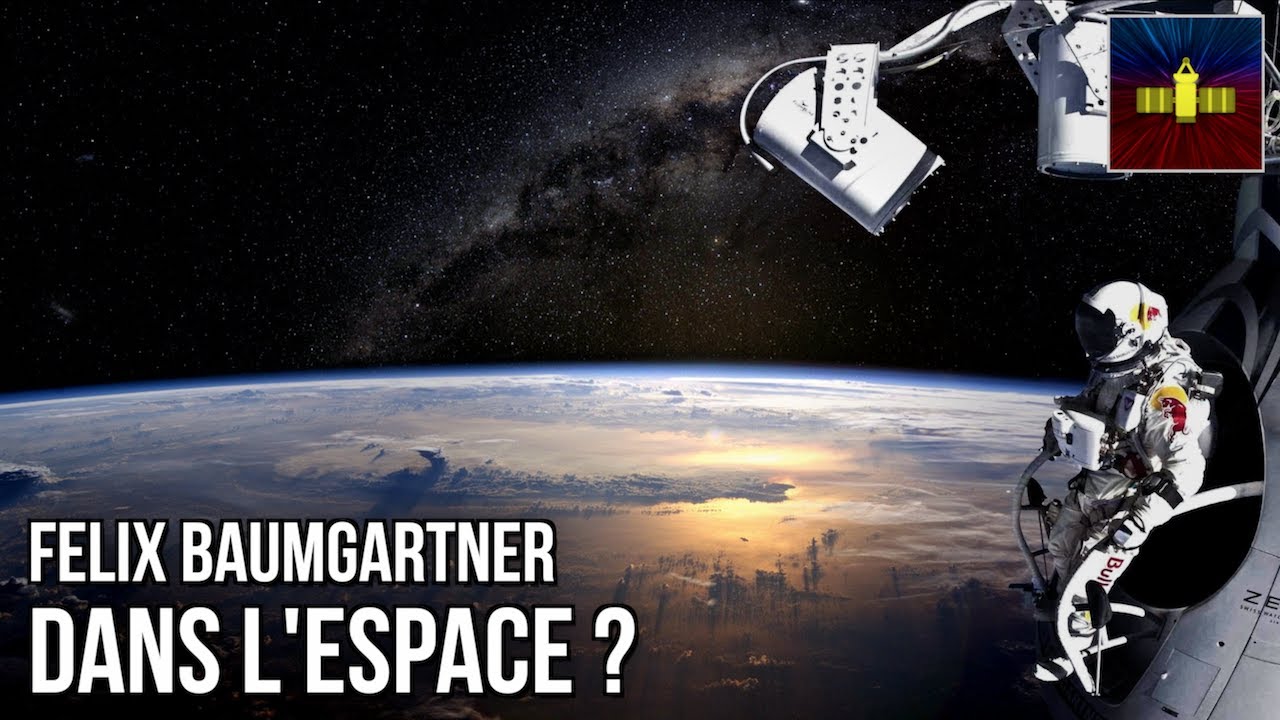
🛰 Felix Baumgartner est-il vraiment allé dans l'espace ?
Keywords
Summary
186 words
Critical Evaluation
Value of the Information & Strength of the Argument
The video provides valuable information by clarifying the definition of space and the Kármán line, which is often misunderstood. It effectively argues that Baumgartner’s jump did not reach space, using logical reasoning and physical principles. The debunking of the iconic photo is well-argued, pointing out multiple inconsistencies. The argumentation is solid and accessible, making complex concepts understandable. The video also addresses common misconceptions about balloon flights and the curvature of the Earth, adding to its educational value.
Scientific Rigor, Source Quality, Title Accuracy
The video demonstrates scientific rigor by citing multiple Wikipedia articles and a Futura-Sciences page, which are generally reliable sources. The information is accurate and well-presented. The title accurately reflects the content, and the video stays on topic. The sources are used appropriately to support the claims made. The video could benefit from more primary sources, but the ones used are sufficient for the level of the content.
159 words
Title / Content Match
The title accurately reflects the content, which directly addresses whether Baumgartner went to space.
Quality & Reliability
8/10
The video provides a clear and well-structured explanation of why Felix Baumgartner's jump did not reach space, using the Kármán line definition and physical arguments. It cites multiple Wikipedia articles and a Futura-Sciences page, which are generally reliable. The reasoning is sound and the debunking of the iconic photo is convincing. Minor limitations: some simplifications and a lack of primary sources, but overall high reliability.
Key Moments
Markers derived by PSI from the transcript: the creator did not define chapters.
- Introduction to the topic and the Red Bull Stratos project.
- Historical context: Joseph Kittinger and the Excelsior project.
- Details of Felix Baumgartner's jump and the record.
- Definition of space and the Kármán line.
- Analysis of the iconic photo and its inconsistencies.
- Debunking of common misconceptions about balloon flights.
- Conclusion: the jump was not into space and was a marketing stunt.
Cited Sources
- Espace (cosmologie) — Definition of space in cosmology.
- Felix Baumgartner — Biographical information about Felix Baumgartner.
- Joseph Kittinger — Background on Joseph Kittinger and his record.
- Ligne de Kármán — Definition and explanation of the Kármán line.
- Parachutisme#Exploits_et_records — Records in parachuting.
- Projet Excelsior — Details on the Excelsior project.
- Red Bull Stratos — Overview of the Red Bull Stratos project.
- Ligne de Kármán (Futura-Sciences) — Definition of the Kármán line.
- GoPro in space video — Example of a misleading video claiming to send a GoPro to space.
Concurring Sources
- Kármán line — Confirms the definition and altitude of the Kármán line.
- Red Bull Stratos — Confirms the details of the jump and its altitude.
Contribution & Novelties
The video provides a clear and accessible debunking of a common misconception, explaining the scientific and geopolitical definition of space. It adds value by analyzing the iconic photo and explaining why it is a composite. The video also educates viewers on the limitations of balloon flights and the physics of the atmosphere.
Pour aller plus loin :
- Kármán line — Further reading on the Kármán line and its definition.
- Red Bull Stratos — More details on the project and its records.
- Joseph Kittinger — Information on the previous record holder.
90 words
Radar Profile
The radar profile shows high scores in information quantity, quality, and reliability, with a slightly lower technical level. This indicates that the video is informative and trustworthy, but may not delve deeply into advanced technical details, making it accessible to a general audience.
💬 Très positif. Sur les 30 commentaires analysés, les spectateurs expriment un fort enthousiasme et une appréciation pour la qualité pédagogique et le travail de vulgarisation, avec quelques remarques constructives sur la technique de tournage.