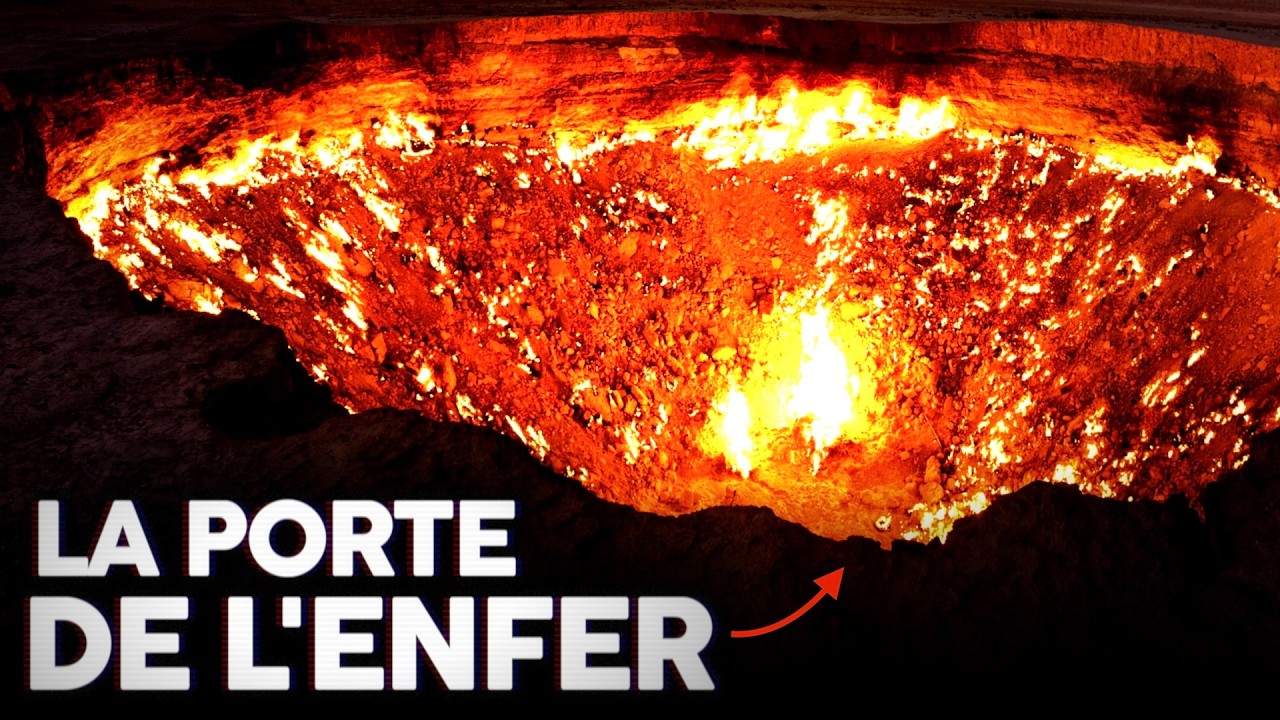
Le CRATÈRE de feu qui brûle depuis 50 ans
Keywords
Summary
133 words
Critical Evaluation
Value of the Information & Strength of the Argument
The video provides a compelling and informative account of the Darvaza crater, combining historical narrative with scientific explanation. It effectively argues that the crater’s longevity is due to the continuous supply of methane from deep geological reservoirs, making it a complex problem to solve. The argumentation is solid, supported by references to geological processes and expert observations. The inclusion of the expedition and the discussion of potential solutions (e.g., nuclear explosions) adds depth. However, some claims, such as the exact cause of the initial collapse, are presented with appropriate uncertainty.
Scientific Rigor, Source Quality, Title Accuracy
The video demonstrates good scientific rigor by citing multiple sources, including Wikipedia, National Geographic, and news articles. It acknowledges the lack of precise historical records and presents the story with appropriate caveats. The title accurately reflects the content, focusing on the long-burning crater. The video’s narrative is well-structured and aligns with the sources provided. The use of archival footage and expert testimony would have further strengthened the credibility, but the current presentation is reliable.
179 words
Title / Content Match
The title accurately reflects the content, focusing on the long-burning crater.
Quality & Reliability
7/10
The video provides a well-structured narrative of the Darvaza crater, with accurate historical and geological context. It relies on credible sources (National Geographic, Wikipedia, news outlets) and includes a first-hand expedition. Minor uncertainties are acknowledged (exact date of formation). The presentation is engaging but occasionally dramatized.
Chapters
Cited Sources
- Darvaza - Wikipedia — Background information on the village and crater.
- Gurbanguly Berdimuhamedow - Wikipedia — Information on the former president's role and policies.
- Porte de l'Enfer (Turkménistan) - Wikipedia — General information about the crater.
- Turkménistan : les 'portes de l'enfer' bientôt éteintes ? — News article about the potential extinguishing of the crater.
- Insolite : hostile désert du Karakoum, la porte de l'enfer brûle depuis des décennies — National Geographic article on the crater.
- Cratère de méthane au Turkménistan : Washington propose d'aider le pays à colmater la fuite géante — Article about US offer to help seal the crater.
- Turkménistan : les 'portes de l'enfer' bientôt éteintes ? — CTV News article about tourism around the crater.
- Turkménistan : les 'portes de l'enfer' bientôt éteintes ? — 20 Minutes article about the crater as a tourist attraction.
Concurring Sources
- National Geographic article — Confirms the crater's existence and ongoing burning.
- Wikipedia article on Darvaza — Provides historical details consistent with the video.
Dissenting Sources
- Some sources suggest the crater formed in the 1960s, not 1971 — The exact date of formation is uncertain; the video states 1971, but other sources may vary.
Contribution & Novelties
The video offers a comprehensive and engaging synthesis of the Darvaza crater’s history, combining geological explanation with cultural and political context. It highlights the paradox of a tourist attraction born from an industrial accident and the ongoing environmental concerns. The narrative is enriched by the inclusion of the 2013 expedition and the discussion of potential solutions, providing a well-rounded perspective.
Pour aller plus loin :
- Methane emissions from the Darvaza crater — Note: This is a placeholder; actual studies may exist.
- Karakum Desert — Background on the desert environment.
- Soviet Union gas extraction history — Context on Soviet energy policies.
100 words
Radar Profile
The radar profile shows high scores in information quantity and quality, indicating a well-researched and informative video. The technical level is moderate, making it accessible to a general audience. The overall reliability is good, though some minor uncertainties remain.
💬 Très positif. Sur les 30 commentaires analysés, les spectateurs expriment un fort enthousiasme pour la vidéo, saluant son caractère intéressant et bien présenté, avec quelques références humoristiques et des suggestions de sujets similaires.