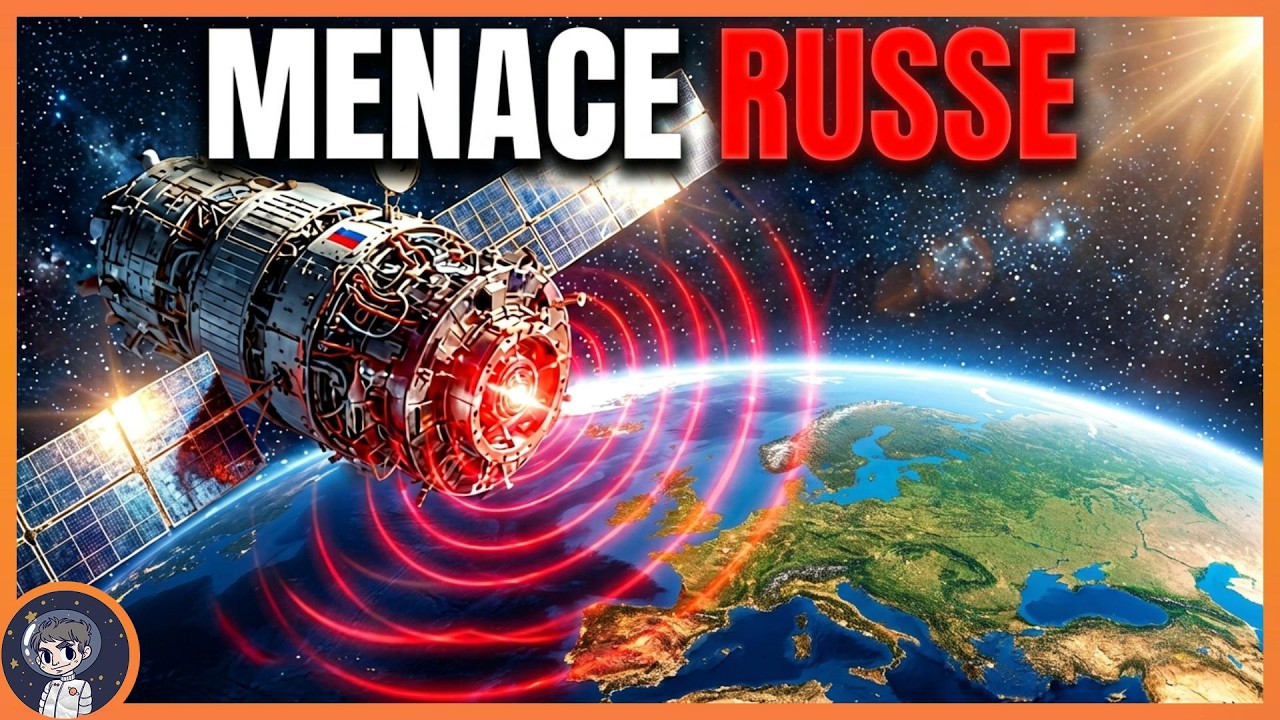
ALERTE : Des satellites RUSSES brouillent-ils nos GPS ? - Le Journal de l'Espace #346 - Actus espace
Keywords
Summary
127 words
Critical Evaluation
Value of the Information & Strength of the Argument
The video provides a good overview of current space developments, with a focus on geopolitical and technological aspects. The argumentation is generally solid, clearly distinguishing between confirmed events and preliminary reports. For instance, the host explicitly warns that the GPS jamming study is a preprint and should be treated with caution. Similarly, he notes that the Rasvet satellite failure is based on orbital tracking data, not official statements. The discussion of Putin’s drone control system is contextualized with the ongoing conflict in Ukraine and the role of Starlink, providing a balanced perspective. However, the depth of analysis is limited by the format of a news roundup, with each topic receiving only a few minutes of attention.
Scientific Rigor, Source Quality, Title Accuracy
The video demonstrates a reasonable level of scientific rigor for a news summary. It references a preprint study on GPS interference, but does not provide specific details or a link to the study itself. The host correctly notes the lack of official confirmation for the Rasvet satellite failure. The title is somewhat sensationalist with ‘ALERTE’, but the content itself is measured and cautious. The description includes links to the channel’s blog and social media, but no direct sources for the news items. The video is well-structured with clear chapters, and the host consistently reminds viewers to treat preliminary information with caution.
232 words
Title / Content Match
The title is somewhat sensationalist ('ALERTE') but accurately reflects the main topic of the video, which is the suspected Russian satellite interference with GPS signals.
Quality & Reliability
7/10
The video presents a balanced overview of recent space news, clearly distinguishing between confirmed facts and preliminary studies. It emphasizes caution regarding the GPS jamming study and notes the lack of official confirmation for the Rasvet satellite failure. The channel is a well-established space news source, but the content is a summary rather than an in-depth analysis.
Chapters
- Intro Incogni
- Brouillage GPS : Des satellites russes en cause ?
- Poutine veut contrôler ses drones depuis l'Espace
- Rasvet : Le "Starlink russe" connaît déjà des ratés
- NASA : Une "dépanneuse spatiale" pour sauver le télescope Swift
- Japon : Succès économique pour la fusée H3
- NASA : Vers un "Internet spatial" universel avec PEX
- On se voit au Summer Space Festival à Bruxelles !
Cited Sources
- Incogni (sponsor) — Sponsor segment at the beginning of the video, offering a discount code.
- Summer Space Festival — Mentioned at the end of the video as an event the host will attend.
- Journal de l'Espace blog — General source for the channel's content.
- Forum de la conquête spatiale — Mentioned as a general source for space news.
Concurring Sources
- GNSS interference — General information on GNSS interference, supporting the video's discussion.
- Molniya orbit — Explains the orbit type mentioned in the video.
External References
Contribution & Novelties
The video provides a concise synthesis of recent space news, with a particular emphasis on the potential space-based GPS jamming by Russian satellites, a topic that is not widely covered in mainstream media. It also highlights the challenges of satellite constellations and the emerging trend of on-orbit servicing. The host’s critical approach to preliminary information adds value.
Pour aller plus loin :
- GNSS interference — Provides background on types of interference and jamming.
- Molniya orbit — Explains the characteristics and uses of this type of orbit.
- On-orbit servicing — Discusses the concept and missions like the one planned for Swift.
100 words
Radar Profile
The radar profile shows high scores in quantity of information and technical level, indicating a content-rich video with some technical depth. The quality and reliability scores are slightly lower, reflecting the preliminary nature of some topics and the lack of detailed sources. Overall, the video is informative but not deeply analytical.
💬 Très positif. Sur les 30 commentaires analysés, la majorité exprime des remerciements et de l'enthousiasme pour le contenu, avec quelques remarques humoristiques sur le sponsor et des discussions techniques sur les sujets abordés.