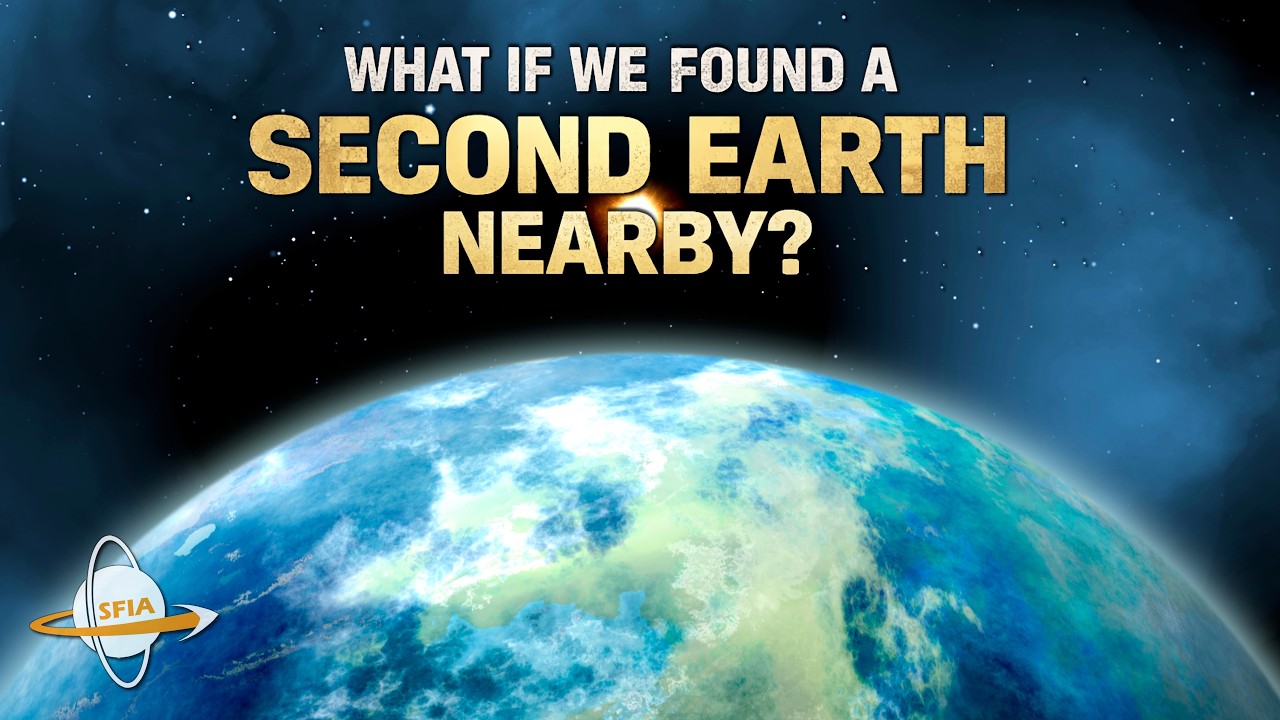
What If We Found a Second Earth Nearby?
Keywords
Summary
171 words
Critical Evaluation
Value of the Information & Strength of the Argument
The video provides substantial value by systematically exploring the implications of a second Earth, from detection methods to long-term societal impacts. It effectively uses analogies (e.g., Antarctica, the age of exploration) to ground speculative scenarios in historical precedents. The argumentation is logical and well-structured, presenting multiple perspectives on each issue without being overly biased. It acknowledges uncertainties and avoids definitive answers, which is appropriate for speculative topics. The discussion of terraforming a barren but habitable world is particularly insightful, highlighting the practical challenges of ecosystem engineering.
Scientific Rigor, Source Quality, Title Accuracy
The video demonstrates scientific rigor by referencing established concepts such as Lagrange points, biosignatures, and panspermia, and by clearly separating established science from speculation. It does not cite specific scientific papers but relies on general knowledge in astrobiology and planetary science. The title accurately reflects the content, which is a balanced exploration of the topic. The video includes a sponsorship segment for Nebula, which is clearly disclosed and does not detract from the scientific content.
176 words
Title / Content Match
The title accurately reflects the content, which explores the scientific, political, and economic implications of discovering a second Earth.
Quality & Reliability
8/10
The video is a well-structured speculative analysis grounded in current scientific concepts (exoplanet detection, biosignatures, panspermia, Lagrange points). It clearly distinguishes between established science and speculative scenarios, and avoids overhyped claims. The presentation is balanced, acknowledging uncertainties and ethical dilemmas.
Chapters
- Intro
- What Counts as a “Second Earth”?
- The Hidden Twin
- The Real Discovery: A Nearby Earth
- If It Has Life
- Alien Life, But Compatible
- Familiar Life - Too Familiar
- Gods & Monsters
- If It’s Barren - but Ready
- The Rush: Who Gets a Whole World?
- The Economics of a Second Earth
- How Do You Divide a Planet?
- The Long View: A Second Earth Changes Everything
Cited Sources
- Isaac Arthur Website — Official website for Isaac Arthur and SFIA content.
- Nebula - Nearby Supernovae — Exclusive video on Nebula related to space threats.
- Nebula - Gods & Monsters — Recommended video on deep ocean life and myths.
- SFIA Reddit Community — Community discussion forum for the channel.
- Subscribestar — Support platform for the channel.
Concurring Sources
- NASA Exoplanet Exploration — General information on exoplanet detection and habitability.
External References
Contribution & Novelties
The video offers a comprehensive and thought-provoking analysis of the societal and ethical dimensions of discovering a second Earth, going beyond typical scientific discussions. It uniquely frames the discovery as a ‘property dispute’ and explores the economic valuation of a habitable world, which is rarely addressed in such depth. The discussion of terraforming a barren but habitable planet as ‘debugging a planet’ provides a fresh perspective on the challenges of ecosystem engineering.
Pour aller plus loin :
- Exoplanet habitability — Provides background on what makes a planet habitable.
- Panspermia — Discusses the hypothesis of life spreading between worlds.
- Terraforming — Explores the concept of making a planet Earth-like.
108 words
Radar Profile
The radar profile shows high scores across all dimensions, indicating a well-rounded and informative video. The slightly lower score in technical level reflects its accessible approach, while the high scores in information quality and reliability underscore its scientific grounding.
💬 Positif. Sur les 30 commentaires analysés, le public est très enthousiaste et engageant, avec des discussions sur les implications pratiques et des références à la science-fiction, sans critiques négatives notables.