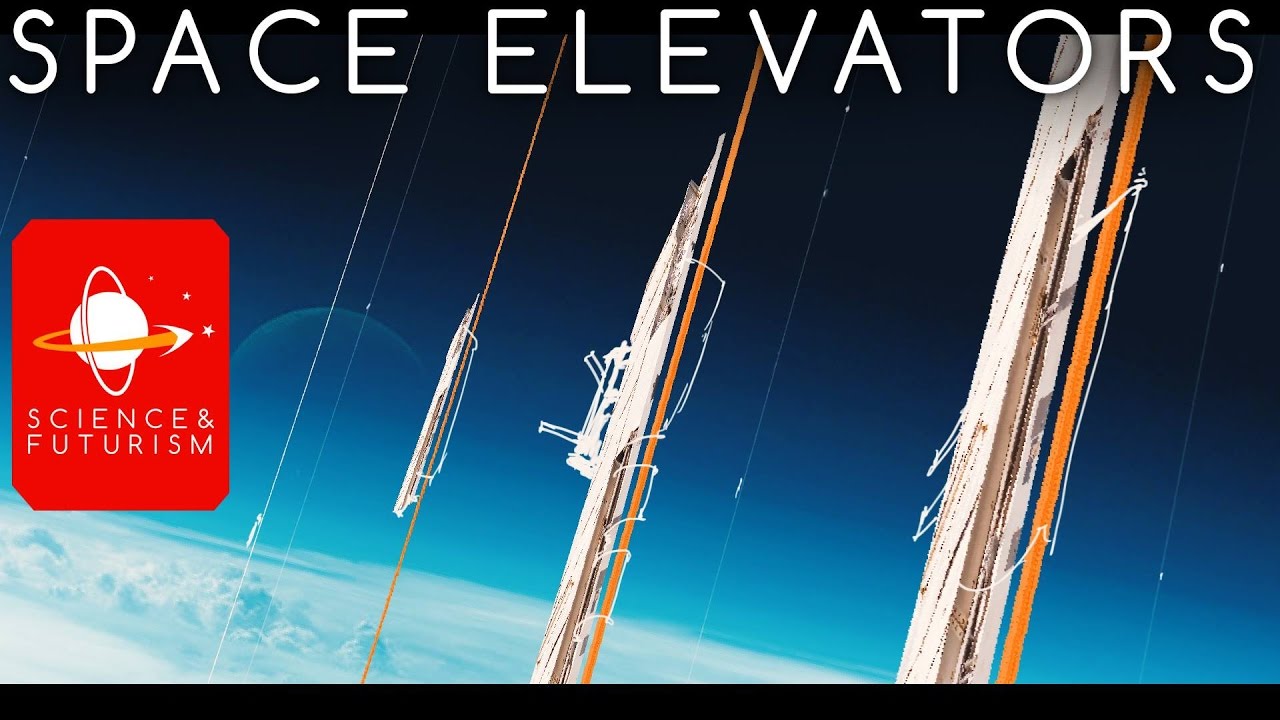
Space Elevators & Orbital Tethers
Keywords
Summary
172 words
Critical Evaluation
Value of the Information & Strength of the Argument
The video offers substantial value by systematically dismantling common misconceptions about space elevators, such as the breaking length issue and the fear of catastrophic failure. The argumentation is solid, grounded in physics and engineering principles, and the presenter uses clear analogies and examples. The discussion of safety scenarios, including tether breakage and passenger rescue, is particularly valuable, as it addresses concerns often overlooked in popular discussions. The cost analysis, while admittedly rough, provides a realistic perspective on the economic challenges. The presenter’s approach is balanced, acknowledging both the potential and the significant hurdles.
Scientific Rigor, Source Quality, Title Accuracy
The video demonstrates scientific rigor by referencing a specific academic paper (Aravind) and discussing the physics accurately. The sources cited in the description are relevant and support the content. The title accurately reflects the content, which covers both space elevators and orbital tethers. The video does not overstate claims and clearly distinguishes between established physics and speculative engineering. The presentation is well-structured and the technical level is appropriate for a general audience interested in space exploration.
184 words
Title / Content Match
The title accurately reflects the content, which covers both space elevators and orbital tethers in depth.
Quality & Reliability
8/10
The video provides a detailed, technically accurate overview of space elevator concepts, referencing a peer-reviewed paper (Aravind) and discussing physics, materials, and engineering challenges with appropriate caveats. Minor simplifications are present but overall reliable.
Key Moments
Markers derived by PSI from the transcript: the creator did not define chapters.
- Introduction to the concept of space elevators and the misconception about breaking length.
- Explanation of geostationary vs geosynchronous orbits and the requirement for equatorial placement.
- Discussion of materials: breaking length, carbon nanotubes, and tapering.
- Construction challenges: starting with a thin tether, joining sections, and mass estimates.
- Counterweights and extending the tether beyond geostationary for interplanetary launches.
- Multiple tethers and non-equatorial placement using guy-wire configurations.
- Safety analysis: what happens if the tether breaks, parachutes, and passenger rescue.
- Earth-to-Earth travel using the elevator and lateral tethers.
- Speed and trip time considerations, including high-acceleration options.
- Cost analysis: graphene prices, launch costs, and the path to feasibility.
Cited Sources
- The physics of the space elevator — Referenced in the video description as a key source for the physics behind space elevators.
- Isaac Arthur Website — Official website of the channel, providing additional resources and information.
- Nebula — Streaming platform where Isaac Arthur's content is also available.
- SoundCloud Audio — Audio version of this episode.
- Cover Art by Jakub Grygier — Artist who created the cover art for the video.
- Reddit Community — Community discussion forum for the channel.
- Subscribestar — Platform for supporting the creator.
Concurring Sources
- The physics of the space elevator — The video's content aligns with the physics described in this paper.
Contribution & Novelties
The video provides a comprehensive and accessible synthesis of space elevator concepts, effectively dispelling common misconceptions and addressing practical engineering and safety concerns. It goes beyond basic explanations by discussing multi-tether configurations, non-equatorial placement, and detailed failure scenarios, offering a more nuanced view than typical popular science coverage.
Pour aller plus loin :
- Space elevator - Wikipedia — Overview of the concept, history, and challenges.
- Carbon nanotube - Wikipedia — Material properties and potential applications.
- Geostationary orbit - Wikipedia — Explanation of the orbit and its significance.
- Tensile strength - Wikipedia — Definition and relevance to tether materials.
- Orbital mechanics - Wikipedia — Fundamentals of orbits and trajectories.
108 words
Radar Profile
The radar profile shows high scores in quantity and quality of information, with a moderate technical level and good reliability. This indicates a well-researched and informative video that is accessible to a general audience while maintaining scientific accuracy.
💬 Très positif. Sur les 30 commentaires analysés, les spectateurs expriment une admiration marquée pour la qualité du contenu, la profondeur des explications et l'humour de l'auteur, avec quelques commentaires sur son trouble de la parole, mais dans un esprit de soutien.