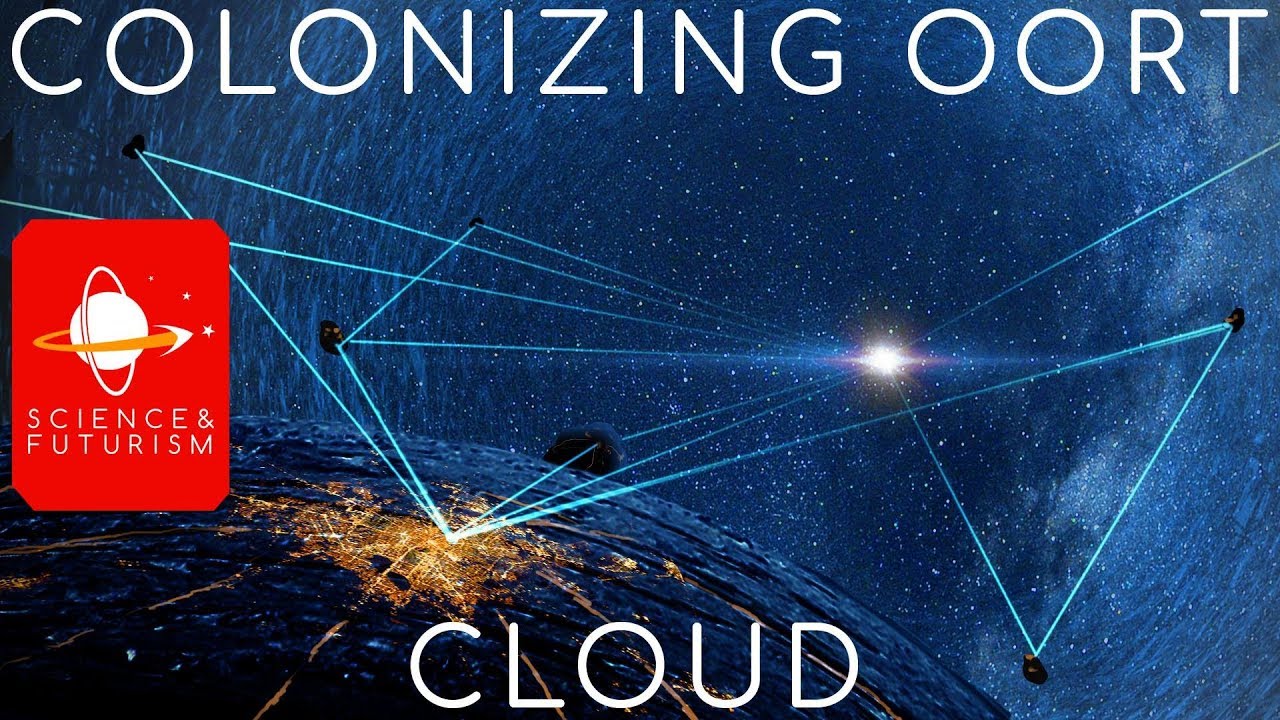
Colonizing the Oort Cloud
Keywords
Summary
179 words
Critical Evaluation
Value of the Information & Strength of the Argument
The video provides a high value of information by systematically analyzing the feasibility of colonizing the Oort Cloud, covering astronomical context, engineering challenges, and socio-economic motivations. The argumentation is solid: Arthur builds from known facts (e.g., Kuiper Belt mass, detection limits) to plausible extrapolations, and he explicitly addresses counterarguments (e.g., why not just go to another star). He uses quantitative examples (energy requirements, population capacities) to ground his speculative scenarios. The reasoning is logical and avoids unsupported claims, though some assumptions (e.g., fusion power availability) are optimistic.
Scientific Rigor, Source Quality, Title Accuracy
The video demonstrates scientific rigor by clearly distinguishing between established knowledge (e.g., Kuiper Belt existence) and theoretical concepts (e.g., Oort Cloud structure). It references prior episodes and concepts like starlifting and interstellar highways, but does not cite specific scientific papers. The title accurately reflects the content, which is a speculative but reasoned analysis. The description provides links to the channel’s website and sponsor, but no direct scientific sources. The video’s internal consistency and acknowledgment of uncertainties enhance its credibility.
181 words
Title / Content Match
The title accurately reflects the content, which focuses on the feasibility, methods, and motivations for colonizing the Oort Cloud.
Quality & Reliability
8/10
The video presents a well-structured speculative analysis grounded in current astrophysical knowledge (e.g., Kuiper Belt mass estimates, Oort Cloud hypotheses). It clearly distinguishes established science from theoretical extrapolation, and avoids overclaiming certainty. The reasoning is internally consistent and acknowledges uncertainties.
Key Moments
Markers derived by PSI from the transcript: the creator did not define chapters.
- Introduction to the Oort Cloud and Kuiper Belt, and the episode's scope.
- Explanation of planetary formation and the definition of a planet, including Pluto's demotion.
- Discussion of the Kuiper Belt's mass and composition, and its potential for resource extraction.
- Challenges of detecting Oort Cloud objects and the uncertainty about its extent.
- Methods for colonizing icy bodies: landing, digging, and building rotating habitats.
- Motivations for colonization: isolation, safety, and potential as waypoints for interstellar travel.
- Role of Oort colonies in laser highways and as defensive outposts.
- Potential scale of Oort Cloud civilization and comparison to Dyson swarms.
- Conclusion and teaser for next episode on interstellar empires.
Cited Sources
- Isaac Arthur Website — Official website for the channel, providing additional resources and episode archives.
- Brilliant.org Sponsor — Sponsor link; mentions a course 'Worlds Beyond Earth' related to interstellar travel.
- Nebula — Streaming platform where Isaac Arthur's content is available.
- Soundcloud Audio — Audio version of the episode (note: title appears mismatched).
- Cover Art by Jakub Grygier — Artist's portfolio for cover art.
- Sergio Botero Artstation — Graphics team member's portfolio.
- Reddit Community — Community discussion forum for the channel.
- Subscribestar — Alternative support platform.
Concurring Sources
- Oort cloud - Wikipedia — Supports the existence and characteristics of the Oort Cloud as described.
- Kuiper belt - Wikipedia — Confirms the Kuiper Belt's mass and composition estimates.
Contribution & Novelties
The video offers a comprehensive and original synthesis of Oort Cloud colonization, combining astronomical knowledge with engineering and socio-economic considerations. It goes beyond typical discussions by exploring the Oort Cloud’s role in interstellar infrastructure, such as laser highways, and its potential for large-scale human settlement. The analysis of motivations, including isolation and defense, adds depth to the speculative scenario.
Pour aller plus loin :
- Oort cloud - Wikipedia — Provides a scientific overview of the Oort Cloud’s structure and composition.
- Kuiper belt - Wikipedia — Details on the Kuiper Belt’s characteristics and objects.
- O’Neill cylinder - Wikipedia — Concept of rotating space habitats, central to the video’s colonization method.
- Breakthrough Starshot — A real project using laser propulsion, relevant to the laser highway concept.
- Fusion power - Wikipedia — Background on fusion energy, a key assumption for deep space colonies.
140 words
Radar Profile
The radar profile shows high scores in quantity and quality of information, with a strong technical level, indicating a content-rich and well-reasoned video. The overall reliability is high, reflecting the careful distinction between fact and speculation.
💬 Très positif. Sur les 30 commentaires analysés, les spectateurs expriment une admiration constante pour la qualité du contenu, la clarté des explications et la capacité à inspirer, avec des éloges récurrents sur l'amélioration de la production et la profondeur des sujets.