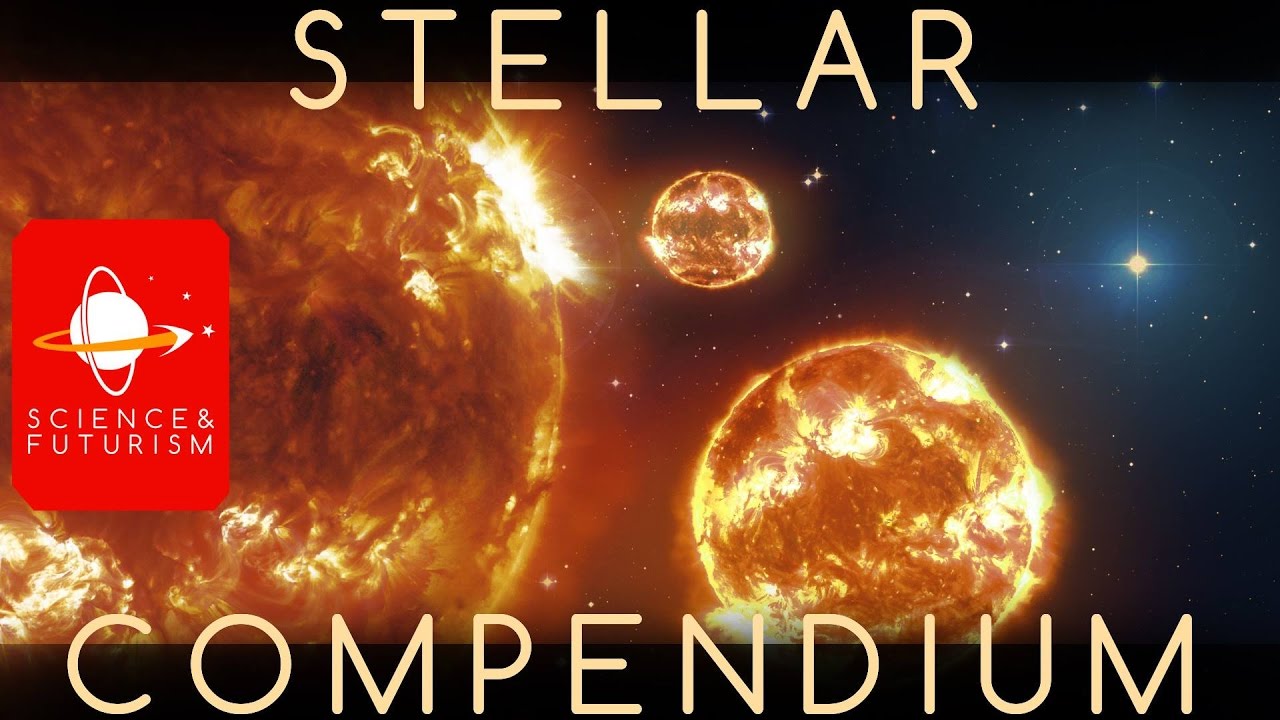
The Stellar Compendium
Keywords
Summary
140 words
Critical Evaluation
Value of the Information & Strength of the Argument
The video provides a high density of accurate and well-structured information, effectively demystifying complex astronomical concepts. The argumentation is logical and builds from foundational classification systems to more exotic stellar types. The presenter uses clear analogies and examples to enhance understanding, and appropriately distinguishes between well-established facts and speculative hypotheses, such as the future evolution of low-mass stars and the existence of hypothetical particles.
Scientific Rigor, Source Quality, Title Accuracy
The scientific rigor is high, with accurate explanations of stellar classification, evolution, and nucleosynthesis. The video does not cite specific sources within the narration, but the channel’s reputation and the consistency of the content with established astrophysics lend credibility. The title accurately reflects the comprehensive scope of the content. The description provides links to the channel’s website and social media, but no direct references to scientific papers.
146 words
Title / Content Match
The title accurately reflects the comprehensive overview of stellar types and their properties.
Quality & Reliability
8/10
High-quality science communication with accurate, up-to-date astrophysical concepts, clear explanations, and appropriate caveats about speculative topics. Minor simplifications and lack of formal citations slightly reduce the score.
Key Moments
Markers derived by PSI from the transcript: the creator did not define chapters.
- Introduction to the Harvard Classification System and its history.
- Explanation of the Yerkes Classification System and the Hertzsprung-Russell diagram.
- Discussion of star formation, populations, and metallicity.
- Overview of abnormal stars, including brown dwarfs and Wolf-Rayet stars.
- Explanation of variable stars, particularly Cepheid variables.
- Discussion of dead stars: white dwarfs, neutron stars, and black holes.
- Introduction to hypothetical stars like quark stars and preon stars.
- Discussion of iron stars and the far future of the universe.
Cited Sources
- Isaac Arthur Website — Official website for the channel, providing additional resources and information.
- Nebula — Streaming platform where Isaac Arthur's content is available.
- ArtStation - Jakub Grygier — Cover art by Jakub Grygier.
- Reddit - r/IsaacArthur — Community discussion forum for the channel.
- Subscribestar - Isaac Arthur — Platform for supporting the channel.
Concurring Sources
- Hertzsprung-Russell diagram — The video's explanation of the HR diagram aligns with standard astronomical knowledge.
- Stellar classification — The Harvard and Yerkes classification systems are accurately described.
Contribution & Novelties
The video provides a comprehensive and accessible synthesis of stellar classification and evolution, effectively bridging the gap between introductory and advanced astronomy. It clarifies common terminological confusions and presents speculative concepts in a clear, engaging manner.
Pour aller plus loin :
- Hertzsprung–Russell diagram — Essential for understanding stellar classification and evolution.
- Stellar evolution — Provides a detailed overview of the life cycles of stars.
- Brown dwarf — Further reading on these substellar objects.
- Supernova — Explores the different types and mechanisms of stellar explosions.
- White dwarf — Detailed information on the most common stellar remnant.
95 words
Radar Profile
The radar profile shows high scores across all dimensions, indicating a well-rounded and reliable educational video. The strongest aspects are the quantity and quality of information, while the technical level is slightly lower, reflecting its accessibility to a general audience.
💬 Très positif. Sur les 30 commentaires analysés, l'enthousiasme est unanime, les spectateurs louant la densité d'information, la clarté des explications et la qualité de la narration.