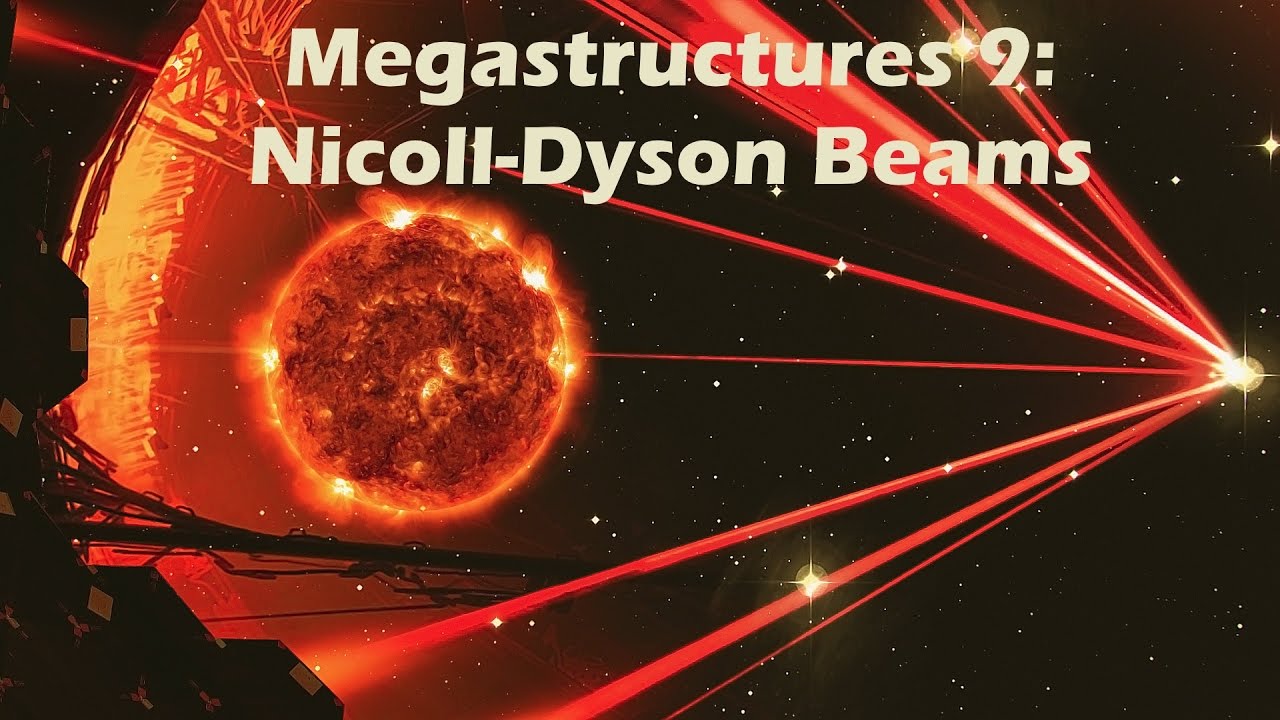
Nicoll-Dyson Beams: Weaponizing Stars
Keywords
Summary
185 words
Critical Evaluation
Value of the Information & Strength of the Argument
The video provides substantial value by quantitatively analyzing the physics behind a popular science fiction concept, grounding it in real astrophysical principles. The argumentation is logical and well-structured, moving from basic concepts to complex applications and strategic considerations. Arthur effectively uses comparisons (e.g., Death Star vs. Nicoll-Dyson Beam) and thought experiments to illustrate the scale of energy involved. He also addresses potential counterarguments and defenses, demonstrating a balanced and rigorous approach. The inclusion of non-destructive uses adds depth and shows the concept’s plausibility as a general-purpose tool for a K2 civilization.
Scientific Rigor, Source Quality, Title Accuracy
The video demonstrates strong scientific rigor by correctly applying concepts like gravitational binding energy and the mass-luminosity relation. While no formal citations are given, the presenter references relevant science fiction works (Star Wars, Star Trek) and real-world concepts (Shkadov thruster, RKKVs) that are well-known in the field. The title accurately reflects the content, and the video stays on topic throughout. The lack of explicit sources is a minor weakness, but the overall reasoning is sound and consistent with established physics. The presenter also transparently distinguishes between known science and speculative engineering.
197 words
Title / Content Match
The title accurately reflects the content, which focuses on the concept of using a star's energy as a weapon.
Quality & Reliability
8/10
The video presents a well-structured, scientifically grounded explanation of the Nicoll-Dyson Beam concept, drawing on established physics (gravitational binding energy, luminosity-mass relation) and referencing relevant science fiction and real-world concepts. The presenter clearly distinguishes between known science and speculative extensions, and the content is consistent with current astrophysical understanding. Minor limitations include the lack of formal citations and the speculative nature of some engineering aspects.
Key Moments
Markers derived by PSI from the transcript: the creator did not define chapters.
- Introduction to the Nicoll-Dyson Beam concept and its destructive potential.
- Review of Dyson Spheres and Swarms, and the basic setup for a Nicoll-Dyson Beam.
- Discussion of gravitational binding energy and the energy required to destroy planets.
- Comparison with the Death Star and Star Trek's planetary bombardment, highlighting the overkill.
- Explanation of using the beam to accelerate relativistic kinetic missiles (RKMs).
- Strategic implications: galaxy sterilization and the ease of xenocide with a head start.
- Defenses against Nicoll-Dyson Beams and RKMs, including evasive maneuvers and armor.
- Non-destructive uses: propulsion, power beaming, and infrastructure support.
Cited Sources
- Isaac Arthur Website — Official website for the channel, providing additional resources and information.
- Nebula — Streaming platform where Isaac Arthur's videos are available.
- Jakub Grygier Artstation — Featured artist's portfolio, showcasing artwork used in the video.
- IsaacArthur Reddit — Community discussion forum for the channel.
- Subscribestar — Alternative support platform for the channel.
Concurring Sources
- Dyson Sphere - Wikipedia — The concept of Dyson spheres and swarms is foundational to the Nicoll-Dyson Beam, and this source provides a detailed overview.
- Gravitational binding energy - Wikipedia — The video's discussion of planetary destruction relies on this physical concept, which is well-documented.
- Relativistic kill vehicle - Wikipedia — The video's description of RKMs aligns with the concept of relativistic kinetic weapons, which are discussed in this source.
Dissenting Sources
- No direct discordant sources found — The video's content is consistent with established physics and common speculative concepts; no conflicting sources were identified.
Contribution & Novelties
The video provides a comprehensive and accessible analysis of the Nicoll-Dyson Beam, a concept that is often mentioned but rarely explored in depth. It bridges the gap between science fiction and real physics by quantifying the energy requirements for planetary destruction and sterilization, and by discussing the strategic and defensive implications. The presentation of RKMs as a more practical alternative to direct beam weapons adds a novel perspective. The video also highlights the dual-use nature of such megastructures, emphasizing their role in propulsion and power beaming, which is a valuable contribution to the discourse on advanced civilizations.
Pour aller plus loin :
- Dyson Sphere — Provides background on the concept of Dyson spheres and swarms, which are the foundation for the Nicoll-Dyson Beam.
- Gravitational binding energy — Explains the physics behind the energy required to destroy a planet, a key concept in the video.
- Relativistic kill vehicle — Discusses the concept of relativistic kinetic weapons, which the video presents as a practical application of the Nicoll-Dyson Beam.
- Kardashev scale — Provides context for the level of civilization capable of building such megastructures.
182 words
Radar Profile
The radar profile shows high scores in information quantity, quality, and technical level, with a slightly lower but still strong score in overall reliability. This indicates a well-researched and informative video that maintains a high standard of scientific accuracy, though it relies on speculative engineering and lacks formal citations.
💬 Très positif. Sur les 30 commentaires analysés, les spectateurs expriment un enthousiasme marqué pour la qualité scientifique et la clarté des explications, saluant la capacité de la chaîne à rendre la science plus intéressante que la science-fiction, et appréciant l'humour et la narration.