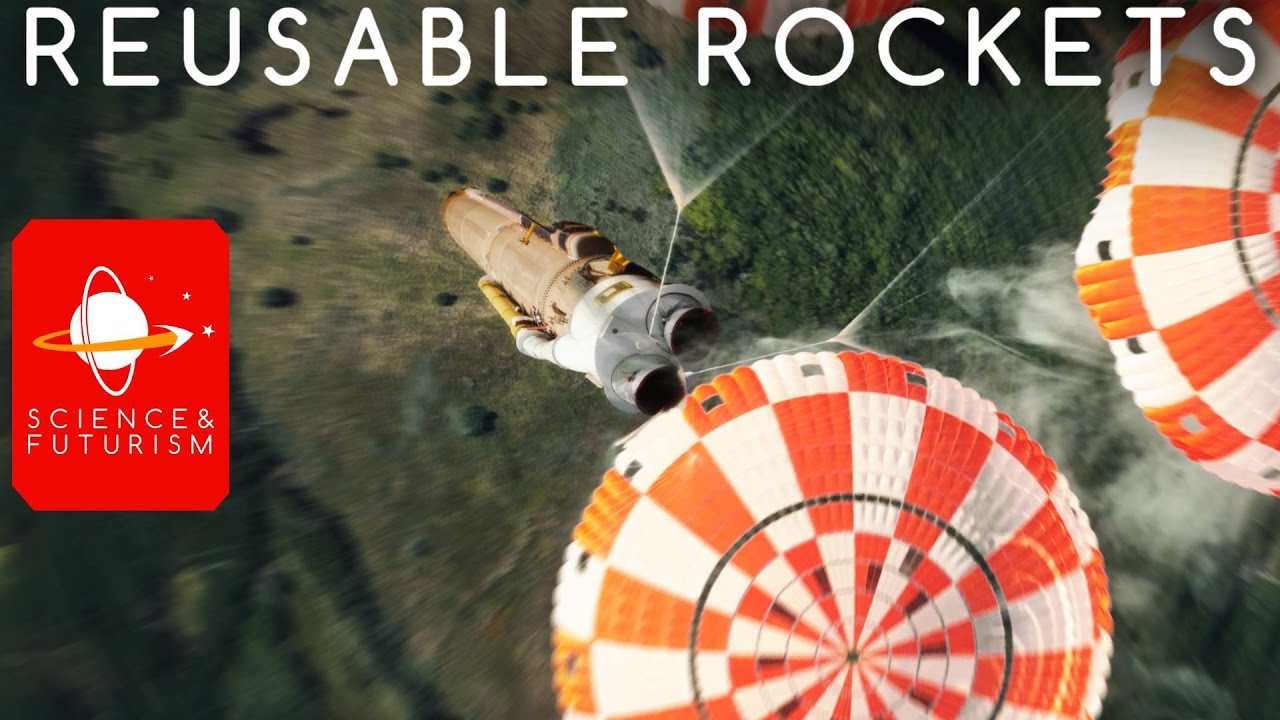
Reusable Rockets & Metallic Hydrogen
Keywords
Summary
160 words
Critical Evaluation
Value of the Information & Strength of the Argument
The video provides substantial value by clearly explaining the economic and physical principles behind rocket reusability and fuel efficiency. The argumentation is solid, using concrete examples like the Space Shuttle and Falcon 9, and employing the rocket equation to illustrate the dramatic impact of exhaust velocity on payload capacity. The presenter effectively debunks the common misconception that fuel cost is the primary expense, instead highlighting the cost of the hardware itself. The discussion of metallic hydrogen is well-contextualized, presenting both its potential and the significant challenges to its practical use. The use of analogies (e.g., buying a new car when out of gas) makes complex concepts accessible without oversimplifying the underlying physics.
Scientific Rigor, Source Quality, Title Accuracy
The video demonstrates strong scientific rigor by grounding its explanations in established physics and referencing primary sources, including Isaac Silvera’s papers on metallic hydrogen and a NASA report. The presenter is careful to distinguish between proven technology, theoretical concepts, and speculative futurism. The title accurately reflects the content, which covers both reusable rocket technology and the potential of metallic hydrogen as a propellant. The video does not overstate claims and acknowledges uncertainties, particularly regarding the practical application of metallic hydrogen.
207 words
Title / Content Match
The title accurately reflects the content, which covers both reusable rocket technology and the potential of metallic hydrogen as a propellant.
Quality & Reliability
8/10
The video provides a well-structured, technically accurate overview of rocket reusability and metallic hydrogen, grounded in established physics and referencing primary sources (Silvera's papers). The presenter clearly distinguishes between established facts, theoretical possibilities, and speculative futurism, maintaining a high standard of scientific rigor.
Key Moments
Markers derived by PSI from the transcript: the creator did not define chapters.
- Introduction to the high cost of space launches and the concept of reusable rockets.
- Analysis of the Space Shuttle's cost per kilogram and the role of fuel vs. hardware costs.
- Discussion of the Falcon 9's cost structure and the square-cube law's effect on tank mass.
- Exploration of large rocket concepts like the Sea Dragon and the advantages of oceanic launches.
- Explanation of specific impulse and comparison of common rocket fuels.
- Introduction to metallic hydrogen, its predicted performance, and potential impact on rocket design.
- Discussion of future possibilities combining metallic hydrogen with advanced materials like graphene.
Cited Sources
- Metallic Hydrogen basic theory paper (2010) — Referenced as the primary source for the theory of metallic hydrogen.
- NASA Phase 1 Final Report on Metallic Hydrogen (2011) — Referenced as a report on the potential use of metallic hydrogen as a rocket fuel.
- Harvard Gazette interview with Isaac Silvera (2017) — Referenced as a news article about the claimed creation of metallic hydrogen.
- Isaac Arthur's Website — Official website for the channel and additional content.
- Soundcloud audio of the episode — Audio version of the episode for download.
- Cover Art by Jakub Grygier — Artist's portfolio for the cover art.
Concurring Sources
- NASA Space Shuttle program cost analysis — Provides historical data on Shuttle launch costs, consistent with the video's estimates.
- SpaceX Falcon 9 user's guide — Official documentation on Falcon 9 capabilities and pricing, supporting the video's cost per kilogram figures.
Dissenting Sources
- Claims of metallic hydrogen creation disputed — Some researchers have questioned the reproducibility of the Harvard experiment claiming metallic hydrogen creation, suggesting the results may not be definitive.
External References
Contribution & Novelties
The video’s original contribution lies in its clear, quantitative synthesis of the economic and physical factors driving rocket reusability, and its balanced assessment of metallic hydrogen’s potential. It effectively connects the rocket equation to launch costs, illustrating how a high-specific-impulse fuel could revolutionize space access. The discussion of oceanic launch and large ‘big dumb boosters’ provides a broader context for reusability beyond just landing boosters.
Pour aller plus loin :
- Rocket equation — The fundamental equation governing rocket performance, central to the video’s analysis.
- Specific impulse — A key metric for comparing rocket fuel efficiency, explained in the video.
- Metallic hydrogen — The theoretical state of hydrogen discussed, with its potential as a superconductor and propellant.
- Sea Dragon (rocket) — The large launch vehicle concept mentioned, illustrating the square-cube law’s benefits.
- SpaceX Falcon 9 — The partially reusable rocket used as a modern example of cost reduction.
147 words
Radar Profile
The radar profile shows high scores in information quality and technical level, reflecting the video's depth and accuracy. The quantity of information is also high, but the overall fiabilite is slightly lower due to the speculative nature of some future concepts discussed.
💬 Très positif. Sur les 30 commentaires analysés, les spectateurs expriment une admiration quasi unanime pour la qualité pédagogique et la rigueur scientifique de la vidéo, saluant la clarté des explications et la profondeur des sujets abordés.