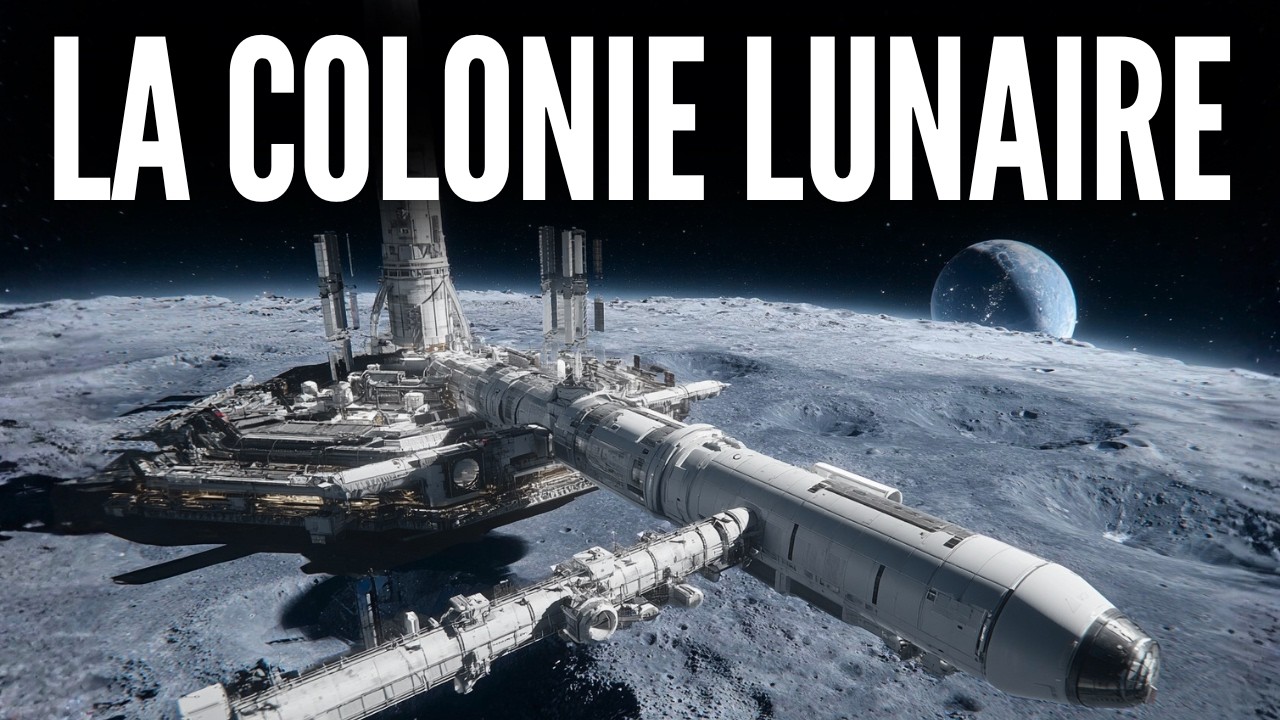
La VRAIE RAISON de notre retour sur la Lune (ce n’est pas la science)
Keywords
Summary
Critical Evaluation
However, the video has several weaknesses. First, it relies heavily on a single scientific article (the IEEE overview of Artemis) as a source, which limits the depth of technical and scientific analysis. The discussion of lunar resources like helium-3 is presented without critical evaluation of the technological and economic feasibility of extraction. The video also glosses over the significant technical challenges of building a permanent lunar base, such as radiation protection, life support, and in-situ resource utilization. The role of China is mentioned but not deeply analyzed, and the competitive dynamics between the US and China are oversimplified.
The video's strength lies in its clear communication of complex geopolitical and historical contexts, making it accessible to a broad audience. The argument that the return to the Moon is driven by geopolitics and economics rather than pure science is well-supported. The inclusion of the sponsor segment (Mammouth AI) is a minor distraction but does not undermine the core content. The title is representative of the content, as the video indeed focuses on non-scientific reasons. Overall, the video is informative and engaging, but lacks the technical rigor expected of a purely scientific analysis. It serves better as a documentary on space policy than as a scientific review.
Key Moments
- Introduction: The Moon as a civilizational project again.
- The uncomfortable question: why return after 50 years?
- The last human step and fifty years of silence.
- Apollo as a weapon of the Cold War.
- 400,000 people to win an impossible race.
- Victory achieved and the lunar dream halted.
- The Space Shuttle traps NASA in orbit.
- Constellation collapses and the future seems closed.
- SpaceX shakes things up and China accelerates.
- Birth of a lunar economy on-site.
- SLS versus Starship: shift in the space model.
- The real reason for our return to the Moon.
Cited Sources
Contribution & Novelties
The video provides a clear synthesis of the geopolitical and economic motivations behind the Artemis program, contrasting them with the Cold War-era Apollo program. It effectively explains the shift from government-led to commercial space exploration and highlights the role of new actors like SpaceX and China. The narrative is accessible and well-structured, making complex space policy understandable to a general audience.
Pour mieux comprendre : - Apollo program — Comprehensive overview of the Apollo missions and their historical context. - Artemis program — Detailed description of NASA's current lunar exploration plans. - Space policy of the United States — Context on the political and economic drivers of US space activities.
Radar Profile
The radar profile shows high scores in quantity of information and global reliability, but lower in technical level. This indicates the video is informative and trustworthy for a general audience, but lacks deep technical or scientific detail.