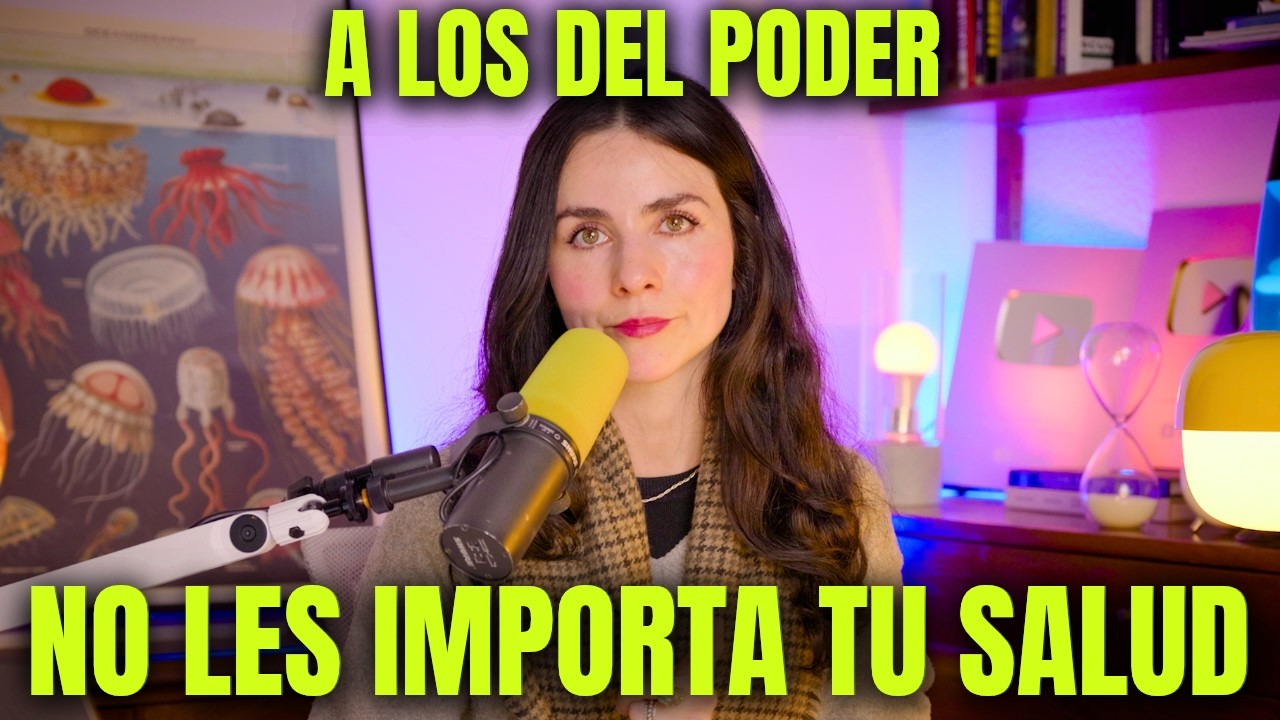
Explosión de Plomo en Iowa y Agua en Guadalajara - CIENCIA SIMPLIFICADA EP#93
Lead Explosion in Iowa and Water in Guadalajara - SIMPLIFIED SCIENCE EP#93
Keywords
Summary
364 words
Critical Evaluation
Value of the Information & Strength of the Argument
The informational value is real and concentrated in the toxicology segment, which goes well beyond the usual ’lead is bad for you’ treatment: the calcium-mimicry framing is used consistently to link molecular events (channel blockade, altered intracellular calcium regulation, interference with NMDA-dependent plasticity) to organ-level outcomes (hippocampal function, learning and memory) and then to clinical and epidemiological consequences (anaemia, developmental deficits, impulsivity). The extended metaphor of a key that fits the lock but cannot turn, jamming the ignition of a working car, is an effective pedagogical device because it correctly conveys the irreversible-occupancy idea rather than merely decorating the explanation. The value is lower where the episode moves from mechanism to causal claims about institutions: the assertion of ‘incompetence’ is asserted and illustrated rhetorically rather than demonstrated, the decision-making chain that led to the detonation is not reconstructed, the risk assessment that justified refusing chemical neutralisation is not examined, and the alternative proposal is mentioned only to be set aside. The strongest argumentative move is the systematic insistence that no threshold dose exists, which is well supported and repeatedly anchored; the weakest is the shift to population-level inference, where the lead-crime correlation and the IQ-points-lost correlation are presented as ‘interesting graphs’ with hedging but without any discussion of confounders, exposure timing, or the difference between ecological correlation and individual causation. The overall argument is coherent and cumulatively persuasive but is carried largely by the host’s moral framing; a listener is invited to be indignant before being given the tools to evaluate the decision that provoked the indignation. Some assertions about the historical behaviour of the plant and about institutional negligence are stated categorically with no documentary anchor in the episode.
Scientific Rigor, Source Quality, Title Accuracy
Scientific rigour and source quality are the weak point of the episode. No study, report, agency document or named expert is cited in the transcript; the EPA is mentioned only as having reported that its air monitors detected no lead after the detonation and as continuing air, soil and water testing, without a report title, date or link. The figure that 17% of Mexican children aged 1 to 4 show lead poisoning is given as coming from ‘a study’ without author, institution, year or journal, which makes it unverifiable for the listener despite being the single most striking quantitative claim about the region. The historical account of leaded petrol being maintained by industry despite known harm is accurate in substance but is referred to indirectly, through a recommendation to watch a Veritasium video on the subject rather than through the primary historical or scientific literature. The description of the video does not compensate for this: apart from the sponsor link it contains only the host’s Patreon and social accounts and three cross-links to other episodes of the same channel, none of which is a reference for any claim made here. There is therefore no source trail at all, and the episode’s credibility rests entirely on the internal consistency of its explanations and on the host’s authority. The positive side is that the mechanistic passages avoid the classic popular-science distortions: they distinguish between lead and calcium correctly, describe competitive interference rather than a vague ’toxicity’, and correctly present bone as a dynamic reservoir rather than inert storage. The episode also contains an advertising segment of roughly two and a half minutes integrated into the first third of the programme, which is clearly demarcated and has no bearing on the scientific assessment. On title/content fit, the Iowa lead detonation announced in the title is treated at length and with real documentary attention to dates, quantities and the history of the site; the Guadalajara water topic announced in the second half of the title is absent from the transcript available for this evaluation and therefore could not be assessed.
641 words
Title / Content Match
The first half of the title (Iowa lead explosion) is fully and extensively covered, including the 25 November 2026 detonation, the lead-azide stockpile and the toxicology of lead. The Guadalajara water segment does not appear in the transcript available for this assessment, so that part of the title could not be verified.
Quality & Reliability
6/10
The toxicological content (calcium mimicry, NMDA signalling, oxidative stress, inhibition of haemoglobin synthesis, mitochondrial ATP production, skeletal sequestration and remobilisation during pregnancy, absence of a safe threshold) is consistent with mainstream environmental-health knowledge and is explained with unusual mechanistic care for a general-audience podcast. However, no primary reference, author, journal or institutional document is cited anywhere in the episode; the only quantitative claim (17% of Mexican children aged 1-4 with lead poisoning) is given without identification of the study, and the population-level lead-crime association is mentioned without discussing confounding. The framing is openly editorial and polemical, which lowers the reliability of the episode as a reference source while leaving the explanatory core sound.
Key Moments
Markers derived by PSI from the transcript: the creator did not define chapters.
- Opening: the host frames the episode around lead and around 'incompetence' as a public-health hazard.
- The 25 November 2026 controlled detonation at Middletown, Iowa, and the ~4.5 tonnes of lead azide stored in 68 barrels since 2009.
- Advertising segment, clearly separated from the editorial content (roughly two to three minutes).
- Lead as a calcium impostor; bone as a long-term reservoir of body lead.
- Mechanisms of harm: calcium channels, NMDA receptors, long-term potentiation, oxidative stress, haemoglobin synthesis, mitochondrial ATP.
- Exposure routes, distribution to soft tissues, 90-95% of the burden in the adult skeleton, remobilisation and transmission during pregnancy.
- Developmental neurotoxicity and behavioural outcomes; population lead-crime correlations; the 17% figure for Mexican children aged 1-4.
- Historical sources of exposure: cosmetics, paints and painted toys, pipes, tetraethyllead in petrol, and the regulations that followed the evidence.
- History of the Iowa Army Ammunition Plant: construction from January 1941, operations from September 1941, wartime production, later contamination and remediation designation.
- Properties of lead azide as a sensitive primary explosive and the pivot towards the question of how such a stockpile was allowed to degrade.
Cited Sources
- Unidentified Mexican study reporting lead poisoning in 17% of children aged 1 to 4 — Mentioned orally as 'a study' published in Mexico; no author, institution, journal or year is given in the episode.
- Veritasium video on the history of leaded petrol — Explicitly recommended by the host as further viewing on the industry's knowledge of lead's harmfulness; no link is provided in the description.
- Channel cross-promotion: 'Todo el mundo IGNORA la mayor REVELACIÓN ALIENÍGENA' — Link from the description; another episode of the same channel, not a source for any claim in this video.
- Channel cross-promotion: 'Nueva epidemia global: La falta de sueño te va a matar' — Link from the description; another episode of the same channel, not a source for any claim in this video.
- Channel cross-promotion: 'Tu cerebro está envejeciendo. Esto es lo que puedes hacer.' — Link from the description; another episode of the same channel, not a source for any claim in this video.
External References
Contribution & Novelties
The original contribution here is not the discovery of new facts but the articulation of a very recent, little-covered event (the 25 November 2026 detonation of a degraded lead-azide stockpile in Iowa) with a thorough mechanistic primer on lead toxicology, and the insistence on a single unifying idea: lead is dangerous precisely because it impersonates calcium. That framing lets the host connect molecular pharmacology, skeletal storage, pregnancy, developmental neurotoxicity and environmental contamination into a single explanatory chain, which is more than most news coverage of a controlled detonation offers. The historical arc of the Iowa plant, from a 1941 wartime munitions facility to a site designated for hazardous-waste remediation around 1990 and still holding deteriorated primary explosive, adds a useful long-duration perspective. The episode’s genuinely novel angle is methodological rather than factual: it treats a demining operation as a case study in institutional risk governance, asking why a chemical neutralisation option was declined. That question is raised but not documented, which limits its value as an original contribution.
Further reading:
- Lead poisoning — Overview of exposure routes, mechanisms and health effects, useful for checking the toxicology presented in the episode.
- Lead(II) azide — Properties of the primary explosive at the centre of the Iowa detonation, including sensitivity and decomposition behaviour.
- Tetraethyllead — Background on the leaded-petrol story the host recommends via a Veritasium video, including the public-health history.
- EPA lead programme — Institutional resources on lead exposure, monitoring and remediation referenced obliquely when the EPA’s post-detonation testing is mentioned.
- Lead–crime hypothesis — The population-level correlation discussed in the episode; worth reading alongside critiques of ecological correlation before drawing causal conclusions.
- Iowa Army Ammunition Plant — History of the site, its Second World War and Korean War production, and its subsequent contamination and remediation status.
294 words
Radar Profile
The profile is fairly balanced but pulled downward on reliability and slightly upward on information quantity: the episode packs a lot of mechanistic content into a single instalment while providing no traceable references. The gap between information quantity and reliability reflects a commentary-driven format in which accurate mainstream science is delivered without citations and mixed with categorical institutional criticism. Technical level sits in the middle, appropriate for a detailed popular explanation that names channels, receptors and metabolic pathways without going into primary literature.