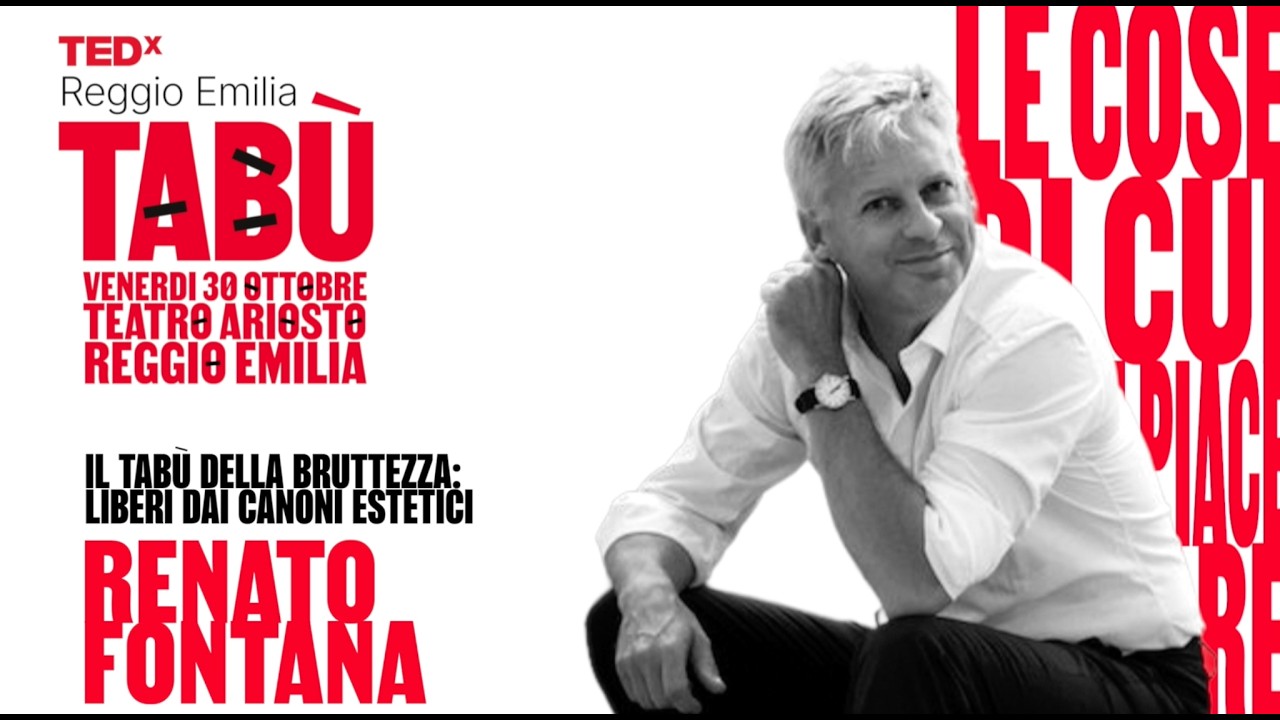
Il tabù della bruttezza: liberi dai canoni estetici | Renato Fontana | TEDxReggio Emilia
The Taboo of Ugliness: Free from Aesthetic Standards | Renato Fontana | TEDxReggio Emilia
Keywords
Summary
191 words
Critical Evaluation
Value of the Information & Strength of the Argument
The talk provides a thoughtful and accessible perspective on ugliness, blending personal anecdotes with cultural references. The argumentation is logical and well-structured, moving from a concrete example (Pantone 448C) to a broader critique of societal norms, and finally to a constructive call for acceptance. Fontana effectively uses authority and emotional appeals, though the evidence is largely anecdotal and based on selected artistic and literary works. The value lies in its humanistic approach, challenging binary thinking and offering a nuanced view of beauty and ugliness. However, the argumentation would be stronger with more empirical data or systematic analysis of the social impacts discussed.
Scientific Rigor, Source Quality, Title Accuracy
The talk is a personal and professional reflection rather than a scientific study. It references several named sources (Umberto Eco, Mia Mingus, Moshtar Hilal) but without precise citations or URLs, making verification difficult. The only external link is the general TEDx page, which does not provide specific reference material. The title accurately matches the content, which focuses on deconstructing the taboo of ugliness. While the speaker is a communication professional with experience in culture and art, the talk relies on subjective interpretation and selected examples, which may limit its scientific rigor.
208 words
Title / Content Match
The title accurately reflects the content, which explores the taboo of ugliness and challenges aesthetic norms.
Quality & Reliability
6/10
The talk offers a cultural and philosophical reflection on ugliness, referencing works like Eco's History of Ugliness and contemporary artists, but lacks rigorous scientific evidence or comprehensive sourcing.
Key Moments
Markers derived by PSI from the transcript: the creator did not define chapters.
- Introduction and the question of the color of ugliness, introducing Pantone 448C.
- Discussion of ugliness as a universal taboo and the risks of social stigma.
- Exploration of how marketing and social media amplify beauty standards, referencing brand personality and the 'society of likes'.
- Examples of ugliness in art and culture: Picasso, Kahlo, Joplin, Cunningham, and fashion designers like Demna.
- Contemporary trends: manosphere, incels, and looksmaxxing as reactions to beauty pressure.
- Reference to Umberto Eco's 'Storia della bruttezza' and the lack of treatises on ugliness.
- Introduction of three concluding words: reconciliation, magnificence, and freedom, with references to Moshtar Hilal and Mia Mingus.
Cited Sources
- TEDx Program — Official TEDx page providing information about the event format and organization.
Contribution & Novelties
The talk offers a refreshing humanistic perspective on ugliness, arguing for its value as an alternative to rigid beauty standards. It synthesizes ideas from philosophy, art, and contemporary digital culture, and proposes a practical approach of ’letting the ugly be’ as a path to personal freedom. The contribution is not groundbreaking but consolidates scattered concepts into a coherent narrative.
Pour aller plus loin :
- Umberto Eco’s On Ugliness — A comprehensive historical survey of ugliness in art and culture, directly relevant to the talk’s central reference.
- Incel — Discusses the involuntarily celibate community, which the talk connects to beauty standards and social exclusion.
- Manosphere — Examines the broader online male communities that often react to beauty and gender norms, as mentioned in the talk.
- Looksmaxxing — A trend where individuals attempt to maximize their physical attractiveness, illustrating the opposite reaction to beauty pressure.
143 words
Radar Profile
The radar profile shows moderate scores across information quantity, quality, and reliability, with a lower technical level. The talk is not technical but offers a balanced cultural overview. The fiability is moderate due to the lack of verifiable sources and reliance on personal experience.